
Turbulence and Tensions: The 19th Century Crisis in the United States
The 19th century was an incredibly significant yet exceptionally tumultuous period in the history of the United States. The economic and territorial growth of this still-emerging nation was met with significant internal challenges that nearly brought about its collapse. What did the United States look like in the 19th century? Below, I will address this question.
.jpg)
The United States of North America transformed from an overseas colony into the greatest power in the modern world, both militarily and economically, in a short span of time. Several pivotal points mark the history of this superpower, with one of the key moments being the 19th century.
By the mid-19th century, the United States had become one of the fastest-growing countries, gaining a stronger international position. However, they were simultaneously grappling with a significant internal crisis. Let’s explore the events that shaped the United States’ international standing today.
The Situation of the United States in the 19th Century
The United States entered the 19th century as an independent nation (the Congress adopted the Declaration of Independence on July 4, 1776). A dynamic expansion across the North American continent commenced, acquiring additional lands in the central and western parts of America through conquest or purchase.
Alongside territorial expansion, there was economic growth, leading to an increasingly populated United States. People from Europe and other continents began migrating to the country, enticed by the prospect of acquiring free land in the western part of the country and opportunities for employment in emerging industrial facilities, resulting in a multicultural society.
By the mid-19th century, the United States had become one of the most dynamically developing countries globally. However, it’s essential to note that this development was uneven. The northern part of the country was in a significantly better position than the southern part, where agriculture dominated.
Not only that, but the stance on slavery also contributed to differences between the two parts of the country. As the movement advocating for the abolition of slavery gained momentum, the societal dispute took on a political dimension and initiated the bloody Civil War, which seriously threatened the unity of the nation.


Territorial Expansion and Expansionism
The early 19th century saw intensive territorial expansion of the United States in North America. In 1802, amidst ongoing wars, France, seeking funds to finance its military activities, offered to sell Louisiana to the United States. The deal, amounting to $15 million, was finalized in April 1803.
Nine years later, another armed conflict erupted with the British. This time, the United States aimed to drive the enemy out of Canadian territory. Despite Britain’s involvement in European war, the Americans couldn’t achieve their goal. By late 1814, the Treaty of Ghent was signed, reinstating pre-war boundaries. The United States never attempted to annex Canada again.
While Canadian territory remained part of the British Commonwealth, the USA acquired other territories. In 1819, the US government purchased Florida from Spain. In 1845, Texas was annexed. On February 2, 1848, the Treaty of Guadalupe Hidalgo was signed, concluding the US-Mexican War. As a result, Mexico ceded over half of its territory to its neighbor. Apart from Texas, the US gained California, New Mexico, Arizona, Nevada, Utah, Wyoming, and Colorado. 19 years later, the United States purchased Alaska from the Russian Empire.
Industrial Revolution in the United States
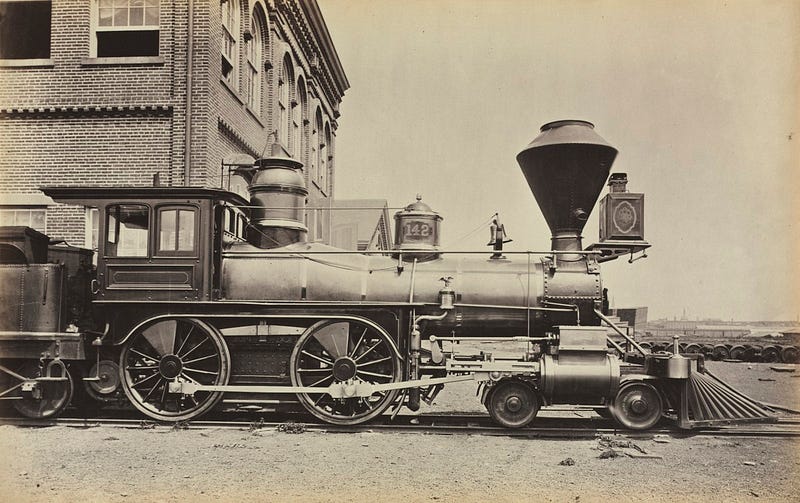
The territorial growth of the USA progressed alongside changes in industry. In the northern part of the country, all key industrial sectors experienced rapid development. Mining, metallurgy, and textiles flourished in this region, facilitated by the natural resources present. It’s worth noting that this area was well-connected by an extensive railway network.
The situation in the southern states was quite different. Large plantations dominated, producing cotton, tobacco, corn, and sugarcane. Development there progressed much slower, and the differences between the North and South weren’t just limited to economic matters. The attitude towards slavery was entirely different as well.
Fight for the Abolition of Slavery
Slave labor powered the southern plantations, while the northern states were increasingly inclined towards abolishing slavery. The existing laws at that time allowed individual states the freedom to decide on this matter. Successive northern states began prohibiting forced labor, but in the South, especially during the industrial revolution, nobody wanted to hear about it. The rapidly growing textile industry needed cotton, the primary crop in the South.
In 1820, the Missouri Compromise was signed, dividing into 12 slave states and 12 states prohibiting slavery. Over time, the abolitionist movement gained momentum, and the dispute over slavery took on a political dimension.
When Abraham Lincoln won the presidential elections in 1860, discussions about the complete abolition of slavery and increasing the central government’s influence grew louder. The Southern states didn’t accept this choice. They decided to secede, and that’s when the country’s division became a reality. How were the United States divided into zones in the 19th century?


The Civil War
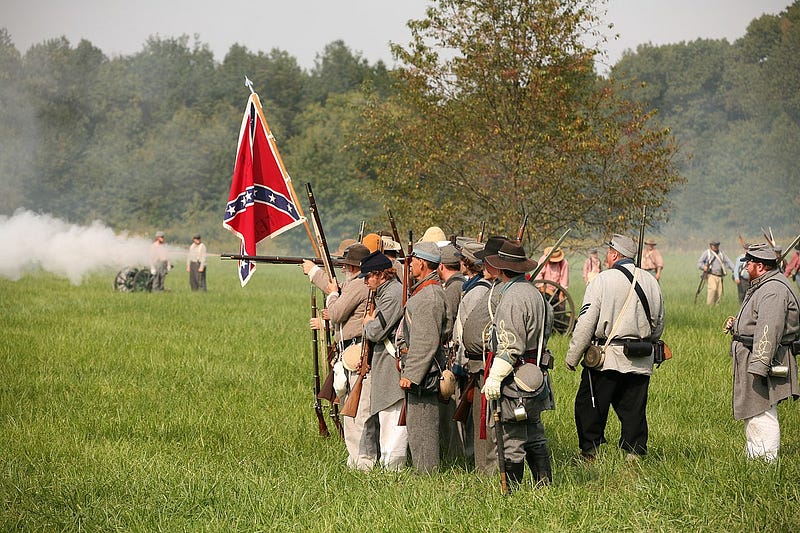
South Carolina was the first to secede, followed by 10 other states. In February 1861, they formed the Confederate States of America, also known as the Confederacy. The northern states began to be referred to as the Union.
In April 1861, the Confederates attacked Fort Sumter, marking the beginning of the Civil War. Initially, the Confederates, better trained and with more efficient leadership, gained a clear advantage. However, the Union had the majority of the navy, enabling them to blockade the coast and cut off weapon supplies to the Southern states. Over time, the Union, with its industrial backing, gained an advantage in armament. The significant firepower advantage began to change the course of the war.
The year 1863 was pivotal in the course of the battles. In July, Union forces managed to repel the enemy in the bloody battle of Gettysburg. When General Ulysses Grant took command of the northern troops, a scorched-earth tactic was adopted. In 1865, the Confederacy surrendered. In the same year, the 13th Amendment to the Constitution was ratified, completely abolishing slavery.

Manifest Destiny
What were the societal sentiments prevailing in 19th-century America? The phrase “Manifest Destiny” encapsulates it well, first used in July 1845 by John L. O’Sullivan, editor of the “Democratic Review.” The author aimed to legitimize the westward expansion of the USA, attempting to mobilize the government for a faster annexation of Texas. According to him, such actions aligned with the country’s destiny, as bestowed by God.
Attention all readers!
As content creators on Medium.com, we face minimal compensation for our hard work. If you find value in my articles, please consider supporting me on my “Buy Me a Coffee” page. Your small contributions can make a big difference in fueling my passion for creating quality content. Thank you for your support!

