
Tuning in to Your Internal GPS: How to Lead with Your Heart
Tune into your heart and follow its wisdom.
The GPS (Global Positioning System), is a revolutionary device that makes me think of the “evolutionary device” that is built into every human being: the intuition of the heart that is always there to help us plan our lives and find our way when we have wandered off course. Like a GPS, however, you need to learn how it works and then use it.
A helpful way to think about your internal GPS is to examine what athletes call “the zone,” a state of supreme focus in which they are performing at their peak potential. When they are in the zone, they feel fully connected to the moment and consistently achieve their intended goal, which might be a basket or a certain score. While in the zone, an athlete’s mind processes only the thoughts and images that help to execute a chosen task successfully.

Being in the zone during everyday life is based on the same principle. When we are present in our lives and in touch with ourselves in the way that is most inspiring to our being, we are happy and focused in the moment. We feel connected to a greater consciousness, and synchronicities and confirmations abound. When we are off-course or out of touch, we may be dissatisfied with life or feel unhappiness in our hearts that we can’t trace the origin of.
Entering the Zone
To enter the zone, athletes know that they must be totally committed to their game plan. What’s more, they must let go of doubts, fear of failure, lack of trust, and overthinking. The zone is a state of total involvement in the present moment without the mental burden of worry, doubt, or fear about results.
To be happy, you must be present with your life and live from your heart, which means being in tune with your spiritual self and committed to the game plan of your life. Like an athlete, you must constantly work to let go of your fears, doubts, and lack of trust. The first step is to commit to living life more from your heart. Your heart is your life’s GPS.
Living from Your Heart
Living from your heart simply means being in touch with your inner self and intuition, and this arises out of being more present in your life. You may already practice being present to a certain degree, but as we grow and evolve, we must continually face the uncomfortable challenge of trusting what we feel within to take us to the next level.
The Present Moment
Getting more connected to the present is the key because the connection to your heart and intuition can only happen when you are present with your life. Mystics from times past to current day spiritual teachers have all told us we must put our full awareness on the Now, yet it is one of the hardest things to do because of all the distractions around us. However, it is not too late to start working towards a goal of being present, because everything from depression to frustration to experiencing a lack of creativity or feeling intuitively blocked is a result of not tapping into the resources of the present moment. When you focus on too many things at once and get distracted by all the voices “out there,” you lose touch with the one clear voice within.
Intuition Is a Skill Not a Gift
Although it may seem that some people are intuitive and others are not, that is not true. The reality is that everyone is intuitive. Being intuitive and being able to stay in the present moment are skills, not gifts, as many think. The key to strengthening your intuition is to make a commitment to being more present. Your intuition is strongest when you are living in the present moment.
In addition, many think that someone who is “spiritual,” practices meditation, and eats only organic, whole foods — for example — is more intuitive than someone who doesn’t participate in these activities. The so-called spiritual person might just be stuck in the past, holding on to regrets and negative self-perceptions, and living in fear of the future — and not “in tune” with his or her inner voice, at all. While lifestyle can support intuition, it does not create it. The only thing that matters is whether your energy and focus are in the present time.
What are you doing to get present so you can hear your inner voice?
Cultivate Being Present
It is to your advantage to work towards getting present so that you can be more productive, feel more connected to a greater source, and dissipate fear and stress.
Following are some helpful ways to get into the habit of being present:
- Reduce the number of things you juggle at one time. Sure, multitasking can make you feel productive, but multitasking all the time creates scattered patterns in your energy field, and these are not conducive to being present. Concentration is a key to being in the Now, so practice using your attention to focus on one thing regularly.
- Experience what you are doing. How many times a day do you do something just to do it, without really experiencing it? An example is taking a quick shower just to get out of the house and make it to work on time versus experiencing the feel of the water and the moments of peace. Another example is eating quickly just to put something in your stomach versus really tasting the food that is nourishing your body. It doesn’t take any more time to experience what you are doing; it just takes awareness and a commitment.
My Chinese uncle ate meal after meal with his eyes closed. I was a child, so I would giggle and make faces at him when he did it. In retrospect, however, I can appreciate that he was being present in the moment of an experience. At the dinner table, he often told all of us children to close our eyes so that we could “experience” eating. He told us to visualize the ocean when we tasted the saltiness in food and visualize the fruit on the tree when we tasted the sweetness of freshly-cut fruit. He told us that each grain of rice took months to grow and reminded us to appreciate the nourishment it gives. If you have never eaten with your eyes closed — try it! It is an instant way to become present with the moment.

- Let go of resistance. Anytime you feel stuck or find yourself in a situation or predicament you don’t want to be in, relax. You can’t get centered if you resist. When you resist, your mind races around, taking you out of the present. The next time something happens and you start to resist and react, catch yourself and refocus your energy toward feeling “okay” with it. So, if your boss says No to your requested vacation day or you can’t find your keys or your car won’t start, take a deep breath and start by accepting the situation. Even if you don’t like it, acceptance is the first step toward getting centered. Only from the center can you gain insight into the matter.
- Have goals, but let go of expectations. Now, goals may seem like a contradiction when talking about the present because goals are based in the future. However, goals that inspire you are necessary, because they provide an overall direction that guides you in what you are doing today. Beware that your goals don’t trap you in the future, which happens when the result (or your expectation of the result) becomes more important than the journey. Make sure to focus your actions, thoughts, and emotions in the present as you use your goals to guide you in the right direction.
- Every day, appreciate what you have. I can’t stress this enough. Make it a habit to reflect on what you have and say thank you. It means looking for things to be happy about Now rather than later. Find reasons to be thankful for the opportunities that come your way as well as for the challenges.
When You Veer Off Course
It almost goes without saying that there will be times along the way when you realize that you are off-course. Wandering or even veering off course as you move toward your goal is unavoidable. When it happens, let it go! Easy to say and hard to do, I know, but even the most sophisticated and advanced jet plane ever built — the Concorde — constantly went off course.
Do you remember the Concorde? It was in operation for twenty-seven years, and it was an amazingly time-efficient means of traveling from New York to Europe. A commercial jet took eight hours to get to Paris, but the Concorde could make it in less than three-and-a-half hours. It flew too fast for human pilots to keep up with it: one miniscule wrong move would throw the jet off course, heading towards a different country. Because of this, two computers had to fly the jet. The computers would literally talk to each other.
One computerized pilot would say aloud, “We are off-track! Get back on course.” The other computerized pilot would respond, “Recalculating. Correcting course.” This would go on for the entire flight; if you happened to walk nearby, you could hear them jabbering: “Off-track!” “Correcting course.” “Off-track!” “Correcting course.”
I heard that a gentleman on a Concorde tour was curious as to why the two computers were constantly talking to each other. “Wasn’t the Concorde ever on course?”
The tour guide said, “Yes, about one percent of the time. The other 99 percent of the time the jet veers off course and requires constant auto correction.”

Autocorrect and Move On
It’s natural in life to veer right, stray to the left, swerve up, sway down, and bump around. When the Concorde goes off course, no one gets upset. The computers don’t scream at each other. They don’t say things like, “You dummy! You are off-target — again!” They autocorrect and keep going toward their destination.
Since we all go off course from time to time, it would benefit us to follow the Concorde’s example: autocorrect and move on. You may tell a lie that gets you in trouble, cheat and get caught, eat the whole gallon of ice cream and blow your diet, break a confidence, have one too many drinks, have a car accident because you were texting, lose your temper, betray your best friend — and so what? We all make mistakes, and we learn from them. It is part of being human. The important thing is to recognize what you have done, take responsibility, apologize if you need to, make amends, and then get back on course. So, treat yourself gently when you find you’ve gone off track.
What’s more, if someone confronts you about why you did what you did, you can just say, “It seemed like a good idea at the time.” At the moment of taking “wrong” action, a part of you thought it was a good idea. In that split-second, the benefits of taking the “wrong” action outweighed the challenges you would have to deal with later.
This is not an excuse for your actions, but it was the reality of your state at the time, and you made a choice that worked for you in that moment. Don’t waste time or energy thinking that you should have been better or done better. Accept the facts and move on. The more connected you are to the present and to your intuition, the less frequently you will veer off course.
Use Your Intuition
Many people are out-of-practice when it comes to using their intuition. If this is you, start simply. The next time you have to make a choice — which restaurant to choose for lunch or what vacation package to book — instead of tediously weighing out the pros and cons in your mind as you would usually do, notice your physical response to each option. Close your eyes and put both hands on your stomach. Say one option out loud or think of it for five to ten seconds and note your body’s response. Does it tense or relax? Notice your breath. Does it feel restricted or expanded? The best choice, of course, is the one that produces a relaxed and expansive response in the body.
Intuition and Synchronicities
The more you lead with your intuition, the more you will notice synchronicities. Synchronicities show up as affirmations to let you know you are on the right path. For example, let’s say you are practicing leading with your intuition and choose to go to the Heart Café instead of the Logic Lounge for lunch with your friend. You made your choice because your expanded breathing and relaxed body response confirmed the Heart Café as a better choice. You know this means you will have to wait for a table and spend a bit more money, but you decide to trust this intuitive decision.
Before your experiment today, you would have chosen to go to the Logic Lounge because it is a time and money saver, however, while at The Heart Café this week, you run into an old friend who tells you about a job possibility that interests you. Note this as a synchronicity and affirm that you made the “right” choice. As you build up trust in your intuitive voice, you will hear it without the louder voice of reason drowning it out, and as a result, you will naturally start to lead with what feels right. Logic still has its place and its role, however, leading with your intuition will never steer you wrong.
Always Note Your Heart’s Response
Make it a habit to note what your heart says in response to everything that happens in your life. Let’s say a friend calls and asks you to lunch. Immediately, you feel that you don’t want to go, but then you start talking yourself into it: it’s been too long, you “owe” her lunch, she needs to talk, and so forth. Make the choice you are most comfortable with, but be aware of how you really feel. If you decide to go, acknowledge to yourself that you don’t want to go, and don’t judge how you feel as “right” or “wrong.” Move towards doing what your heart says, knowing that in the bigger picture, this choice is the “right” one because it is heartfelt. If you choose to say No and feel bad about it, take time to list the potential benefits to your friend because you declined. This exercise will help to balance your perception.
It’s Not All about the Brain
It’s hard to lead with your intuition when you have been programmed that using your brain is the “smart” way to operate. I can understand this. I grew up in a bi-cultural environment where there was much opposition, but one thing my Chinese mother and American father agreed upon was the importance of teaching me to use my brain at all times. Anytime I acted spontaneously or made a decision based on a whim, I got a rap to my head and heard the phrase, “What are you, stupid? Use your brain!” It’s amusing that some cultural phrases, when translated, emerge with a different nuance or confusion of meaning, however this phrase always meant literally the same thing whether I heard it in Chinese or in English.
In school, the emphasis was always on logic and reason, which were considered far more important than intuition and heart. In fact, I don’t remember ever hearing any advice about them. No teacher said, “Follow your heart” or “Go with how you feel.” It was all about intellectual reason, which is black and white and extremely limiting.
Glory to the Mental Body
Albert Einstein said, “The intuitive mind is a sacred gift and the rational mind is a faithful servant. We have created a society that honors the servant and has forgotten the gift.”
Note the last sentence in the quote above. Our rational, intellectual mind gets way too much glory. When faced with a complex problem that requires a solution, we immediately engage our mental body and start weighing the pros and the cons to see what avenue of action is best. Understandably, we define “best” by the rules that we learned growing up.
We may weigh the consequences of what others will think, make sure that our choice minimizes the chance of failure, and of course, our final decision must minimize the risk of loss. The more important the decision, the more we try to find the “best” answer according to a rational perspective.
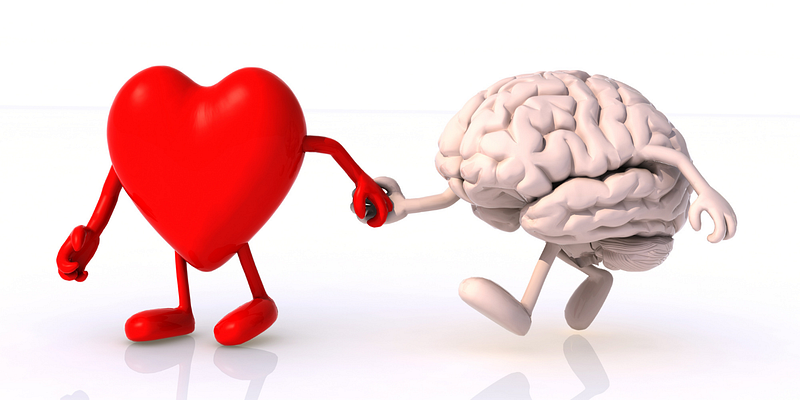
Use Your Brain and Your Heart
Did you know that our human brain’s rational capacities are far more error-prone than our intuition? That’s why the answer we think is “the best” may not be. The problem is, we are so afraid of making the “wrong” decision that we have a hard time trusting our intuitive instincts, so we usually suppress them in favor of logic. The reality is that complex problems you can’t find a logical answer to are best solved by leading with your intuitive capacities.
I love the saying, “Your heart will never follow your mind, but your mind will eventually follow your heart.” There is a lot of truth to it.
If you continually use logic to make decisions, you will keep moving further away from the essence of your heart. Your heart will never buy into what your mind tries to convince it of. If your heart is not into it, what you have to do feels extremely difficult and challenging. If your heart is into it, although at first you may feel a bit scared because your mind is trying to talk you out of it, stay with it and you will start feeling elements such as happiness, spontaneity, and joy. If you keep at it, eventually your mind will surrender its hold and jump on full-bore.
Bringing the essence of your heart into your decision making is a life-affirming practice. Even if some things don’t make sense at first, your life will expand and grow in ways that previously would not have been possible.
Traits of the Happiest People
Only in recent years has the question of how to be happy been addressed through research. When happiness experts combined data, they discovered that all happy people have four traits in common. These are life perspectives that all the happiest people on earth share. Start practicing them, and you will be headed in the right direction.
- The happiest people are on a search for themselves.
- The happiest people design their lives for joy.
- The happiest people avoid saying “if only.”
- The happiest people allow themselves to be happy.
Remember Albert Einstein’s words: “The intuitive mind is a sacred gift and the rational mind is a faithful servant.” May you always remember to honor the sacred gift of the intuitive mind, use your rational mind as its faithful servant, and have the courage to live in your heart.