
Tsutomu Yamaguchi: The Man Who Survived Two Atomic Bombs
A tale of courage and resilience
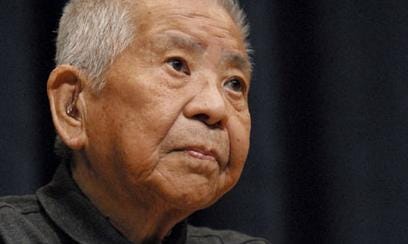
In 1945, during World War II, the world was caught in the grips of unimaginable conflict, and atomic bombs were dropped on Hiroshima and Nagasaki, causing immense destruction and claiming many lives.
In the midst of destruction, something extraordinary happened: a man named Tsutomu Yamaguchi emerged as a living testament to the horrors of nuclear warfare. His story is nothing short of miraculous, a tale of resilience and the enduring human spirit.
The Day Hiroshima Burned
On a fateful day in August 1945, Tsutomu Yamaguchi, a 29-year-old naval engineer, found himself in Hiroshima on a business trip. Little did he know that this ordinary day would turn into a nightmare. As he walked towards the shipyard, an American bomber dropped the world's first atomic bomb, 'Little Boy,' over Hiroshima.
The city was engulfed in a blinding light, leaving Yamaguchi just miles away from ground zero. Miraculously, he survived the blast despite the horrifying experience.
“I didn’t know what had happened,” he later told the British newspaper The Times. “I think I fainted for a while. When I opened my eyes, everything was dark, and I couldn’t see much. It was like the start of a film at the cinema before the picture has begun when the blank frames are just flashing up without any sound.”
After the atomic bomb hit Hiroshima, Yamaguchi was surrounded by falling ash and a fiery mushroom cloud. He suffered burns, ruptured eardrums, and found his coworkers alive. The next day, they went to the train station, hoping to escape the devastation.
The Journey Home to Nagasaki
Yamaguchi, despite feeling unwell, went to work at Mitsubishi's Nagasaki office on August 9. In a meeting, he tried to explain the devastation of Hiroshima, but his boss doubted him.
Suddenly, another bomb struck Nagasaki. Yamaguchi dropped to the ground, shielded by the office structure. After the blast, he rushed to check on his family. Although part of their house was destroyed, his wife and son survived.
His wife had gone out to get burn ointment for him, and when the explosion occurred, she and the baby took refuge in a tunnel, ensuring their safety. It was luck – if he had not been injured in Hiroshima, his family might not have made it through Nagasaki unharmed.
Life After Devastation
After the bombings, Yamaguchi became very sick. He lost his hair, his wounds got worse, and he couldn't stop vomiting. On August 15, Japan surrendered, but Yamaguchi felt nothing. He was extremely ill and thought he might die.
Surprisingly, Yamaguchi recovered slowly and lived a normal life. He worked as a translator for the U.S. army and later became a teacher and engineer. He and his wife had two more children. To cope with his memories, he wrote poetry. He didn't talk about his experiences until the 2000s when he wrote a memoir and joined the anti-atomic weapons movement.
He later journeyed to New York in 2006 and spoke about nuclear disarmament before the United Nations.
“Having experienced atomic bombings twice and survived, it is my destiny to talk about it,” he said in his speech.
Legacy of Hope
Tsutomu Yamaguchi was not alone who survived both bombs, his coworkers Akira Iwanaga and Kuniyoshi Sato, along with kite maker Shigeyoshi Morimoto, also experienced both attacks.
Around 165 people might have been in this situation, but only Yamaguchi was officially recognized as a "twice-bombed person" by the Japanese government, a distinction he had never sought but one that carried the weight of history.
He received this recognition in 2009, a year before he passed away at the age of 93. His life stands as a testament to human resilience, a reminder that even in the face of unimaginable adversity, the human spirit can endure.
In the annals of history, Tsutomu Yamaguchi's name shines brightly—a symbol of hope, peace, and the unwavering strength of the human heart. His story echoes through time, urging us to strive for a world where the horrors he witnessed remain confined to the past, never to haunt our future again.