avatararun

Free AI web copilot to create summaries, insights and extended knowledge, download it at here

3765

Abstract

nearby, it sounded like a herd of elephants were foraging, we were expecting the herd to emerge soon from the thickets, so we waited patiently for them to come out of the forest and cross the track. And our patience was rewarded.</p><figure id="598e"><img src="https://cdn-images-1.readmedium.com/v2/resize:fit:800/1*C6cUpwYGjPHX2wURVO-q7w.jpeg"><figcaption>Elephant crossing | Arun</figcaption></figure><p id="1dff">Poor tusker, big boy he can’t be part of any herd, he has to fend for himself, unless he is mating he has to roam alone, depression anyone for being a social outcast?</p><p id="3460">Later we saw the herd stop by a waterhole to quench their thirst. The babies were having fun splashing water and running in between their mama’s legs.</p><figure id="a953"><img src="https://cdn-images-1.readmedium.com/v2/resize:fit:800/1*1sjfTmhoeVM57lAVg63lzw.jpeg"><figcaption>Elephant in waterhole | Arun</figcaption></figure><p id="ea0e">In the year 2020, again we went on a jungle safari through Nagarhole forests. There we saw two elephants a baby and his mother. The baby was handicapped, he seemed to have some problem with one of his hind legs. He was limping and walking slowly. This is a tiger country and such weak animals are easy prey for the tigers. We were worried for this fellow, but we can’t interfere here, his survival would be decided by the nature. With a tinge of worry, we had to leave him, hopefully, he is now grown up to be a big strong boy.</p><figure id="b069"><img src="https://cdn-images-1.readmedium.com/v2/resize:fit:800/1*2LSJE8_1KLDQvWvdenGVxg.jpeg"><figcaption>Baby with broken leg | Arun</figcaption></figure><p id="c2d4">One thing I always see is elephant mothers and the herd is so protective of their babies. The mamas are on their toes always making sure the baby doesn’t ward off far and dote the baby. The mama also makes sure the baby is well-fed and no intruder can come close to the baby.</p><p id="2639">Another observation I have made through my various sojourns through the forest is if we see a herd of elephants, it is safe to keep a distance and watch them. There is no reason to get panicky. Just take care of a few basic etiquettes — not crossing their path, not going near their babies, not disturbing them in any way, if we respect them and their space, they will allow us to watch them to our heart’s content.</p><p id="a6ea">Once in April, we were doing a safari in Rajaji National Park. It was the peak of summer, with the sun slanting harshly on us. The earth was bone dry and all small vegetation have keeled off. We saw a mama and a baby. With no grass and small shrubs sprouting on the ground, the baby had difficulty feeding himself. We saw that the mama was so caring and intelligent, she broke branches from tall trees and put them down for the calf to eat.</p><figure id="9622"><img src="https://cdn-images-1.readmedium.com/v2/resize:fit:800/1*P8Z_LoWb2lBCucflCpy3UA.jpeg"><figcaption>Mama pulling some branches down for the baby | Arun</figcaption></figure><p id="d141">Talking about the tuskers, during their musth period they can be extremely dangerous and can charge even without any provocation. As such the bull is a marauder and musth will make him a rogue. It is easy to identify if a bull is in musth. During musth, we can see a liquid flowing down the side of his forehead. In the same Rajaji park on the safari once we can across a tusker in musth. He was marching down with panache. We got stationed at a safe distance and saw him cross the road in some sort of rage. He didn’t care to look our side.</p><figure id="06a7"><img src="https://cdn-images-1.readmedium.com/v2/resize:fit:800/1*a3uRxBXQGYxWnabV-BZ-Dg.jpeg"><figcaption>Musth Elephant | Arun</figcaption></figure><p id="dadc">

Options

Elephants love water, splashing in the water, playing in the water, cooling off in the water and they want gazillion litres of water to quench their thirst. So waterholes are easy pickings to spot elephants in the forest. Their child-like traits come to the fore once they are in the water. We were a witness to their ebullient and effervescent side in full splendor when we were in Corbett National Park last summer.</p><p id="1492">They have friendly duels.</p><figure id="4d45"><img src="https://cdn-images-1.readmedium.com/v2/resize:fit:800/1*GCI1RqasaDkgARsmRXH5Ag.jpeg"><figcaption>Friendly Duel | Arun</figcaption></figure><p id="3622">They cool off lying under the water for hours at stretch.</p><figure id="b59a"><img src="https://cdn-images-1.readmedium.com/v2/resize:fit:800/1*XoTormGwaLgIxIyXB_MJfA.jpeg"><figcaption>Cooling off | Arun</figcaption></figure><p id="854d">They splash and spray water all over the place.</p><figure id="92dc"><img src="https://cdn-images-1.readmedium.com/v2/resize:fit:800/1*xLXXuOEO3MUwKcIHfS3qvg.jpeg"><figcaption>Spraying water | Arun</figcaption></figure><p id="6a7c">Then they decide to walk out completely drenched for foraying food and throwing dust on their body.</p><figure id="dfac"><img src="https://cdn-images-1.readmedium.com/v2/resize:fit:800/1*G9T_5DFZDJF05rUokWLB7w.jpeg"><figcaption>Walking out drenched | Arun</figcaption></figure><p id="789b">As I write this article, my thoughts get intertwined in so many elephant memories from my childhood days to today. I feel blessed to be in this land where these genteel beasts still walk around capturing our hearts and imagination.</p><p id="64fb">They teach us many things — the most important thing I feel is putting their family first. For them their family is everything. They are close-knit, doting on each other, and roam around closely guarded. And they are willing to take charge, flirt with danger, and go to any extent to protect their family.</p><figure id="7b1d"><img src="https://cdn-images-1.readmedium.com/v2/resize:fit:800/1*LD7pslxw6NQyA6FuINJKYA.jpeg"><figcaption>Like mother, like son | Arun</figcaption></figure><p id="2935">I chanced upon this brilliant article by <a href="undefined">Anne Bonfert</a> on elephants which has been my inspiration to write this article. Thanks <a href="undefined">Anne Bonfert</a> your travel tales are quite intriguing.</p><div id="0965" class="link-block"> <a href="https://readmedium.com/elephants-splashing-in-the-wild-b1930ae1d8c3"> <div> <div> <h2>Elephants Splashing in the Wild</h2> <div><h3>Playing in the water is fun for everyone</h3></div> <div><p>medium.com</p></div> </div> <div> <div style="background-image: url(https://miro.readmedium.com/v2/resize:fit:320/1*rn8BDR32TqeHpRAcugpkIA.jpeg)"></div> </div> </div> </a> </div><p id="2a14">Travel References</p><p id="b07d">Kerala <a href="https://www.keralatourism.org/">https://www.keralatourism.org/</a> Guruvayoor Elephant Camp <a href="https://www.keralatourism.holiday/best-places/guruvayur/elephant-camp.php">https://www.keralatourism.holiday/best-places/guruvayur/elephant-camp.php</a> Wayanad Wildlife Sanctuary <a href="https://www.wayanadwildlifesanctuary.com/">https://www.wayanadwildlifesanctuary.com/</a> Nagarhole National Park <a href="https://www.nagaraholetigerreserve.com/">https://www.nagaraholetigerreserve.com/</a> Corbett National Park <a href="https://www.corbettnationalpark.in/">https://www.corbettnationalpark.in/</a> Rajaji National Park <a href="https://www.rajajinationalpark.co.in/">https://www.rajajinationalpark.co.in/</a></p></article></body>

PHOTOGRAPHY | WILDLIFE

Tryst with elephants

In the wild or in the city, observing and experiencing elephants is an incredible experience

If you are from the state of Kerala in India, invariably three things must be ingrained in your psyche — rains, drinking hot tea, and elephants. I grew up in Kerala, where for 6–8 months it rains, it either pours or it drizzles. One season it is characterised by just incessant drizzle, and in another, it is roiling clouds, thunderstorms, lightning, and heavy downpour. Who doesn’t like a cup of comforting hot tea on those wet days? So comes the love affair for rains and drinking hot tea. The third fascination is the elephant.

Besieged by the Western Ghats, my state is also home to a healthy population of Asian Elephants both wild and domesticated. Elephants are an indispensable part of our culture, festivals, and temples. I have grown up seeing elephants almost daily. These days we feed our kids luring them with ipads and iphones, back in those days with no television or phone, we were lured by elephant stories and sights of the elephant.

Though I carry a lot of elephant memories from childhood, the very first time I could take a photo of an elephant was in 2007, in an elephant camp in Kerala. On a hot summer day, with a languorous and sultry atmosphere, this tusker was relishing trickles of water being pumped through a hose by his mahout. Those were the days when I had just got my first point-and-shoot Lumix camera and thrillingly I clicked the first shot of the elephant.
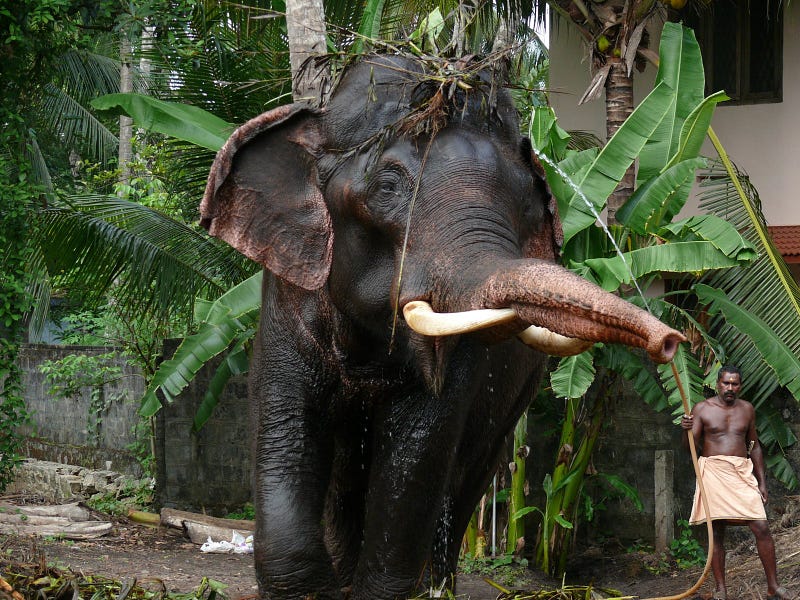
Elephant bath | Arun

He was a naughty and playful animal, at one end mahout was trying to wash him and make him shine jet black, at the other end he was picking up mud and shrubs and putting them all over his body. The friendly skirmishes between the elephant and his mahout were a fun thing to watch back then.

Festivals are fun-time. Elephants are decked up and caparisoned. Elephant is the epicentre of all festivities in Kerala. Rain or shine I don’t miss the festivals, just to see the beautiful elephants.
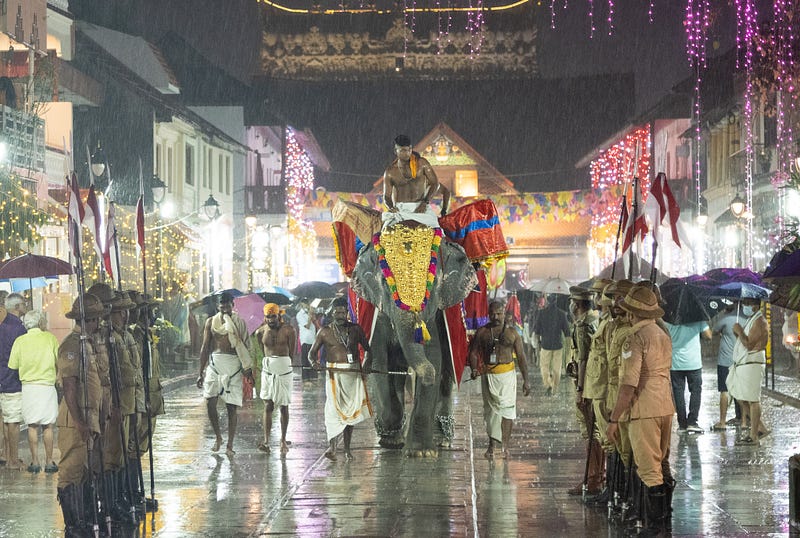
Elephant in festival | Arun

My tryst with elephants in the wild started only from the year 2013. Strutting through the forests in the Kerala-Karnataka border between Wayanad and Mysore, my tête-à-tête with the elephants in the wild started. I was thrilled to see them for the first time in their natural habitat. Those were still the days I had the basic point-and-shoot camera. As we were driving through, we heard a loud thud, a tree has fallen I thought. It was then our driver informed us that it could be an elephant pulling down a tree trunk. As we drove a few meters, there he was standing, a big tusker in all his glory, near the road. He stood unperturbed, with his body cloaked in mud and dust.

Tuskers in the wild stay and walk alone. He is a dangerous beast and can charge if he is in that mood. So cautiously we slipped out taking a few snaps.
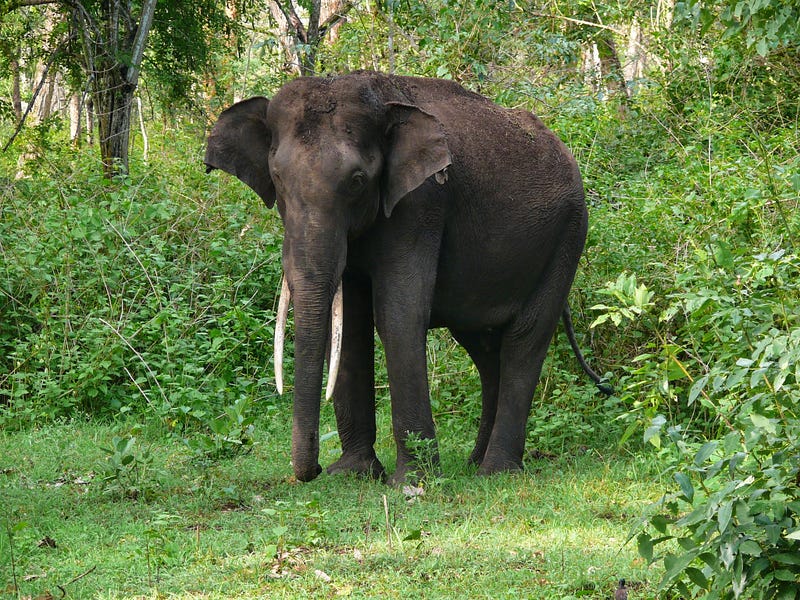
First wild elephant shot | Arun

Later in the day, we came across a herd of elephants, mamas, grandmas, aunts, and little ones. They were crossing a forest track. We were driving through a forest track. We heard loud rustling sounds nearby, it sounded like a herd of elephants were foraging, we were expecting the herd to emerge soon from the thickets, so we waited patiently for them to come out of the forest and cross the track. And our patience was rewarded.
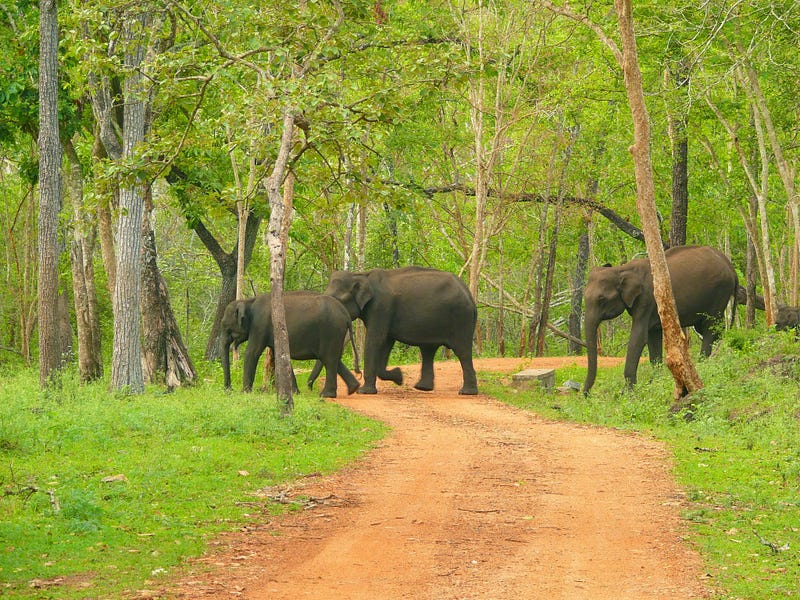
Elephant crossing | Arun

Poor tusker, big boy he can’t be part of any herd, he has to fend for himself, unless he is mating he has to roam alone, depression anyone for being a social outcast?

Later we saw the herd stop by a waterhole to quench their thirst. The babies were having fun splashing water and running in between their mama’s legs.
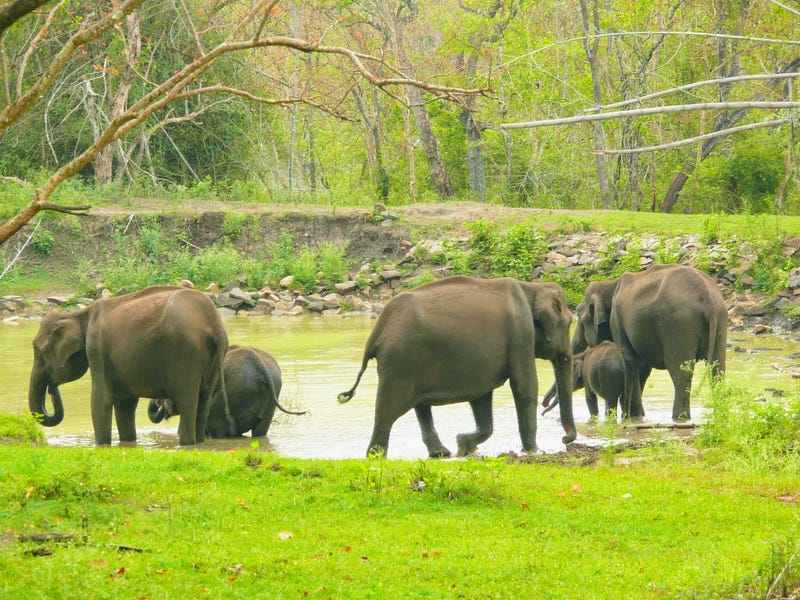
Elephant in waterhole | Arun

In the year 2020, again we went on a jungle safari through Nagarhole forests. There we saw two elephants a baby and his mother. The baby was handicapped, he seemed to have some problem with one of his hind legs. He was limping and walking slowly. This is a tiger country and such weak animals are easy prey for the tigers. We were worried for this fellow, but we can’t interfere here, his survival would be decided by the nature. With a tinge of worry, we had to leave him, hopefully, he is now grown up to be a big strong boy.
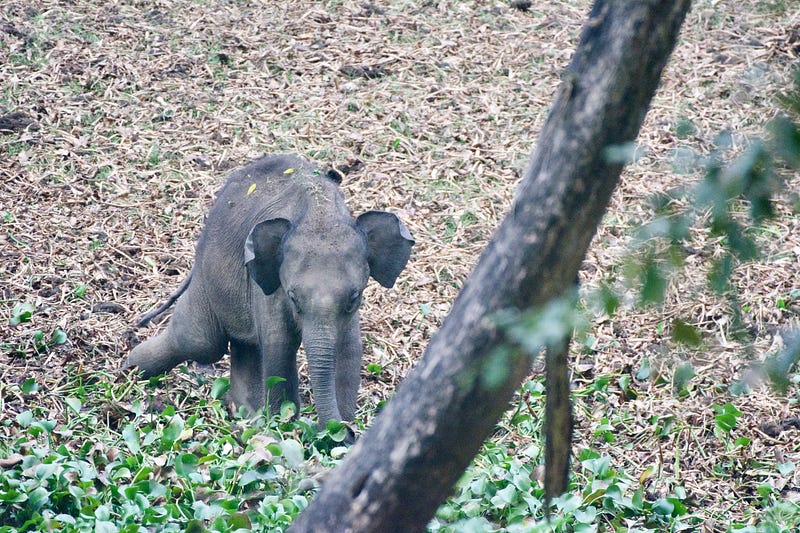
Baby with broken leg | Arun

One thing I always see is elephant mothers and the herd is so protective of their babies. The mamas are on their toes always making sure the baby doesn’t ward off far and dote the baby. The mama also makes sure the baby is well-fed and no intruder can come close to the baby.

Another observation I have made through my various sojourns through the forest is if we see a herd of elephants, it is safe to keep a distance and watch them. There is no reason to get panicky. Just take care of a few basic etiquettes — not crossing their path, not going near their babies, not disturbing them in any way, if we respect them and their space, they will allow us to watch them to our heart’s content.

Once in April, we were doing a safari in Rajaji National Park. It was the peak of summer, with the sun slanting harshly on us. The earth was bone dry and all small vegetation have keeled off. We saw a mama and a baby. With no grass and small shrubs sprouting on the ground, the baby had difficulty feeding himself. We saw that the mama was so caring and intelligent, she broke branches from tall trees and put them down for the calf to eat.
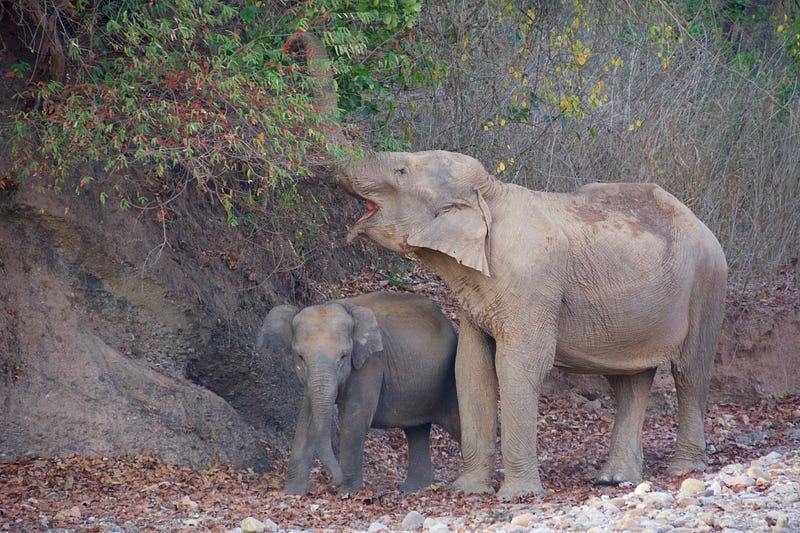
Mama pulling some branches down for the baby | Arun

Talking about the tuskers, during their musth period they can be extremely dangerous and can charge even without any provocation. As such the bull is a marauder and musth will make him a rogue. It is easy to identify if a bull is in musth. During musth, we can see a liquid flowing down the side of his forehead. In the same Rajaji park on the safari once we can across a tusker in musth. He was marching down with panache. We got stationed at a safe distance and saw him cross the road in some sort of rage. He didn’t care to look our side.
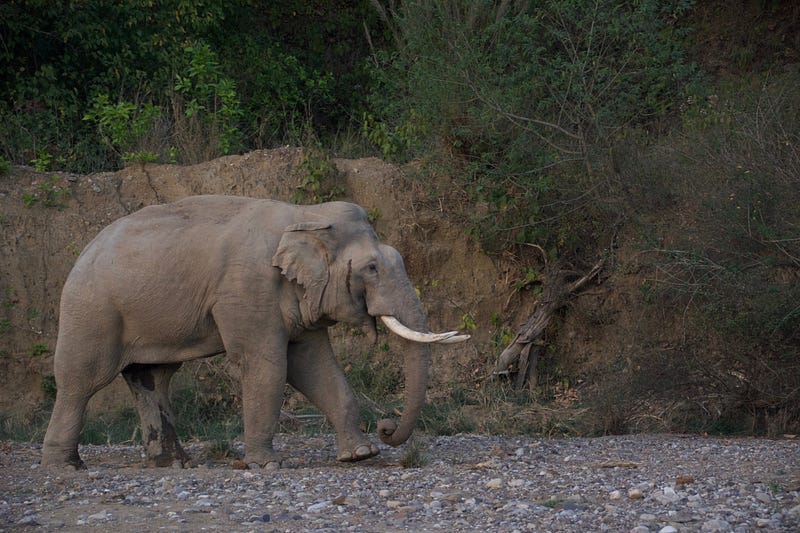
Musth Elephant | Arun

Elephants love water, splashing in the water, playing in the water, cooling off in the water and they want gazillion litres of water to quench their thirst. So waterholes are easy pickings to spot elephants in the forest. Their child-like traits come to the fore once they are in the water. We were a witness to their ebullient and effervescent side in full splendor when we were in Corbett National Park last summer.

They have friendly duels.
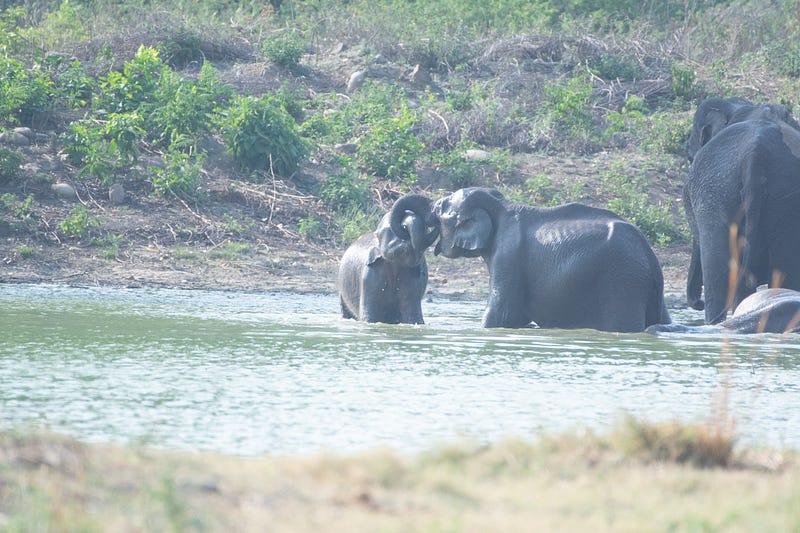
Friendly Duel | Arun

They cool off lying under the water for hours at stretch.
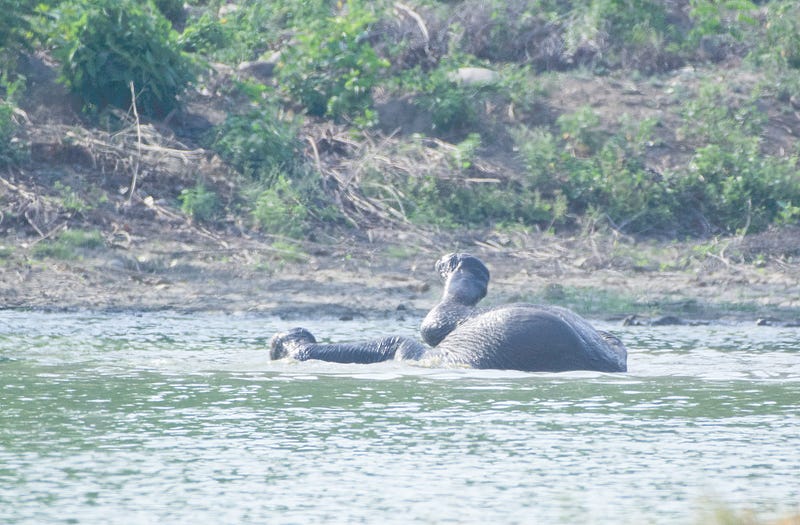
Cooling off | Arun

They splash and spray water all over the place.
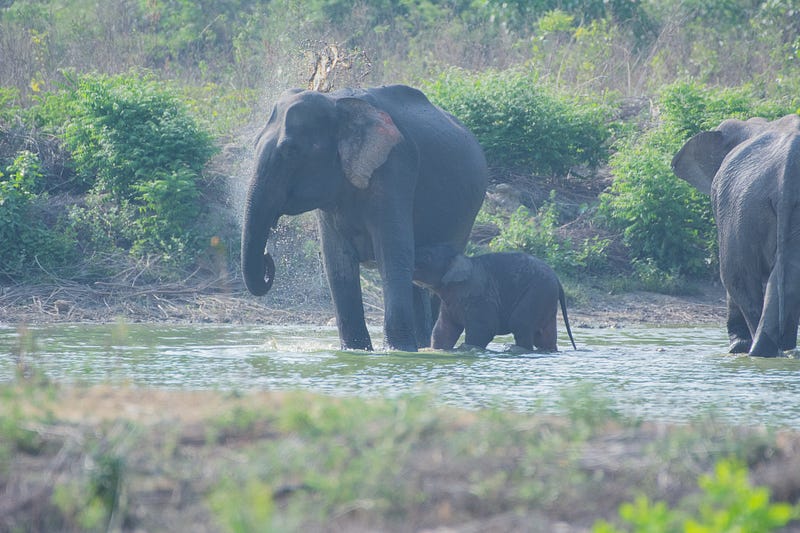
Spraying water | Arun

Then they decide to walk out completely drenched for foraying food and throwing dust on their body.
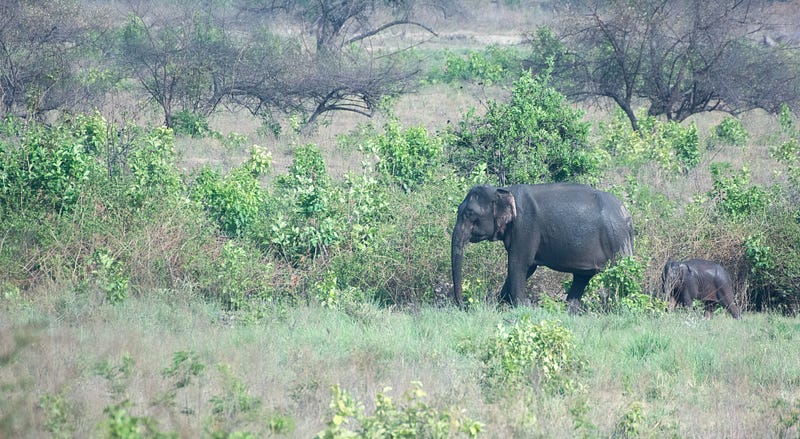
Walking out drenched | Arun

As I write this article, my thoughts get intertwined in so many elephant memories from my childhood days to today. I feel blessed to be in this land where these genteel beasts still walk around capturing our hearts and imagination.

They teach us many things — the most important thing I feel is putting their family first. For them their family is everything. They are close-knit, doting on each other, and roam around closely guarded. And they are willing to take charge, flirt with danger, and go to any extent to protect their family.
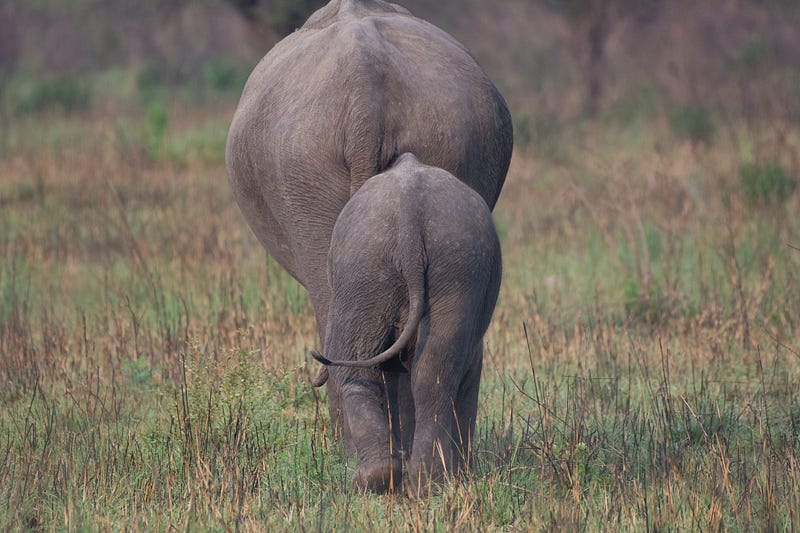
Like mother, like son | Arun

I chanced upon this brilliant article by Anne Bonfert on elephants which has been my inspiration to write this article. Thanks Anne Bonfert your travel tales are quite intriguing.

Travel References

Kerala https://www.keralatourism.org/ Guruvayoor Elephant Camp https://www.keralatourism.holiday/best-places/guruvayur/elephant-camp.php Wayanad Wildlife Sanctuary https://www.wayanadwildlifesanctuary.com/ Nagarhole National Park https://www.nagaraholetigerreserve.com/ Corbett National Park https://www.corbettnationalpark.in/ Rajaji National Park https://www.rajajinationalpark.co.in/

Elephants
Wildlife
Phtography
Nature
Adventure
Recommended from ReadMedium