
Truth, Honesty, And Respect: The Building Blocks Of A Life Well-Lived
Is honesty always the best policy? And does it really pay?
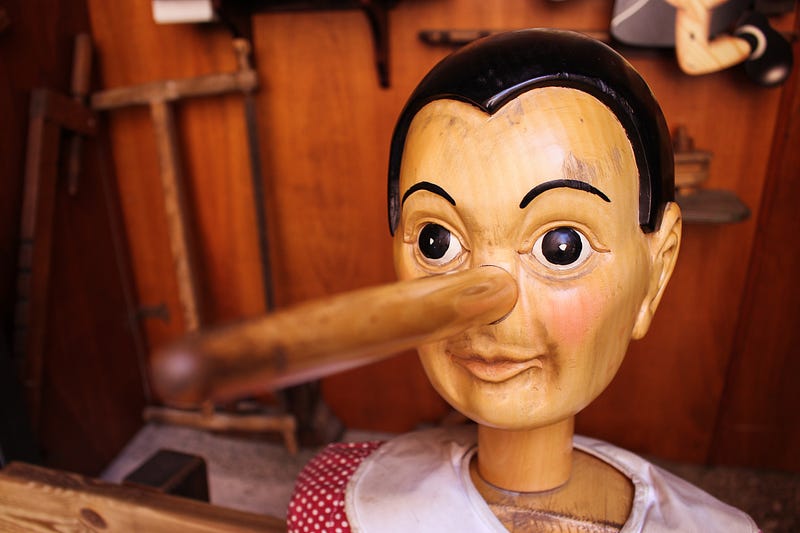
How much does honesty and truth mean to you?
If you believe you are honest, do your actions reflect your words?
Are you totally trustworthy…or careless with the truth? Could you bend the rules, or easily tweak your conscience, if the outcome were to your benefit?
Most people like to believe that they are totally honest, but is it always the case? The fact is, that telling the truth can often be painful. A little white lie, on the other hand…who’s to know?
And yet, caving in to the smallest of lies puts us at risk, at risk of ourselves in the first instance, but also at losing the friendship, and trust, of others.
The fact is, if we tell the truth, we never have to rely on having a good memory. The truth is the truth, and you know it.
But if you tell a lie, you will often find that you have to tell even more lies, in order to support the first, and these untruths have the habit of becoming more significant, over time.
Besides, often there are consequences of telling lies, and they can be grim.
Imagine, for instance, fabricating a situation in order to get a coveted prize. Think about that for a moment. The word coveted means something you very much want. Not only is it something you desire, in this case, but winning the said prize would put your societal position head and shoulders above everyone.
So now, the stakes are high! You’re in!
Let’s imagine if, to win the prize, you had to fudge the truth, just a little, to save face, either yours, or another person’s. To what extent would your conscience play after winning the prize, if you knew you had been less than honest?
In schools we often use parables to get a message across. In these stories, we find valuable life lessons, not just for children, but for adults too.
The following story is set in China. It’s simple, but it delivers. I have used several other fables on a similar theme, over the years. Each teaches a salutary lesson about the need for honesty.
Imagine you are a Chinese Emperor. You are growing old, but have not been blessed with children, and you worry. You are concerned about who might succeed you when you become too old to hold office, or if you die.
Plans must be set in place.
After much thought, you announce that you are seeking a suitable candidate. The candidates have to be young, reliable, and demonstrate above all, honesty and integrity.
To your surprise, many young, enthusiastic men make the journey to the palace, hoping that they might be chosen.
To everyone you give a pot, and in the pot is a seed. Your words are few, and deliberate.
“You each have a chance to succeed me as emperor, but for now, I would like you to go home, and tend to your seedling for one year. One year from now, we will meet again and I hope to see how well you have undertaken your task.’
With that the young men are dismissed. No further explanation was proffered.
As it happened, Ling, was one of the boys. He was keen to be in charge, and couldn’t wait to tend his plant and prove to the emperor that he would be fit for the job.
Each and every day, after arriving home, Ling diligently checked his pot and added water if need be.
There’s nothing like a bit of competition, and so, once a week, the children involved had decided they would get together to compare their plants.
After a few weeks, there were signs of life in all but Ling’s pot. He was so embarrassed.
In order to hasten the growth, he was tempted to water his seed every day, but his mother advised him not to do so, because too much water would be just as harmful as too little. She taught him how to sink his finger into the soil in order to decide if his seed needed water. If his finger was wet, there was no need, if dry, she told him to gently add some.
The weeks passed and Ling continued to water his pot when necessary, often wondering if his mother’s advice was a help, or a hindrance. But he trusted his mother, so stuck with her advice.
After a few months, the pots belonging to all the other boys really came to life. Some had trees starting to grow, some had flowers, and some had leafy shrubs.
Poor old Ling still had nothing growing in his pot, leading the other children to make fun of him.
Still, Ling stuck to his plan, tending to the pot each day and watering when necessary.
And all too soon, a year had passed and it was time to return to the palace.
Excitement was in the air. Who would become the heir elect?
There was no joy for Ling who was beside himself with shame. There was no way that the emperor would choose him. He didn’t want to go back to meet the emperor, but his mother urged him to do the right thing.
“You know,” she said. “The one thing that the emperor will credit you with, is honesty. You tried, and the seed did not grow. Tell him the truth. Remember what we believe. Integrity is important.”
With a heart heavier than lead, Ling entered the palace grounds. All around him were the other young men, their plants tall and impressive, or showy with flowers, whilst others bore strong green branches laden with tiny fruit.
The emperor came out to greet the young men and began his tour of the thousands of pots. He seemed so impressed, that is, until he arrived at Ling’s pot.
“My goodness me, young man…whatever have we here?”
All the young men laughed, but the emperor hushed them with a grave look, and eventually spoke…
“A year ago, I gave you all a seed. I told you to go away, plant the seed and return with your plant. The seeds that I gave you all were boiled until they were no longer viable and wouldn’t grow, but I see before me thousands of plants and only one barren pot. Integrity and courage are more important values for leadership than proud displays, so Ling here will be my heir.”
There was a thunderclap of silence.
The thing is, all of these young men had been willing to cheat in order to take over a role that demands above all other qualities, integrity.
One HUGE lesson learnt, one that none of the young men could ever forget!
This is only a fable of course, but it raises the question, why be honest? What is to be gained by integrity?
In the case of the young men, they were willing to do anything, anything at all to stand tall, and reliable, and rule as the emperor had done.
But to do this they had first to cripple their consciences. If they could lie and cheat in order to gain such responsibility, what else might they be capable of? They simply were not emperor material.
The fact is: ‘a dedication to honesty motivates us to strive to become all the good things lying helps us pretend we already are.’
Whenever we find ourselves finding reasons to lie, most of which we can validate, it ‘unmasks a character defect we then have the opportunity to change.’
So what can we do in our daily interactions with people? How can we, like Ling, stand proud?
Be the go-to person that others can rely on, when seeking the truth.
Be that person who admits they have done wrong, however painful that might be. Have the courage to admit you failed.
Be that person who is renowned for being tactful and honest when others seek the truth.
Be that person who is known, not for his flattery, but for his measured and honest response.
Be that person who naturally stands heads and shoulders above others in the most delicate of situations.
Be the LING of wherever you work, honest and reliable,and mindful of truth.
Perhaps you will be avoided by some who need their egos massaged, people who are not seekers of truth. but that is not your concern.
“Oh what a tangled web we weave, when first we practice to deceive.”
Telling the truth and making someone cry, is far better than telling a lie, which eases pain, but doesn’t solve a problem.


