
Trust, the Final Frontier
Get rid of all of your company values; I dare you.
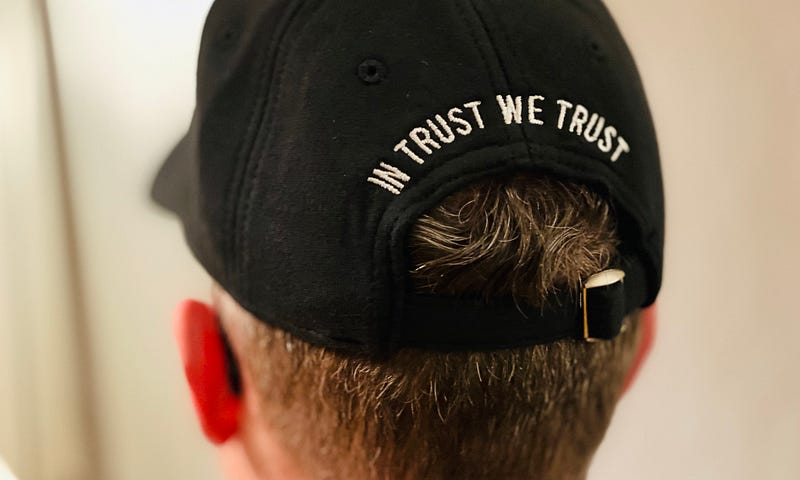
We have all been there; being a manager can be a pain in the neck. No matter how high in the corporate ladder you stand, no matter how you got there, through an MBA, or rising as part of natural professional evolution, no matter your readiness or experience, managing people remains a daily challenge you try to solve by following either a well-oiled corporate process, the latest HBR article, the newest HR trend backed up by various scholarly studies, or simply your guts. You shoot out plans, draw up visions, slap values on mugs and posters, communicate, communicate, communicate, hope for the best, and prepare for the worst. And it doesn’t ever seem to work as well as you expect.
But what if it could all be solved with a single, outrageously simple idea? A principle that trumps all others? What if I could tell you that this is not pure theory, that I had the rare opportunity to experience this firsthand?
Let me tell you a story
I will distinctly remember this particular cold, foggy December morning for years to come. Powerlessness, sadness, and confusion ruled over me as I sat in shock in front of my computer in solitary covid-induced confinement, discovering how a few words could create a whirlwind of emotions while leaving me simultaneously empty.
(I know, this all sounds like I’m describing a romantic breakup or the grieving of a loved one. Rest assured: the story I want to tell is purely business-related.)
“The necessary organization changes in the future have led to the occasion for me to step aside and explore new professional challenges.”
Thus did our CEO announce, in an all-hands online meeting, that he was leaving the company. As CTO and part of his Management Team, I had known in advance the content of his message. But hearing it voiced to the whole company made it unequivocally real and definitive. Seeing the shock and disbelief spreading across faces on the screen, an outsider would have stared at us in wonder, and rightfully so: why would an entire company be wavering as one, with such emotion and uneasiness, just because its top manager was leaving? After all, CEOs are let go or quit on their own terms every day; teams don’t usually respond emotionally.
However, my colleagues and I reacted openly: our story had abruptly reached the end of an exceptional chapter, and we all had grasped the impact the news would have on the next.
What does all of this have to do with the title of this article, you may ask?
It has everything to do with the personality of said CEO and how he profoundly transformed our company with a single, simple idea: trust.
I want to work for this guy!
I met the man four years ago during the first of the six job interviews I faced becoming the next CTO of Belgium’s #1 Real Estate website. There were supposed to be three of us in that first meeting, a setup I rarely welcome as a candidate. Still, being fashionably late, the third party offered me the opportunity of a twenty-minute tête-à-tête with the newly appointed CEO.
I knew nothing of that forty-something man, nor did I know anything about the company. He did tell me about his career, the path that led him to accept this new position, and his view on the bright future he wanted to build. Even though the guy displayed an undeniable charisma, I felt things shifting when the interview became a real conversation. I felt a connection, a certain sense of alignment, and the conviction that he was genuinely interested in my opinion. Not in a “let me ask you some trick questions to see if you agree with my vision” way. More in a “this guy knows stuff I don’t; it may be worthwhile to hear what he has to say” kinda way. Not only interested, but I felt he was also trusting me, something I had not felt in a long while. I was sold: I wanted to work for him.
He hired me, a self-taught geek with a Theatre background, over some Engineer with all the right diplomas. He gave me “carte blanche” to rebuild a modern, flexible IT platform from the ground up and deliver the best experience to our users and customers.
Right there was another show of trust: in my abilities to lead the transformation that loomed ahead, in the alignments of our beliefs that people mattered, and in his unwavering conviction that we could write that story together.
How about rebooting the company too?
Moving away from a legacy IT platform was not the only item on his agenda: we were to reinvent how the company operated. He wanted us to develop the talents he felt were underexploited and bring more autonomy to the teams. They were, he thought, the key to an innovative future.
And there again, trust turned out to be his main driver, so much so that it became our sole company value.
In my previous jobs, I had experienced a myriad of so-called “company values”; they often seemed disconnected from us and soon felt like empty promises to recruits that faded away as the reality of corporate life kicked in.
Trust, however, seemed to be rather simple for everyone to understand and connect with. It even came with a formula! Our version read:
Trust = (Competence * Reliability * Intimacy) / Stakes
It would help us easily measure our trust level in a person, project, team, or process.
Now, announcing Trust as our only value didn’t magically push everyone to jump on the bandwagon and embrace it blindly. It meant that we, as Management Team, had to lead the way and show that we were willing to review our decision-making process.
How it impacted me
As CTO, it meant I needed to change the way we approached procurement, recruitment, technology and architecture, training, tools, team organization, pretty much every single aspect of how my department ran. The level of autonomy given to my colleagues would be determined using the Trust formula, involving them in the process and revising it over time, when any variable’s value would change.
Let me pick a few examples of how things changed.
- Recruiting someone in IT now requires a technical interview with the Team Lead, an interview with the candidates’ future colleagues, one with our HR officer, and one last with yours truly. If any of these four interviews is not a big “Yes,” the candidate is not recruited. My voice has no more weight than anybody else’s.
- My teammates now have access to various online training platforms that allow them to follow specific courses along training paths and any they see fit or find interesting. No question asked.
- A task force refactored our Incident Management Process through a series of cross-team workshops before the Management Team validated it.
These specific examples only show how the existing process changed. It doesn’t stop there.
Added bonus
The beauty of showing the teams you trust them to make the right decisions — while limiting the risks by stating clearly the frame (thanks again to the formula) — is that you get to witness amazing side effects.
- You give room for new product features and innovations.
- Unexpected initiatives bloom by themselves: subjects like User Research, Privacy, Accessibility, Inclusion, and Corporate Responsibility took a life of their own, carried by people who came to us with full, carefully planned projects.
- People do not fear to fail anymore and are, therefore, willing to reach out of their comfort zone. Solutions are more creative; new careers are born. Some employees who were previously planning to leave the company evolved into new, fulfilling roles.
Training ourselves, and therefore raising our level of Competence, providing our users and customers with a more Reliable rebuilt platform, giving them more transparency and drastically reducing the number of issues they faced in the past while using it, thus limiting the Risk, also helped us raising Trust to a new level with them.
Granted, not everything was peaches and roses along the way. Some recruitment choices proved to be wrong, and we felt like we had let the wolves in. Sometimes even the best recruits didn’t adjust well to their new surroundings. Coming from more top-down, controlled cultures, they required time to fully grasp how different our company was.
Sometimes, when facing higher stakes, we, as managers, would slip back into our old ways, bringing back top pressure and an over-controlling attitude into the mix. But the teams were quick to point it out and to help us review our processes, raising either Intimacy or Reliability and therefore restoring Trust (that formula, again!)
Convinced yet?
Four years after my guts told me to trust the guy sitting across from me, I now can vouch that once you get the ball rolling, once everyone understands the benefits, there is no stopping how far, how deep trust will change an organization. This now is a proven fact.
So get rid of your faded company values right now, I dare you. And embrace trust. You will not regret it.
Some people say that a manager is only as good as his teams. I say teams can only be as good as their leader lets them be. This is probably why the whole company felt this sense of loss when discovering said leader would be leaving soon. Wouldn’t you?
Allow me to end this article by sending a personal message to the man who, after four years, is no longer my boss:
Change is not always a comfortable, controlled, or fair process. It sometimes has nothing to do with your accomplishments, your victories, and the way you changed the world you inherited.
Change may even require the story to be rewritten after you. But whatever the revised version may say, it cannot erase the profound impact you have on people’s lives when you stick to your core values, especially when they are the right ones.


