
Alaska Salmon Rivers Need Federal Protection From A Toxic Mega-Mine Proposal
By Carl Safina and Joel Reynolds
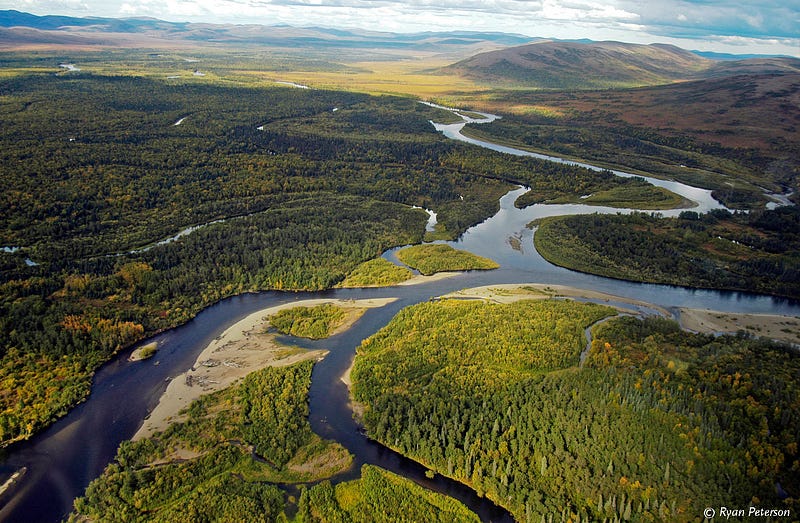
When you see it you realize, it’s not a small place. Forty thousand square miles. A broad tableau of emerald bogs and evergreen forests, the watershed tilting toward Alaska’s Bristol Bay shimmers with rivers and feeder streams whose waters reflect sky and clouds, all rimmed by distant mountains. In those glistening arteries, miracles happen. This system generates and sustains the largest remaining salmon fishery on Earth.
In the most important land-use decision in North America in our time, an essentially eternal supply of food has been pitted against an essentially eternal supply of poison: The Pebble Mine project — a huge open-pit copper, gold, and molybdenum mining operation, proposed for the Bristol Bay region. Execution of such a project would be consistent with the previous administration’s blasé attitude toward toxic contamination and environmental exploitation. However, it has no place in a world committed to ecological protection and remediation, a world working to safeguarding the health and wellbeing of people and wildlife — the world we should want and actively work to create.
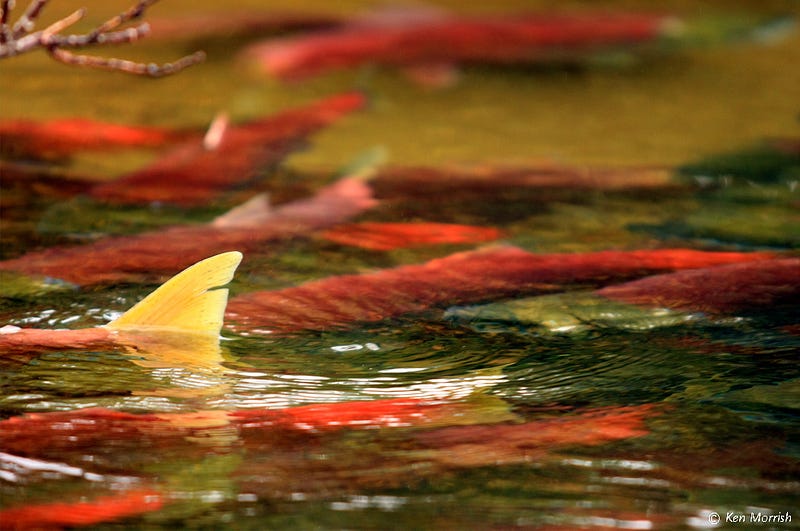
The Bristol Bay watershed now generates a tenth of all wild salmon and fully half the world’s sockeye salmon. Five species: the sweet, scarlet sockeyes; hard-charging kings; silver coho; humpbacked pinks; stolid chums. And much more, because Bristol Bay salmon knit together a vast land- and seascape whose value portfolio is scarcely hinted at by the phrase “half the world’s wild sockeye.”
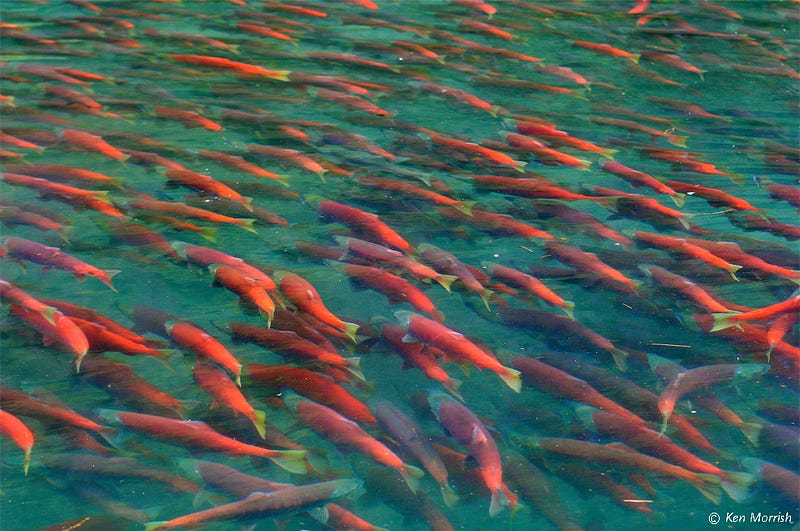
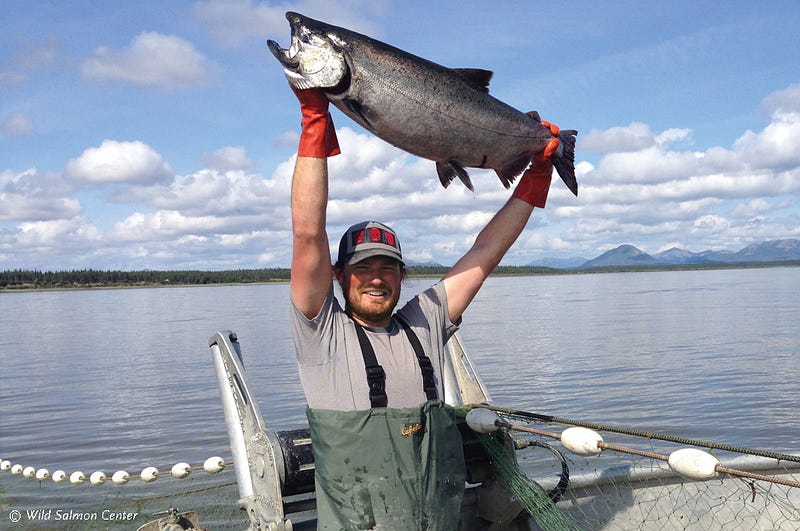
Over sixty three million wild salmon surged into Bristol Bay in 2021, breaking the record previously set in 2018, converging from a thousand miles distant, driven instinctively toward faintly remembered scents of the region’s many rivers. Twice in 2017, fishermen caught over one million fish in a day. Records were shattered. Several overloaded boats actually sank. The fish support 14,000 jobs and annually generate $1.5 billion. Some of them land right on our tables.
Every year, all of this just happens. No one puts anything in. It’s there for the taking, and could last another few thousand years. Nowhere else in the modern world does the landscape grant so much food, such riches, harmlessly beautiful. With such eternal grace.
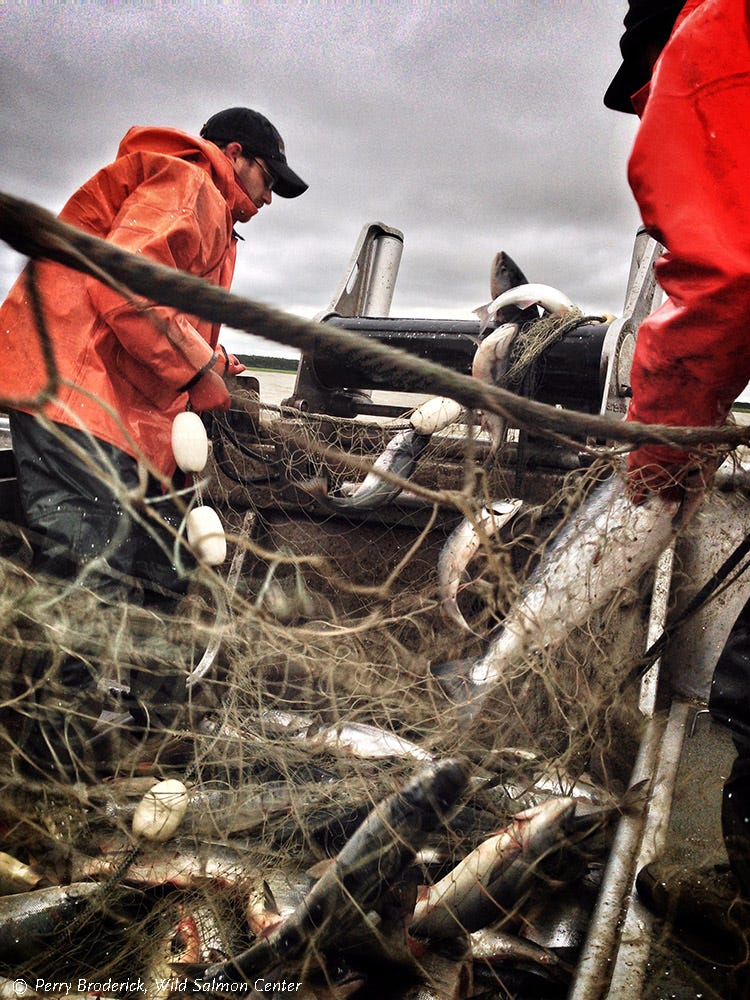
You’d think everyone would realize this place is sacred. For Native people it literally is. For other fishermen, their families and communities, it’s simply the greatest place in the world.
And when you understand all that, you realize — it’s really not a big place at all. It’s vulnerable. But all that’s needed is to not destroy it.
Enter: those who would. A Canadian mining company called Northern Dynasty Minerals has for more than a decade planned to gouge a gigantic open-pit gold and copper mine into the headwaters of the region, where the rain first begins to conjure its salmon-making magic. This mining project would essentially put the rivers on a centuries-long poison drip, one that would far outlast the mining activities. Left as is, the rivers, the salmon, the fishing, and the food would far outlast the mining.
Thus the Pebble Mine project is a death-wish. That’s why 65 percent of Alaskans oppose it, why recreational fishermen and tourist lodges detest it, why the region’s largest native development corporation refuses it, and why commercial fishing communities’ opposition is near-total and dead-set.
Now, this monster of a development appears seriously wounded. In a reversal of the Trump Administration’s previous work to expedite the project, the US Army Corps of Engineers denied the most recent permit in late 2020. The Biden administration and several Congressional Democrats have stated opposition to the project. Despite years of detailed study, peer-reviewed science, and public comment concluding with the determination that the mine’s billions of tons of toxic-contaminated waste could not be reliably contained; that the risks to seafood safety and salmon populations were “catastrophic”; that the generative value of the watershed exceeded the value of the mines that would destroy it.
The fight isn’t over, but with the strong and diverse coalition of individuals and communities — including Alaska natives, nonprofit organizations, and government representatives — working against the mine, accompanied by a more conservation-minded president, there is hope — hope of a permanent federal protection for this area.
Salmon perform a surpassing alchemy, gathering and changing the thin nutrients of the ocean into delicious red flesh and then delivering themselves to us. Those that get past the nets bring the nourishment of the sea uphill against gravity to feed eagles and bears and to fertilize the forests that shade the streams that make more salmon that support communities who feed us.
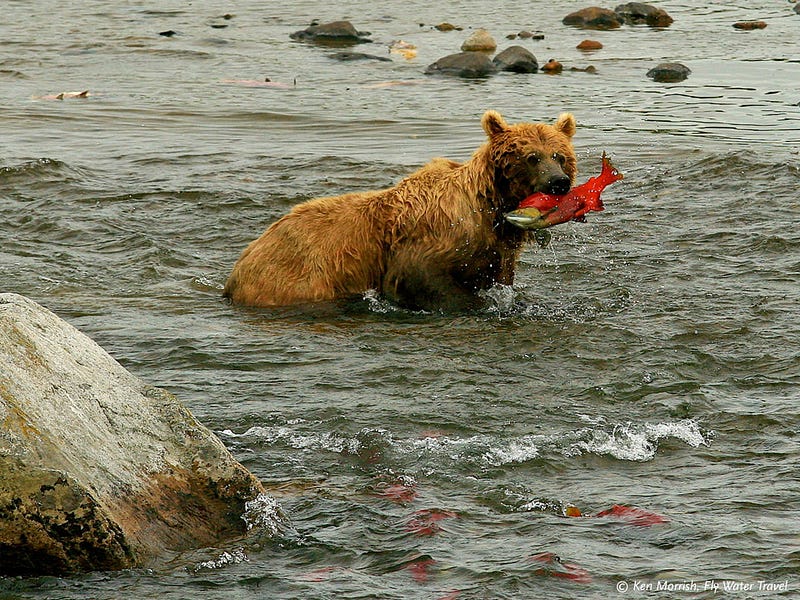
Salmon offer us their resilience, but warn us of their fragility. Salmon live most of their lives as oceanic animals hundreds of miles from coastlines, but each generation depends on clean rivers in unspoiled landscapes. Having learned to exploit the sea, they still shelter their young from the dangers of the open ocean by hiding them in rivers. This winning strategy, we have turned into their Achilles’ Heel.
In the last century, we destroyed the largest salmon complex in the world, the Columbia River system. And today dams, warming, logging, and polluted runoff are continuing to kill and debilitate salmon from the south, northward. British Columbia’s salmon farms idiotically breed Atlantic salmon that infest young native salmon with lethal parasites. The resident killer whales of the Pacific Northwest, too, are starving because of salmon destruction.
All that has been lost to the south remains fully functioning in the Bristol Bay watershed. Another reason to protect this sacred space.
Our responsibility to Alaskans and to Life on Earth requires us to kill the mine project and federally protect Bristol Bay, the rivers, and the salmon, un-ruined. Too much is at stake, economically, socially, culturally, and ecologically for any other outcome.
Carl Safina is Endowed Professor for Nature and Humanity at Stony Brook University. Joel Reynolds is western director and senior attorneyat Natural Resources Defense Council.


