
Songstories
True Story Behind the Song “The Lion Sleeps Tonight”
moments in rock history
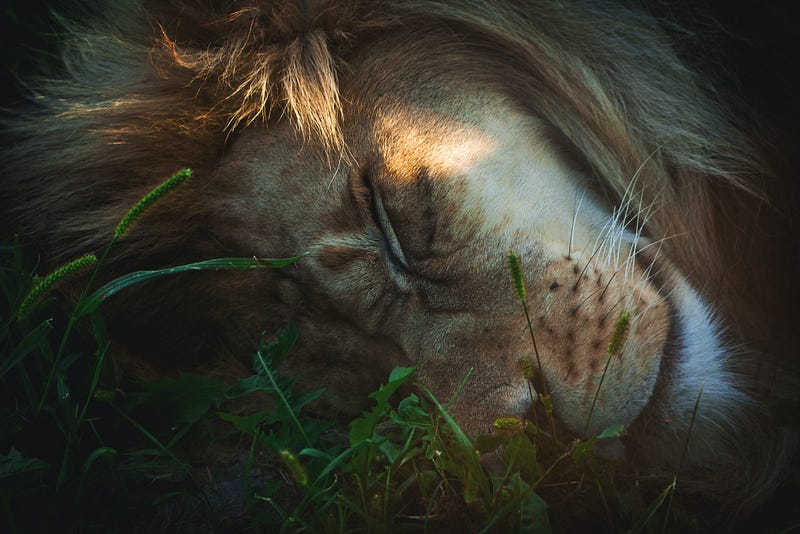
Historic stories wrap around my experience with the song “The Lion Sleeps Tonight.”
In 1994, I was the manager of the first American musician to be invited to tour the new post-apartheid South Africa.
The artist was Shawn Phillips an enigmatic and unknown artist in most of the world. But like the other American singer/songwriter “Sugarman” had become an iconic inspiration for the 70s South African civil rights movement.
Want to celebrate the birth of a new nation?” David Marks asked. “I want to invite you to a five-year-old South African music festival called Splashy Fen. Its purpose was to bring together all peoples through music.”
“As you know, South Africa is about to end apartheid,” he continued.
“Our first free and democratic elections take place on April 27, 1994. With those who supported the struggle against apartheid. We want to celebrate the occasion. You will be the first since the ’70s cultural embargo, to enjoy the first major music and culture happening in the new South Africa. What better way to celebrate the birth of a new nation and the death of apartheid?”
I learned Phillips was triple platinum (50,000 records sold per award) seller in the country. That was a lot of records in a market of only nine million white people. The ones who were most likely able to afford to buy American records.
Besides the history of Nelson Mandela, South Africa, Sugarman, Paul Simon’s Grammy-winning album “Graceland” and “The Lion Sleeps Tonight” there was a lot to learn.
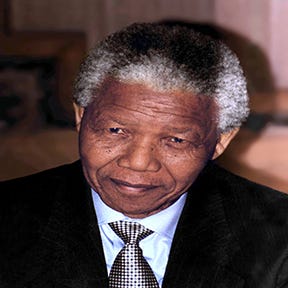
Booked on Phillips tour I would get to see the 5x Grammy-winning acapella group Ladysmith Black Mambazo live.
April 26, 1994
JOHANNESBURG
Eight bombs exploded around South Africa.
Including one at a crowded taxi stand in Germiston, South Africa, killing 10 and injuring 36. 150 pounds of TNT took the lives of nine innocent people. In the largest bomb outside the Monte Carlo Hotel on Bree Street in Central Johannesburg.
I was having second thoughts, “A rock ’n’ roll tour in South Africa?”
During the long flight from New York, I read Nelson Mandela’s autobiography “Long Walk to Freedom.” I put the book down and wondered. How did Phillips music play a role in the dangerous rebellion to free a country of racism?
April 27, 1994
We met Theo Coetzee, our tour promoter at his home in Randburg, a suburb of Johannesburg. Like all suburbs in “Jo’Burg,” it was white only and guarded by private security and electrical razor wire.
Shop windows were covered by security bars and no business stayed open past dark. It felt like living in a state of paranoia.
The tour was the answer to a lifelong dream for Theo. He was an avid, anti-apartheid rebel. Theo wanted to celebrate. Whereas other whites were booking the first flight out of the country.
While South Africa prepared for the mother of elections, Theo was organizing a tour for an international artist.
Despite reports that travel by car was not recommended. We packed for our 500-mile journey. Our destination was the music festival called “Splashy Fen.” In the heart of Zulu country, Kwa-Zulu Natal. According to Marks the first open culture festival of its kind.
We passed a voting hall where thousands of Afrikaner, British, Zulu, Ndebele, Venda, Xhosa, and Indian people were waiting to vote. Speaking 11 languages they laughed and cried together for the first time in history.
Mandela supporters ran up and down the street. They waved yellow-green-and-black flags into the air, shouting, “Tata,” (Father).
The police rested nearby against a footlocker filled with machine guns.
Breaking all bets of an impending civil war. Jo’Burg was peaceful on the first day of the elections.
“The reason apartheid is ending. Is because the South African rugby team got beaten to a pulp by the worst team in the league,” Theo chuckled. “Unable to sign new players because of international sanctions. To save their rugby team from further humiliation. The government had no choice other than to abolish apartheid.”
The highway to our destination in Natal Province was cluttered with armored convoys. We encountered many security stops along the way. The police wanted to know what was in Phillips music cases.
April 28, 1994
11 hours later, the road climbed into the fog-clasped Drakensburg Mountains.
Darkness, weaving roads, rain, and cattle slowed our journey further. Hours behind schedule, we reached a hand-painted sign, Splashy Fen — 15k.
The next morning I stepped outside our cottage and exhaled, was I here? I looked out to the highest peak in the Southern Drakensburg Mountains of Kwa Zulu, Natal — Dragons Head,10,000 feet above sea level.
The storm brought days of rain that mixed with the cold mountain air. Below Dragons Head, 5,000 mixed-race, barefoot, soaked-to-the-bone, graying flower children camped.
Their tent doors flapped like Mandela’s green flags in the freezing drizzle.
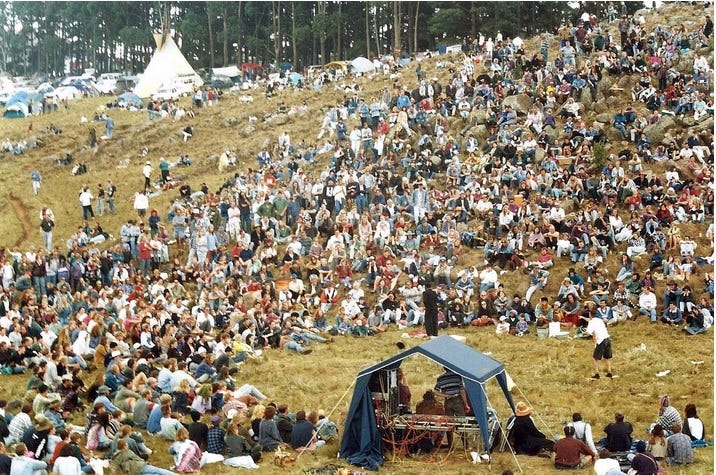
The moment I had long waited for.
Ladysmith Black Mambazo took the stage. Their voices were deeper than a South African gold mine. It filled the music tent with the authentic, chain-gang gospel. The male choir sang the original “The Lion Sleeps Tonight,” by Solomon Linda (1939) in Zulu.
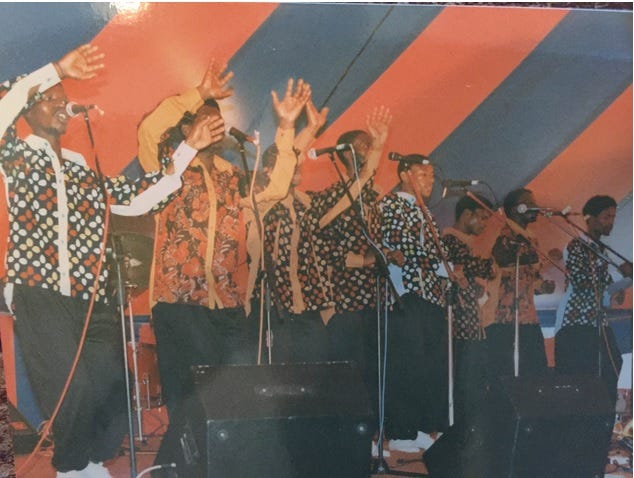
As the crowd saluted the group as heroes it dawned on me how little I knew about the song. The song I heard a million times on the radio, on TV, and in movies.
“The Lion Sleeps Tonight” is a song written and recorded by the South African artist, Solomon Linda in 1939. The song was covered by many artists including The Weavers and featured in the Disney film “The Lion King” without crediting Solomon.
The most well-known version is The Tokens.
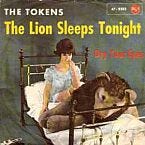
The song charted #1 USA and #11 UK
The song was a hunting song originally sung in Zulu in what is now Swaziland, the original title was “Mbube,” which means lion.
Festival Photos
I talked with David Marks about what happened to the South African music business. “I called the American record distributor about the royalties on my hit song “Master Jack.” The publisher called me a racist and hung up,” Marks told me.
Because of apartheid politics, missing record company royalties would become a worldwide scandal. Many were not paid including Sugarman, Shawn Phillips, Marks, and Solomon Linda.
My grandmother taught me to throw harmonies like bones: both tell the future. — Zulu musician
Every tribe has its record of dreams. Ours is the praise song. — Xhosa percussionist
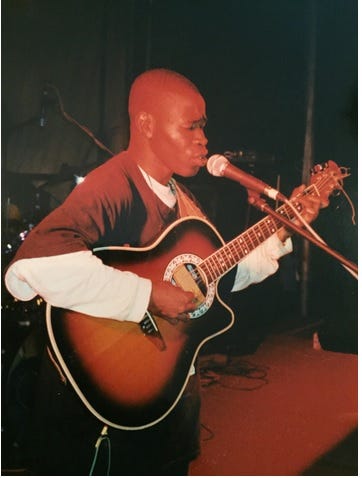
The first cultural event of the new South Africa was lekker cracker, (super good) Afrikaans. Hundreds of musicians performed every type of music imaginable.
Over 5,000 South Africans celebrated together.
The music of South Africa found its long-overdue place on the world music charts. Much of its music history, the role music played in ending apartheid, was not documented.
David Marks founded the Hidden Years Archive Project. The largest audio library of indie and indigenous South African music in the country. Consisting of 50 years of anti-apartheid-era music history.
I returned home to America convinced — more than ever — music could change the world.
For more information on this fascinating story please read the LA Times article about the Lion Sleeps Tonight Netflix documentary.
