
‘True Detective’ S4 E6
Our time in Ennis comes to an end.
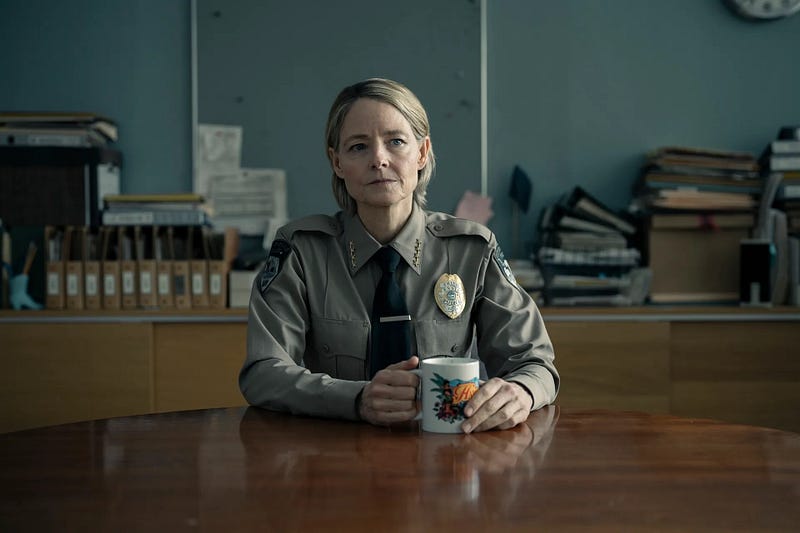
In the final episode of True Detective season four, Danvers (Jodie Foster) and Navarro (Kali Reis) uncover the mysteries about the death of Annie K and the Tsalal scientists.
This episode is indicative of the season as a whole: nice ideas that aren’t always executed as well as they could have been.
One of my biggest complaints about this season of True Detective is that it has felt disjointed throughout. The show will cut from concept to concept, character to character, in ways that have felt consistently strange to me. Ideas and themes are brought up in one episode and then not mentioned again. And concepts connecting this to the first season of True Detective are shoe-horned in randomly but have little to do with the actual plot.
While this finale does wrap up some of the major storylines like revealing what happened to Annie K (Nivi Pedersen) and the Tsalal scientists. But other things are left pretty ambiguous, some of which I think are fine and other things that really bothered me.
One of my biggest questions is about the polar bear that we’ve seen throughout the show. The stuffed polar bear, the real(?) polar bear, and Annie K all had an injury on their eye, and there’s no connection made between the three. There’s such an emphasis on this polar bear, and it’s not acknowledged in this episode, except for the stuffed bear that mysteriously shows up toward the end.
Throughout the season, we’ve seen glimpses into Danvers’ tragic backstory. We know that she lost her son in some way and is dealing with a great deal of grief and tragedy. But this episode doesn’t shed much more light on it. We don’t walk away from this episode with significantly more information than we had going in.
I suppose an argument could be made that the details of what happened to Danvers aren’t as important as her character development. In this episode, we finally see her open up and be vulnerable with Navarro — a side of Danvers that we hadn’t seen before this point.
This leads me to my biggest complaint about this season finale — the way the character development was handled. In order to talk about this, I will spoil some things, so if you haven’t yet watched this episode, please don’t read on.

Because I had watched season one of True Detective, I was primed for this season to be a character study. In some ways, the fourth season lives up to that, and in other ways, it falls incredibly short.
True Detective: Night Country does a great job of exploring who Navarro is. We get to know her: the good, the bad, and the ugly. We get to walk through tragedy with her and watch her mourn. We also get to see moments of real joy that she experiences.
In the finale, she finally learns her Indigenous name. This had been a source of real pain for her as she felt like she was missing a part of who she is. But in this episode, she gets that piece of information. She starts to heal a little bit. She begins to experience some peace in the midst of immense grief.
This is beautiful! I think there are ways the other episodes could’ve set this plot point up more effectively, but, on the whole, I love that Navarro had that important and character-defining moment.
But I think that Night Country flounders a bit with the other characters.
Peter (Finn Bennett) is largely forgotten about in the season finale, which is a shame given the dramatic events of the previous episode. We have a couple of good moments with him and Rose (Fiona Shaw) and a moment to reconnect with Kayla (Anna Lambe), but that’s about it. Peter is then included in a montage where we’re to believe that he’s gone on to live a somewhat okay life after the tragic events he’s endured.
I wish we could’ve seen more of Peter’s struggle as he’s grappling with a series of incredibly difficult circumstances. I wanted to see some sort of growth and Peter being able to stand up to Danvers, choosing his family over her. But it seems like the show ran out of time to really explore this character.
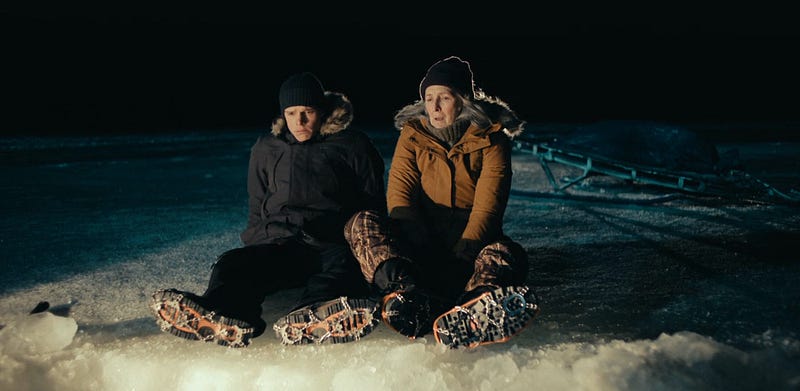
My biggest gripe about the finale of True Detective: Night Country is that Danvers’ character change felt completely unearned. Granted, I fully believe that a near-death experience can change you in incredible ways, but that felt like a cheap explanation.
For the entire season, Danvers has been the literal worst, and by the end of the finale, she seems like a mildly pleasant person. All of her interpersonal problems seem to have been solved.
One of Danvers’ biggest conflicts throughout the season is with her stepdaughter Leah (Isabella LaBlanc), who wants to embrace her Indigenous heritage. Danvers is completely against this and reacts in really harmful ways throughout the season. But, by the end of the finale, Danvers and Leah have reconciled, and their relationship seems to be better than ever.
While I’m happy for them, I struggle to believe that. There are some significant differences in perspective that these two hold. I don’t think that one dunk in the ice will change all of that.
It also would’ve been so valuable to see Danvers grappling with her own racism and choosing to let go of that. But we see none of that. In a day and age when racism is very alive and well, it would’ve been helpful to see a character recognize this harmful and insidious ideology and choose a better way.
In my humble opinion, a feel-good moment is no replacement for solid character development.
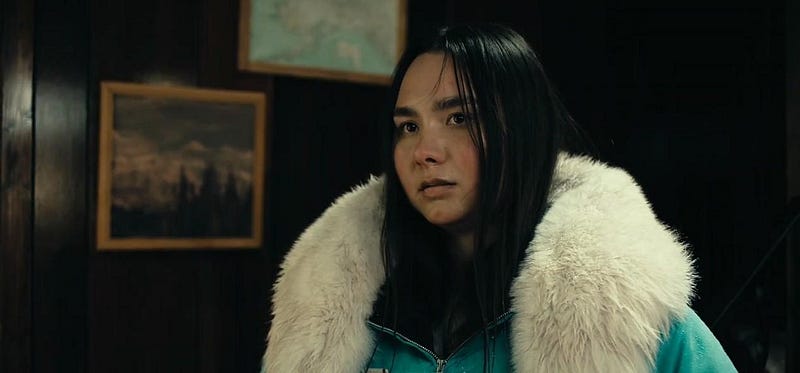
True Detective: Night Country has good elements to it. I particularly love it when the season focuses on the town of Ennis and the people who live there. Centering the lives and struggles of Indigenous people is so important, and I’m glad we get these glimpses into their world.
I just wish that the show was better written. This could’ve been one of the best shows of the year, but it doesn’t quite stick the landing.
Listen to our review of True Detective Season Four wherever you get your podcasts!
Looking for movie reviews? Check out Movies & Us, a weekly gathering place filled with conversations about movies, stories, and connection!
If you want more stories like this, consider becoming a Medium member. You will get access to more awesome content from me, along with stories from thousands of other writers. Use my link and I’ll receive a small commission — you know you want to!