
Troubled Brexit Talks Handed a Lifeline
With Brexit discussions falling apart, a change of tone has sparked new life into the talks.
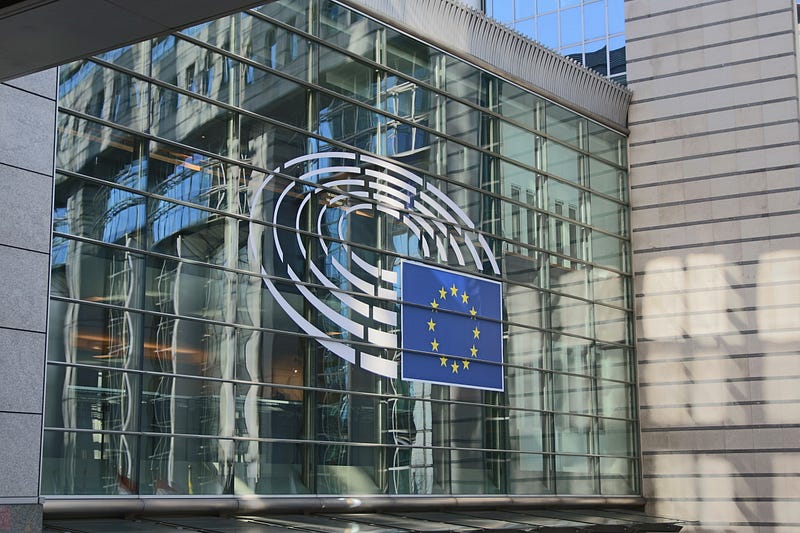
With time running out for the European Union and Britain to reach a post-Brexit deal, it had looked as if talks were over for good. Just ten days ago, both sides had seemingly walked away from the negotiating table — with UK Prime Minister Boris Johnson announcing that there was “no point” in continuing talks and that the UK needed to “get ready” to leave without a deal. But a week is a long time in politics, and now it seems that Brexit negotiations have been handed a lifeline.
This week, the UK government announced that it is “ready to welcome the EU team to London to resume negotiations”, as trade talks are set to continue between the two parties. The U-turn comes after the EU’s chief negotiator, Michel Barnier, addressed the European Parliament last week and acknowledged some of Britain’s key concerns — a move which appears to have broken the deadlock.
With a deadline fast approaching, discussions have now entered a more intense phase, with both sides looking to iron out any remaining points of contention. But given the fraught nature of the talks so far, that may well prove easier said than done.
Last Minute Concessions
Despite the tough rhetoric and the mini-walkout seen earlier in the month, it was Michel Barnier’s conciliatory tone that brought both parties back to the negotiating table. One of Britain’s key concerns was that the talks had not progressed rapidly enough, with Mr Barnier acknowledging that discussions needed to intensify. He said that the EU will work “night and day” to agree a deal, as negotiations enter their most focused stage to date.
Mr Barnier also addressed two other issues that had left the UK worried — sovereignty and trade. Speaking to the European Parliament, Barnier told the his colleagues that Britain’s worry over sovereignty was a “legitimate concern”. The UK government has long accused Brussels of trying to keep it tied to EU regulations and rules even after it had left the bloc, which had made it difficult to find common ground between the two parties.
In an attempt to allay British fears, Mr Barnier declared that fair competition in trade between the EU and the UK could be “fully compatible” with Britain’s demand for sovereignty. Whilst Brussels will undoubtedly expect further compromises by the UK, the tone appeared to acknowledge Britain’s perspective on some of the key sticking points. German Chancellor Angela Merkel seemed to mimic this sentiment, saying that “both sides have to take a step in the direction of the other party” to ensure a deal is made.
Discussions will now move to their most intense phase, as both sides look to iron out the final details of a post-Brexit trade deal away from the media spotlight.
Breaking the Deadlock
The stalemate between Brussels and London has revolved around three key issues — regulations, fishing and governance. For a deal to be brokered over the next few weeks, it is these areas that discussions will focus on.
When it comes to any future regulations put in place by Britain, the EU are keen to ensure a level playing field is maintained. Fundamentally, the EU wishes to ensure that Britain aligns itself closely to European regulatory standards on issues such as state aid, subsidies, workers’ rights and environmental regulations. This is because Brussels wishes to prevent the UK from heavily deregulating certain industries after Brexit, giving Britain a competitive advantage over its European neighbours.
Fishing has also proved to be a difficult sticking point. The EU has demanded that Britain allow its fisherman access to UK waters, with Brussels highlighting that continental ships have fished off of British shores for hundreds of years. The UK government believes that as an independent nation, they should be free to control their own waters — and hence have refused to back down over the issue. Given that the UK fishing industry makes up less than 0.5% of its economy, the fishing issue is more symbolic than economic, but nevertheless a compromise has yet to be found.
Finally, there is the question of dispute resolution. Both sides have clashed over how a future trade deal will be enforced going forward — with the EU particularly concerned about Britain’s willingness to stand by its word.
Speaking of the deadlock, European council president Charles Michel said “It is not a surprise. You know what are the most difficult topics, and we are working to try to find solutions on the most difficult topics” — with the next couple of weeks now becoming crucial.
Political Posturing
Boris Johnson’s decision to walk away from the negotiation table may play well politically with Brexiteers back in the UK, but in practical terms the breakdown was short-lived. The quick reversal by both sides underlines the core truth behind the Brexit negotiations — that in reality, both sides view a mutual agreement as being in their own interest.
With the Prime Minister’s own Brexit deal expected to cost the UK economy as much as £70 billion, and a potential no-deal Brexit likely to cause widespread economic damage, the prospect of truly ending negotiations may prove a step too far for Britain. From the EU’s perspective, warnings that a no-deal Brexit could cost “tens of thousands of jobs” on the continent will also help to sharpen minds as the final deadline looms.
As such, a deal being struck at the last minute still seems possible — but further compromises are needed. The recent change in tone suggests that the EU may wish to avoid looking like it is infringing on the UK’s sovereignty, using a more conciliatory approach to unlock the talks. However, Brussels will also want to avoid appearing as a soft touch, with European leaders becoming increasingly concerned about Britain’s willingness to keep its promises. This balancing act will likely prove to be far from easy.
With the Brexit standoff looking insurmountable only a few weeks ago, it now appears that the talks have been handed a lifeline. However, as both sides once again gather around the negotiating table, it is clear that much more political haggling will take place before any agreement gets across the finish line.


