Trip to South America
STAGING:
I had just come back from my annual vacation to India and the weather in Oregon was putting me into a state of trance and I had to find something exciting to do to keep my spirits up.
Sometime in February Yash, Naveen and I randomly had a conversation about travelling to South America to hike up the Inca trail. Since Peru falls in the southern hemisphere, it was almost the end of summer and beginning of monsoon . Perfect reason and season to visit the place. Yash and Naveen have traveled several places in Europe by themselves and were fairly acquainted with the dos and donts of a backpacking trip. We were just floating the idea in the air and looking at the vacation dates. And before we could realize the D-day had arrived. And I was all set to live my first backpacking trip and hosteling experience.
We toured Peru and Bolivia for 10 days.
DAY 1 April 7th
Yash and I took the early morning flight out of PDX to LAX. We had about 6 hours to kill in LA before we get on the really long flight to Lima. I went to university in LA and I had not been in the city ever since I graduated, I was excited to go around the university area and check out the new USC village and the nostalgia was kicking in hard everytime we passed a library or a study area. (Yes, you can call me a nerd back in the day) We also met Sneh for brunch at Commissiary in downtown LA. After a quick sneak-peak in the city, we were all set to begin our 10 day adventure in the land of Peruanos. We flew LATAM airlines from LAX to LIM, it was a 8 hour direct flight and I would recommend this airlines to anyone who wants to get to a major hub in South America. We reached Lima around 10PM local time and had a mini reunion with Naveen who had traveled all the way North to Canada and finally to Lima because of his long standing relationship with Air Canada. We had decided to bunk at the airport for the night since we had an early morning flight to Cusco. We met a very friendly old couple on the flight to LA who were traveling to Argentina on a volunteering assignment who warned us that not knowing Spanish in Bolivia and most parts of Peru would definitely be an adventure to survive and tell tales about. And I guess our adventure had already begun…
DAY 2 April 8th: Cusco
We took a 6am flight to Cusco, where we were to spend the next 3 days of our trip. Most of the cities in South America are at a high elevation (avg ~10K feet + ) because Andes Mountains runs through most of the western part of the continent. Our first stop Cusco is a beautiful hilly town at elevation of 12K feet. We could feel the altitude and lack of oxygen affecting us when we were landing but the view was just too surreal to concentrate on anything else. We quickly picked our bags and made our way through the city to reach our hostel. We had made reservations at Intro Hostel in heart of the town.
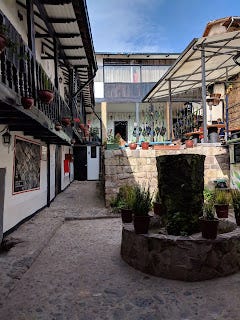
Intro Hostel
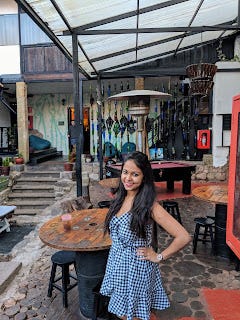
Intro Hostel
The hostel had a couple of rooms with 2 bunk beds each and a common sitting area with fireplace and hammocks. They had 2 common bathrooms and also a kitchen area with a small theater style setting. We were welcomed with Coca tea which is made of dried leaves of Coca plant and it is recommended medicine to beat the altitude sickness. We freshened up and were lingering around the common area and casually got talking with a couple of hostelites who were planning to explore the town and we decided to tag along since we had no agenda for the day.
Cusco has a city fair every Sunday and we decided to check it out to buy some souvenirs. This place had a lot of tiny shops owned by locals. We found ourselves immersed in shopping for hours checking out the beautiful Alpaca made sweaters, scarves and pretty souvenirs for friends and family back home.
We also stopped at a local restaurant for lunch and absolutely loved the house Ceviche which had Salmon with avocado and mango flavors blended beautifully together. We also tasted the famous Pisco sour at this place.
Later that evening, we took a walk around Plaza de Armas and had our dinner in the pretty neighborhood and retired for the day.
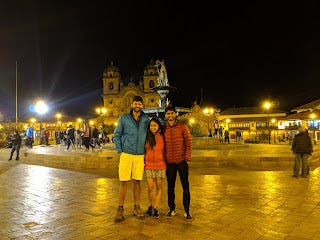
Plaza de Armas- City center Day 3 April 9th : Macchu Picchu
MP can be explored in multiple ways. Hiking via Incan trail/ Salkantray trail both of which have variants for 2day/4 day/ 6 day hike or via bus-train-bus combo which can covered in one day. We initially planned the trip around the 4 day Incan trail hike but we started looking at tickets in February and the permits were completely sold out for the rest of the year. The other hiking options were not appealing enough and we zeroed in on taking a day pass to visit MP. For anyone who’s planning to hike to the peak, we recommend blocking your MP permits atleast 6–7 months in advance.
We had booked tickets to visit Machu Pichu at 12 PM . Which is about 3.5 hours away from Cusco. There are multiple options to get to Ollantaytambo (OTB) (bus/train/cab) and from OTB the only way to get Aguas Calintes (foothills of MP) is via Inca rail/ Peru rail. The train journey is about 90 minutes each way and the terrain is extremely scenic and beautiful. They descend into Sacred Valley and Andean foothills, following Urubamba river for some time. The scenary of the river gives way to stunning greenery of high altitude jungle as we start entering the highly protected Machu Picchu area.
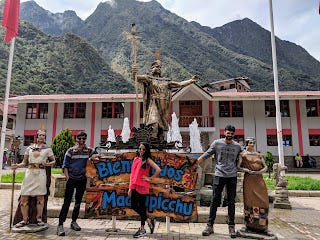
At Aguas Calintes Once we reached Aguas Calintes station , we drove up to the ruins in the local bus which is pretty frequent and accessible. Alternatively you could also hike upto the ruins which would take 60 minutes one way. We hired a local tourist guide to show us around the ruins. Machu Picchu ( Old Mountain ) which is one of the modern Seven Wonders of the world was an ancient Incan city built in 15th Century by the Incan emperors to serve as the royal estate. This city was later abandoned and the ruins remain. This place surely lives up to its hype and the views from the top of 9500ft are just breathtaking.
The Incans did not have a written scripture and most of what has been recorded of the civilization and their practices is from the Spanish Expedition to Peru. There was a slight drizzle and shifting haze in the sky. The views of Machu Picchu Montana and Huyana Picchu ( Young Mountain) were absorbing.
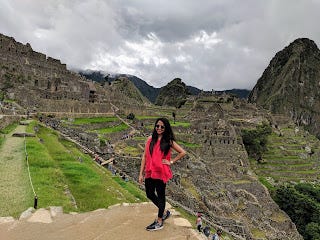
Machu Picchu We could spot a couple of Llamas and Alpacas at the guards hut. We explored the place for couple of hours on our own and were on our way back to Cusco.
We dined at Pacha Papa for the night. And a special mention to corn beer we tried here.
We slept early that night since we had a very early morning the next day.
DAY 4 April 10th : Rainbow Mountain
We had booked the tour to Rainbow Mountain with one of the local agents in Cusco and the prices were almost 100–150$ cheaper than advertised online. We recommend you to reach Cusco a day or two earlier to acclimatize to the altitudes and also buying your tickets to Amazonas/ any other attraction in Peru locally. Machu Picchu is probably the only thing that needs to be planned in advance.
Our day started at 3AM when the tour bus came to pick us up at our hostel . After a couple of nearby stops we were on our way to Quesuino community where we were going to start our hike. The drive took about roughly 3 hours. We stopped for a quick breakfast at a nearby shack after which we were on our way to Apu Winicaca mountains which we were going to summit to catch the splendid views of Rainbow mountains.
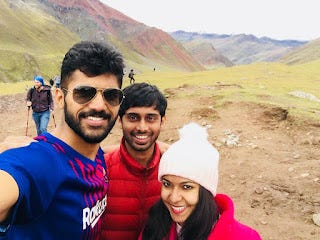
Somewhere on the trail The hike is 10KM round trip with summit at 15K feet above the sea level. On the way up we saw herds of Llamas and Alpacas grazing away to glory, the magnificent views of Ausangate mountain range and tonnes of pretty red houses. For those who couldn’t climb all the way by themselves, there were a couple of horses and horsemen for their aid. There were many times when we felt like giving up and turning around because of the lack of oxygen and exhaustion, but we kept motivating each other to keep going. At the end of 3 hours and multiple stops to catch our breath, we were at the summit and the view was absolutely stunning. We were back at the base camp by noon and made our way back to the hostel by evening. This was our last night in the hostel and we were feeling so incomplete to leave the place and were wishing for another day in our itinerary to just laze around the hostel. With a promise to visit again, we boarded an overnight bus, Cruz Del Sur to Puno.
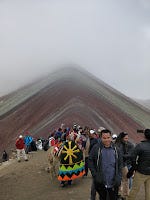
Rainbow mountain as seen from Apu Wincaca
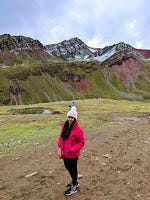
On the way to the summit
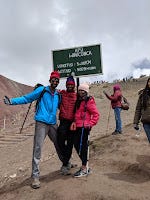
At the summit
DAY 5 April 11th: Lake Titicaca
We reached Puno at 5 in the morning and were to start our private tour with All Ways Travel to the islands of Amantani by 9. We met our guide Javer at lobby of our hotel and made it to the dock in the next couple of minutes. There was a private boat waiting for us, which first took us to the nearby island — floating island ( Yes, you read it right) called Uros. Uros is one of the many islands in Lake Titicaca.
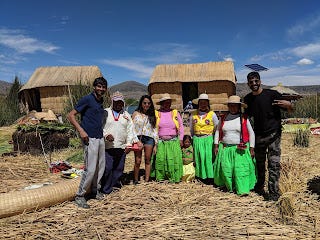
With the citizens of Island :) Lake Titicaca is the highest navigable lake in the world at 12k feet and is the border of Peru and Bolivia. About 20 minute boat ride into the lake from Puno, we find a bunch of islands made up of reed and the life there is so primitive that we felt like going back in time. The islands are made of reeds grown natively and the roots of the reeds are pretty dense and make up the base material which floats on the water. The dried totora reeds are placed on top of it. Once in every 15 days a fresh batch of reeds needs to be placed on top of the existing ones to avoid the island from sinking *facepalm*.
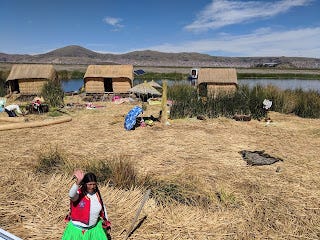
One of mini islands in Uros communityOn an average each island houses about 3–4 families and has an acting President who takes care of the day to day affairs. There is also a floating school among these islands for kids up to 6th grade.
And for all of you who thought barter system was long gone. It’s very much in existence in this part of the world. They trade fish, eggs for vegetables or daily amenities from surrounding islands and tribes.
For anybody who’s visiting Peru, mark this place in your itinerary to go see the other side of life, simple non complicated and basic :)
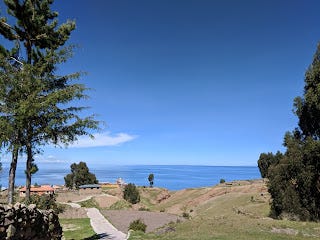
Amantani island We next sailed towards Amantani islands. We had a family hosting us for the night and the gentleman whose house we were supposed to bunk at was waiting for us at the dock. Amantani was way more progressive than Uros in terms of concrete buildings, community houses, sport complexes and schools with computer access. But the roads were still primitive and if you had to get from point A to point B in the island you’ll have to walk. We spend a hefty amount on gym every month and these folks get their cardio workout for free. I was jealous.
I was surprised to know that this island which housed about 1000~2000 people was so well-connected that each family knew the other on first name basis. By the time we reached our host’s house. The lady of the house had prepared some hot quinoa soup and boiled vegetables for lunch — we just felt the same warmth that our mothers extend that more often than not goes under-appreciated.
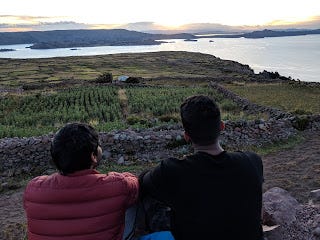
The boys at the sunset point We took a quick nap and Javer took us to the highest point in the island, Pacha Mama around sunset. With the breath-taking view of the entire island and reveling in some self-rumination we marched our way back to the house. On the way back, I got talking our guide, Javer who was explaining how marriages work in this part of the world. In Amantani, when the guy and girl start dating — they often end up living together to figure out the dynamics of the relationship and compatibility factors
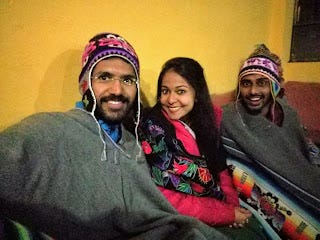
Dressed in traditional Amantani clothes for the cultural night
When they are living in — its mandated that each person contributes equally to the day-to-day expenses of the house. Sometimes, they end up having kids before they get married — and when that happens they’ll have to end up getting married eventually. And once they get married — they are not allowed to separate. So that’s basically 0% divorce rate. I had some tough time explaining to Javer how the concept of arranged marriages work in India. It was interesting to learn their perspective and way of living.
Later that night, after the dinner — the community house had a local band playing some Spanish numbers and all the tourists were dressed up in local clothes and we enjoyed some drinks and dance. With a lot of good memories made and stories to carry home, we rested for the night.
DAY 6 April 12th: The visa-dilemma and La-Paz, Bolivia
As per our itinerary, we had to sail out of Amantani first thing in the morning and catch the bus at Puno to head out to La Paz in Bolivia. The lady of the house had prepared some yummy breakfast in the morning — and at around 5 AM we left the island .
We were crossing over from Peru to Bolivia via roadways. We had to get down at Peru border in Desguedero and get the exit stamp and walk a short distance to cross the border and wait for entry stamp at Bolivian side.
We were pulled out from the line (which we still don’t know why) made to wait in an adjoining room and all this while we kept getting weird stares from everyone around. We were kept waiting for a long time stating that their manager was in a meeting and he ll need to approve our Visa. All this while we kept communicating to the officials in some broken Spanish we knew (Thanks to Google Translate).
Almost after an hour, our bus driver started getting impatient and wanted to go ahead without us. At this point a couple of police men and consulate officials conversed among themselves and told us that our entry to Bolivia is denied and we ll need to get back to Puno in Peru, get to the consulate and complete the formalities and then re enter.
With almost poor to nil internet signal — we were completely lost and thrown off the track. The bus proceeded to La Paz without us, and we crossed over to Peruvian side and got into the consulate to make some quick phone calls to make our next move. We found out that we had about 4 hours to make it to Puno’s consulate before it shuts for the day and we had about 3 hours of drive ahead of us. After bargaining with the Taxi guy — one of them agreed to take us to Puno in next 2 hours and trust me that was THE scariest drive of my life. And none of the amusement rides in Six Flags have scared me to that extent :D
We reached the Bolivian consulate, submitted our paper work and other documentation (luckily we had everything in place) and waited for the next 2 hours to get the visa stamped.
Once the kind lady returned our passports — we made our way back to Desguedero and got the entry stamp and entered Bolivia — FINALLY!
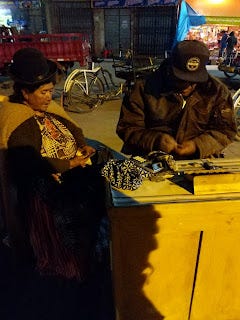
Currency exchange office in BoliviaIt was great sense of an accomplishment. We had some USD and Peruvian Sols and wanted to exchange them to Bolivianos and we were directed to the person in the picture below — He was the official currency exchange contact who sits right beside the consulate.
We hitched a ride from a local taxi to La-Paz with 12 other strangers and the struggles of travelling in an unknown country with an unknown language had begun…
We reached La Paz, checked in to our hostel and passed out for the night.
DAY 7 April 13th: Salar De Uyuni, Bolivia
Our friends back home were kind enough to reschedule some our flight tickets due to visa mess-up. We had an early morning flight out of La Paz to Uyuni. La Paz is the capital of Bolivia and is at 14K feet above the sea level. Because of this altitude and air density the flight usually takes off either early in the morning or late in the evening.
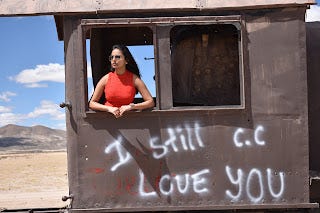
Uyuni train ruins We reached Uyuni at 8 AM and our 3 day tour in and around Uyuni was to begin at 10AM. We had booked our tours with Bolivia Tour Makers online. We were marked to arrive the next day according to their logs and we were made to wait for an excruciating 3 hours before we could negotiate a deal to start our tour on the same day due to the strict time and travel constraints we had. I understand that Bolivia is a developing nation and to expect the professionalism that we see in US might be a bit too much to ask for, but we were a tad bit disappointed with all the hassles we had to go through before we could get moving on the road. Lesson 101 for anyone visiting Bolivia would be to learn some basic Spanish for survival.

Salt FlatsWe started our trip in a 4x4 with our Spanish guide/ drive/ companion for the next three days who goes by the name Gabilaan. We first stopped at Uyuni train ruins to take some pictures.
Next, we made our way to star attraction of the trip, Salar-de-Uyuni — World’s largest salt flats which is about 10,000 sq kms. The staggering views from mecca of salt gives way to picturesque illusions which is every photographer’s delight.
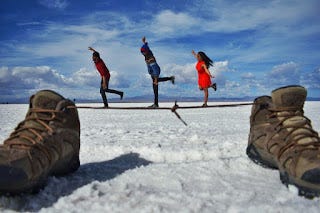
Naveen’s photographic experiments Yes, the famous Allu-Arjun-Rakul Preet starrer Telusa Telusa… was shot here..
The entire place was beaming with people from all over the world going crazy with poses and the camera.
Fun fact about this place is, the International Space Station uses Salar de Uyuni as reflectors to adjust and calibrate their sensors. That’s how pristine and clear it looks.
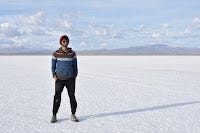
Naveen at Salt Flats

Sunset at Bolivia
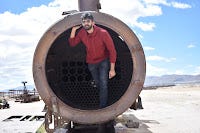
Yash at train ruins
DAY 8, 9 April 14th/15: Roadtripping Bolivia
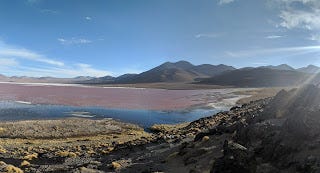
Laguna Colorado The next two days in Bolivia was mostly road-tripping the southern part of the country. Covering Laguna Colorado, Laguna Verde, Arbol de Piedra and the Geysers. We camped at Laguna Colorado on 14th and Yash discovered the passion for wild life photography with the beautiful flamingos acting as his muses.
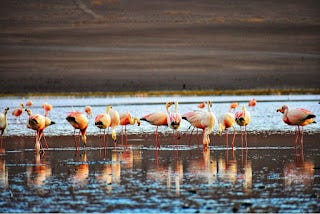
Yash’s creative influence The night of 14th, we met a couple of backpackers from Switzerland and Argentina. We had a fun time sharing some Argentinian fine wine and travel stories beneath the milky way galaxy.
That’s the moment I decided, I’ll take many such backpacking trips, since travelling is just not about being touristy but also learning a lot from the experiences and cultures of other fellow travelers.
On 15th, we touched the southern most point of Bolivia and border of Chile- San Pedro de Atacama- the driest desert of the world. And made our way back to Uyuni to catch our flight back to Lima.
DAY 10 April 16th: Lima
The last day was all about some good food and good fun. We landed in Lima early in the morning. Checked into Pariwana hostel — which is a highly rated hostel on hostelworld and known for its diversity of travelers and the wild parties. We spent some time lazing at the hostel and decided to check out Miraflores and Barranco — the two most happening districts in Lima.
Most importantly, we were more than happy to be breathing at sea level at the end of 10 days. We stopped for lunch at Mango — a highly rated restaurant in Miraflores district. Peruvian delicacies lived up to the fame of the place. We mostly dilly-dallied around the town for the rest of the day and with a heavy heart of not wanting to leave the place, we caught our flights back to the US.
Peru and Bolivia are two beautiful countries, which is on my list to visit-again to check out Amazon rain forest, hike the Salkantray trail and sulk in beauty of Humantay lake sometime later in life.. It was an amazing getaway and vacation that I forgot my laptop password on return to work the next day.