
Triggering addiction — How design can hack your brain
Or how to induce addictive behaviors.
You wake up. Just like every day, you first have a shower and brush your teeth. Then, you read your favorite book while having some breakfast. You might even be talking with your family — be it children, a partner or parents — before dressing up and going to work.
Wait… was it like this? I think everything got a little bit more… complicated.
In today’s digital era, everything has turned to behave extremely fast. This is why, I bet you haven’t even fully woken up from bed that you already know how many messages are awaiting you on Whatsapp, and what’s the new viral trend on TikTok.

Welcome to the triggering world. A welcoming — and twisted — way to make you stay glued to any digital service.
We live in the age of social media, where the lives of family and friends are at our fingertips at any given moment. Even though this might help us keep track of them, let’s recall again how many of us check our phone notifications before even getting out of bed in the morning?
I am pretty sure you do it too…
Why does this happen?
Do you remember what’s a habit? We already talked about this on The Hook Model. According to Gardner and Rebar, the term habit refers to a process that prompts an action automatically, through activation of mental context–action associations learned through prior performances
Habits are not created, they are built upon.
Habits are the basis of our daily behavior. We repeat actions that we have learned in the past. Today it seems we are programmed to always be connected — we all have learned to be so by heart.
What we see on these digital services usually does more than just inform us of what’s happenings in the lives of those we care about. A post of friends hanging out will trigger your anxiety, which can quickly spiral from disappointment from not being invited to feelings of intense loneliness. However, these are not the only — nor the worst — triggers awaiting you on the digital world.
We are used to being constantly glancing at our screen receiving new inputs that we do not even remember how life was before smartphones. This is why I am going to dare you to do something. Just turn on your non-disturb mode on your phone and keep it for as long as you can.
I am pretty sure you won’t last long.
THE TRIGGERS IN YOUR HEAD
The trigger is the actuator of a behavior — the spark plug in the Hook Model. Habit-forming technologies start by alerting users with external triggers like an email, a notification, or the app icon on a phone.

By cycling continuously through these hooks, users begin to form associations with internal triggers, which become attached to existing behaviors and emotions.
External Triggers
External triggers target our senses: we see, hear or touch them. These include the bright red new email notification, the notification sounds or the vibration your phone makes when you have a new message waiting for you.
External triggers are embedded with information, which tells the user what to do next — Nir Eyal
The external triggers hold information of what to do next, whether that’s to share now, read now or sign up.
Internal Triggers
In habit forming technology, emotions are powerful internal triggers. There are key emotions and feelings often associated with certain behaviours, particularly habit forming ones. The most effective ones are loneliness, boredom and sadness.
Internal triggers manifest automatically in your mind. Connecting internal triggers with a product is the brass ring of consumer technology — Nir Eyal
We may not realize it, but we subconsciously turn to Netflix when we are bored or to Tinder when we’re lonely. These internal triggers become part of our routine behavior and thus, the habit is formed.
Our behavior is reshaped by a reinforcement loop. Going on such digital services provides relief and becomes a positive association in our minds, which, through repeated conditioning, creates a connection between the things we feel and the app inside our pocket.
But how does an app like Instagram, Twitter or Netflix create such internal triggers in millions users?
According to Nir Eyal, there is a stepwise approach to create internal triggers:
1. EDUCATING WITH EXTERNAL TRIGGERS
Current digital services fill our digital feeds — be it Twitter, Instagram, Google or our mail — with advertisements that present multiple links back to their service. These external triggers not only help to attract new users, but also show them how to use the product.
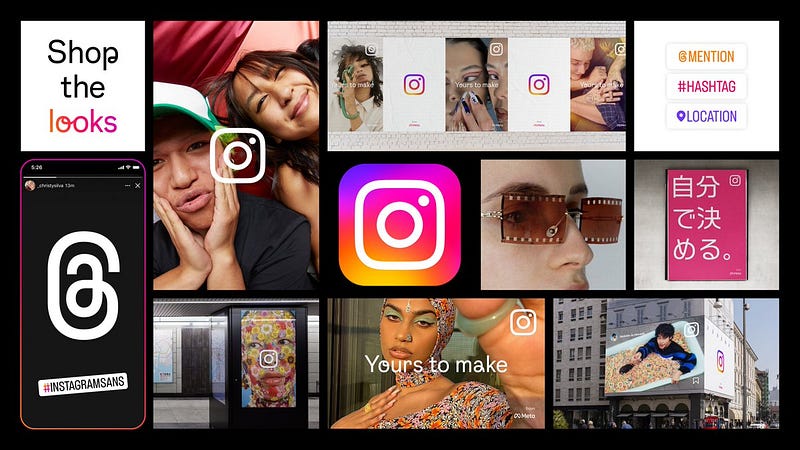
For instance, Instagram effectively used external triggers to communicate what their service is for: Fast beautiful photo sharing. Instagram was successful in acquiring millions of new users.
However, in a world full of (digital) distractions — digital services not only need a huge amount of users, they need them to employ their product daily too.
2. CREATING DESIRE
After clicking through external triggers, users are prompted to install the app and they begin using it for the first time. Now is the time to hook these users — and make them stay.
To get users using their service, digital service need to remove the need to think. People are lazy — so are users. This is why current digital services are made to avoid people thinking — and instead make them consuming non-stop.
To get using users, Instagram followed a product design pattern using a minimalist interface that removed the need to think. With a click, a photo is taken and posted. Everytime a photo is posted, not only users get a social reward getting tones of likes and comments — these very same actions become again external triggers to make sure users come back.
Each photo taken and shared further commits the user to the app.
3. AFFIXING THE INTERNAL TRIGGERS
Finally, a habit is formed. Users no longer require external triggers to go use these digital services because the internal triggers happen on their own. The more the user gets used to using the service, the less likely it is for them to stop using it.
In the case of Instagram, every time a user posts a new picture, the user receives feedback from friends who reward them with comments and likes. Now users find themselves constantly on the hunt for images that fit their own Instagram style. Like a never-ending scavenger hunt, users feel compelled to capture these moments.
Main Conclusions
Digital services are now shaping our daily habits to trigger addiction. By thoughtfully moving users from external to internal triggers, digital services are designing a persistent routine in our lives.
When a product is tightly coupled with a thought or an existing habit, it creates an internal trigger. Unlike external triggers, internal triggers cannot be seen, touched, or heard. This is why they manifest automatically in the mind and once the users’ internal triggers began to fire, competing services cannot stand a chance.
There’s no better way to keep users’ attention than to trigger their engagement using their own feelings. Hence, creating internal triggers is the brass ring of consumer technology.
This is why we all should try to anticipate current digital services strategies and discover how design can become our silent enemy.
Just feel free to share your thoughts and experiences in the comments! ✨
You can follow me on Twitter to stay tuned and receive my content. I promise it will be unique!
If you are not a full Medium member yet, just check it out here to support me and many other writers. It really helps :D
This is the fourth story of the series How design can hack your brain to share with you different ways and techniques that are usually used in modern digital services to increase users engagement, making us be glued to our phone — today’s turn was for Triggering addiction.
You can go check now the following stories about the Infinite Scroll Effect, the Hook Model and Your Personal Slot Machine.


