
Trick or Treatment? How the Placebo Effect Improves Women’s Sex Lives
Is a sugar pill the secret to fabulous sex?
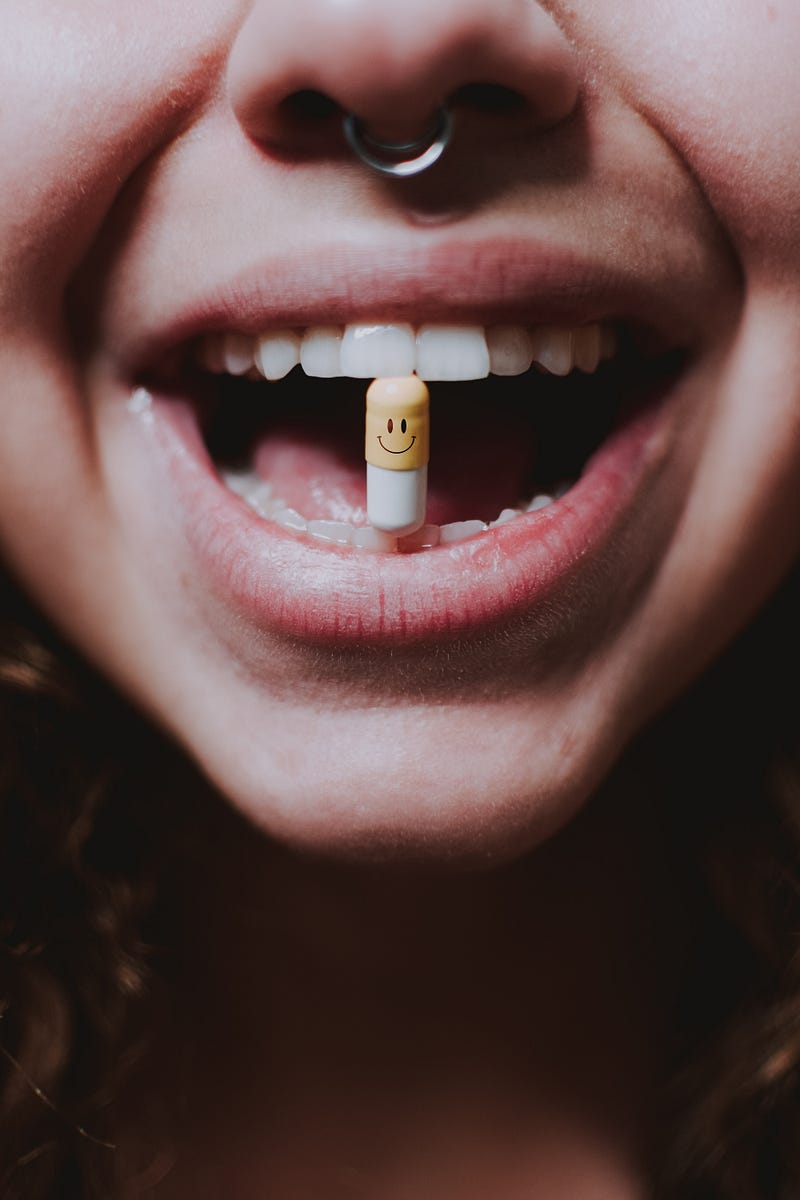
When you hear the word placebo, you probably don’t think of pleasure, but the Latin root of placebo is “I shall please.”
We can partly thank the fourteenth-century author and troublemaker Geoffrey Chaucer for popularizing the word. In The Merchant’s Tale, one of his characters is “Placebo” — a butt-kissing sycophant who tells everyone what they want to hear. The word stuck, and eventually, “placebo” came to mean brown noser. Or, as Chaucer wrote in The Parson’s Tale, “Flatterers are the Devil’s chaplains, always singing Placebo.” Basically, medieval fanboys and fangirls were called placebos.
By the eighteenth century, doctors often prescribed sham cures “to please” difficult patients. There were bread pills, colored water, and chalky powders with one purpose — to shut patients up.
The word “placebo” became medical jargon for these sham cures by the nineteenth century. However, the placebo effect was not considered a scientific phenomenon until 1955 when Henry K. Beecher published “The Powerful Placebo.”
During WWII, Beecher was working at a military hospital when they ran out of morphine. So, he injected wounded soldiers with saline solution and told them it was morphine. He claimed the saline solution alleviated pain as well as morphine.
I hope you are screaming bullshit right about now. Since the paper’s release, many scientists have accused Beecher of fabricating his data.
But let’s not be too harsh. Without Beecher’s research, we might not have a billion-dollar industry of alternative medicine the government refuses to regulate. Imagine a world without the MyPillow guy curing your restless leg syndrome or penis enlargement pills turning you into Ron Jeremy. (Not a personal reference.)
Placebos challenge the complex interplay between psychological and physiological responses and force stuffy scientists to address an ongoing debate — does the mind have the power to heal the body?
It’s a question we are still asking. Today, a placebo is any harmless pill, medicine, or procedure prescribed for mental relief. Recent research has found placebos work because the brain responds to an imagined outcome in the same way it responds to a real outcome.
In one of my favorite placebo-related studies, researchers found people got fitter by watching workout videos. Just watching. Not actually breaking a sweat. This is why I sit on my couch, eat salami, and watch Richard Simmons videos in my underwear.
But this study begs another question. If watching people work out can make you buffer, could watching people have sex make you sexier? Since most of the research on porn is funded by religious organizations, we may never know.
Of course, a placebo can only make you feel better if you believe it will. Like its word origins, a placebo can please, but it won’t shrink a tumor or make an injured person walk again. However, it can help modulate pain and alleviate stress-related conditions such as insomnia, fatigue, nausea, and sexual dysfunction.
It’s the last one that has been garnering more research lately. Since most sexual pleasure begins in the brain, a placebo can floor the gas pedal on arousal.
And as long as it doesn’t contain harmful ingredients, there are minimal side effects to using placebos to improve your sex life. The worst that could happen if you overdose on placebo pills is that you will believe you are dead. The best that could happen is you will have mind-blowing orgasms.
Or at least that is what researchers found when they tested placebos on women with sexual dysfunction.
In a double-blind study, researchers followed 200 women who struggled to orgasm. Fifty of those women were given a placebo pill. From the placebo group, a third of women saw an improvement in their sex lives.
Did these women really believe they had found a magical orgasm pill, or was something else going on?
When researchers asked women why their sheets were suddenly on fire, they may have found the true cause.
Many women reported they received more stimulation during sexual activity while they participated in the trial, even though their partners were not given any special instructions.
Now just imagine a woman goes home to her partner and says, “Babe, I am in this new clinical trial to test a medicine that will, for the love of Jesus… finally make me cum. No pressure, though. And please don’t do anything differently. I will just keep on not cumming and see if this pill works.”
Screw science. If you want a man to not skip the foreplay, just threaten his manhood. (That was a joke. There are better ways to communicate what you want in bed.)
To be fair, the women participants could have also given their partners more sex-related feedback during the trial. No one wants to be part of the group that the drug didn’t work on.
But this study points to a more significant problem regarding placebos — they are really hard to test. Your body has an amazing capacity to heal without intervention. Sometimes other treatments are introduced without researchers knowing. And most importantly, it’s not only the person taking the placebo who must believe in it. Everyone around them has to believe too.
Placebos are like religion. When one person believes, that person is just an eccentric bible thumper with a Jesus sign. When everyone believes, you have a magical thinking money-making franchise.
But there is a less deceptive way to close the orgasm gap. First, stop calling women “dysfunctional” unless there is a diagnosed physiological problem. It harks back to that other medical catch-all with a grim past — “hysterical.”
When there is a physiological problem, call it what it is — erectile dysfunction. Yes, women have the same erectile tissue. And just like men, sometimes the plumbing doesn’t work. More often, the faucet is expected to gush water without ever being turned on.
Or better yet, let’s improve sexual education, and then there won’t be as many bumbling, clueless people who can’t find a clitoris on a diagram.
The real problem is complacency, and research will back me up. In one study, researchers interviewed partnered women about their sexual satisfaction levels. They then asked them questions to determine if they had a “sexual destiny belief” or a “sexual growth belief.”
People with a sexual destiny mindset believe amazing sex is the result of finding your soul mate and all that new-age malarky. These people believe sex should be earth-shattering right out of the box. They lie back and think of, well…nothing. A pillow princess’s orgasm happens when the stars are aligned.
People with a sexual growth mindset believe amazing sex takes work, not fate. They try new things and constantly check in with their partner to see what they want. When sexual problems arise, they view it as a challenge to overcome and not sexual incompatibility.
It probably won’t shock my readers that people with a sexual growth mindset reported higher levels of sexual pleasure.
It makes sense. Great sex doesn’t require astrological compatibility. Great sex requires communication, experimentation, and a little bit of the medieval definition of placebo — the desire to please.

Carlyn Beccia is an award-winning author and illustrator of 13 books. For past articles grouped by subject, see my Table of Contents.
Update! I am launching Conversations with Carlyn soon to have more open and honest conversations with readers about sex, love, feminism, culture, and the latest science behind our most intimate human interactions.
If you enjoyed this article, please support my research and writing by becoming a paid pledge. You won’t be charged until the conversation gets rolling.


