
Trekking Among the Redwood Trees in Muir Woods — A Sanctuary Experience
A wonderful visit to the ancient ground
It is when we are filled with awe at the sight of nature that we begin to think about things outside ourselves. A sense of awe helps us to slow down and stop worrying. It transforms negative emotions into positive feelings. It gives us pause and brings us joy.”
Dr. Qing Li from the book, Forest Bathing: How Trees Can Help You Find Health and Happiness
Nature lovers are in luck living in San Francisco. Muir Woods National Monument, managed by the National Park Service and is the home of the giant redwoods, is located in Marin County, about 10 miles from San Francisco (a 45-minute drive).
Before 2017, Muir Woods attracted over one million visitors per year. Due to the traffic congestion and parking woes, the officials decided to set up a reservation system for parking and shuttles to control the number of visitors.
The 558-acre Muir Woods National Monument is special because it preserves one of the last remaining ancient redwood forests in the Bay Area.
There are two species of redwoods in California — the Sierra redwood and the coastal redwood.
Sierra redwoods live in the Sierra Nevada mountain range, while coastal redwoods grow closer to the Pacific, stretching from the Big Sur along the Californian coast to the southwestern corner of Oregon. Sierra redwoods are about 40 feet wide, while coastal redwoods are about 20 feet wide and taller.
The large trees in Muir Woods are coastal redwoods (another name is California redwood or just redwood). The tallest one is about 258 feet. Further north, they can be as tall as 379 feet, 74 feet taller than the Statue of Liberty.
The average age of Muir Woods redwood trees is between 600 to 800 years, with the oldest at 1,200 years old! Redwoods can live up to 2,200 years.
Redwood trees are sacred and well-loved because not only are they long-living and large, they play a significant role in carbon, nutrient, and water cycling and support the numerous plants and animal life in the forest.
When the winter rains and summer fog soak Muir Woods, they provide the perfect climate for the trees to grow large and wide tree rings.
Now that you know more about our California redwoods, shall we take a walk through the sacred ground?
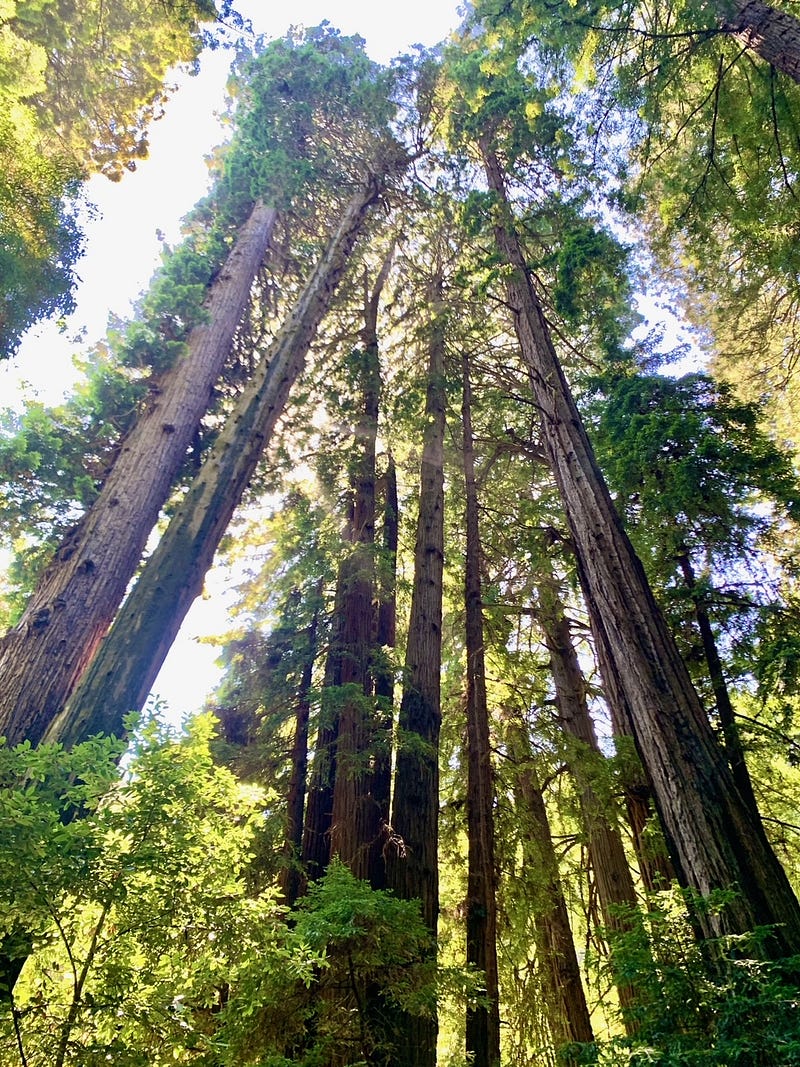
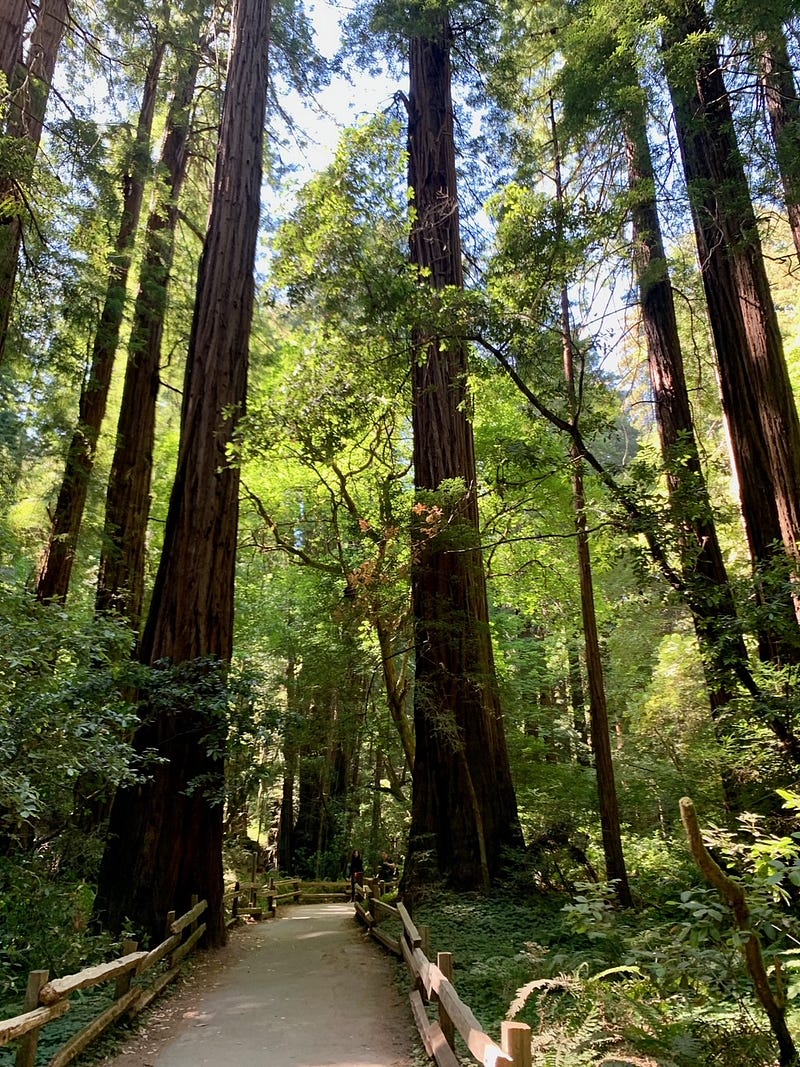
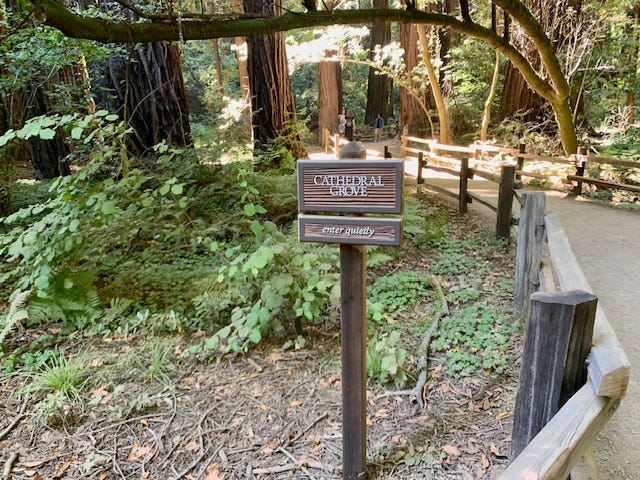
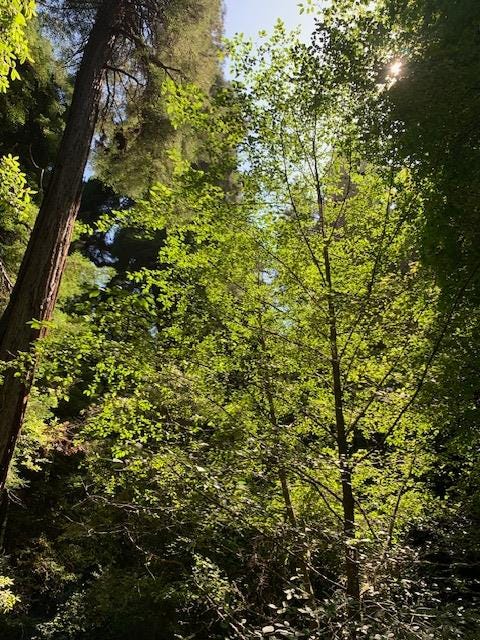
After we walked along the well-paved path, we encountered the Cathedral Grove, which requested all visitors to be quiet.
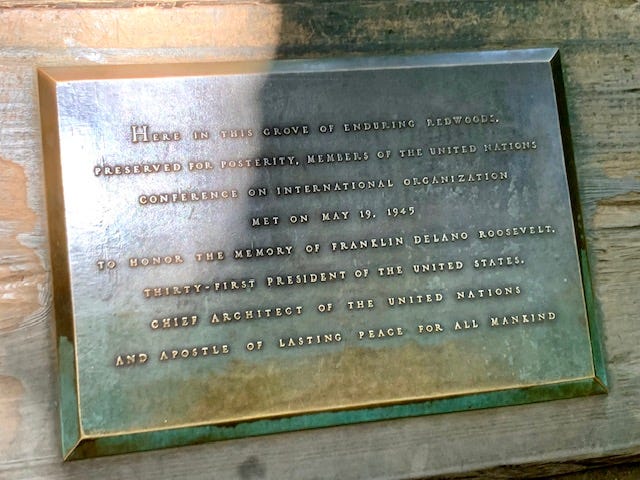
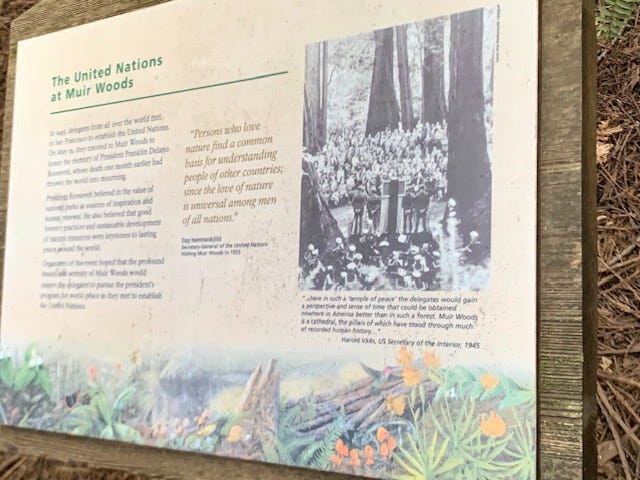
Turning to history, in 1945, before World War II ended, the United Nations representatives gathered in Muir Woods to contemplate sustaining world peace. Sadly, President Franklin Delano Roosevelt died before the gathering, and the retreat to Muir Woods became a fitting memorial for the late President under the towering trees that have stood tall for ages like the pillars of a cathedral.
Muir Woods not only has giant redwoods but also houses Douglas firs. It is the shelter for over 380 different plants and animals, including 27 species of mammals, 50 species of birds, 12 species of reptiles, and 5 species of amphibians.
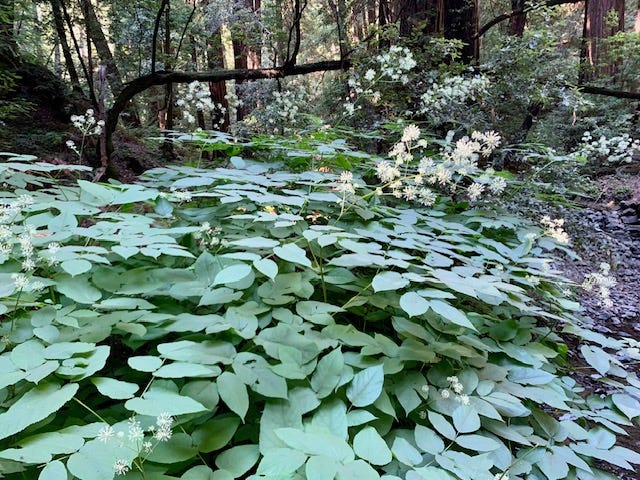
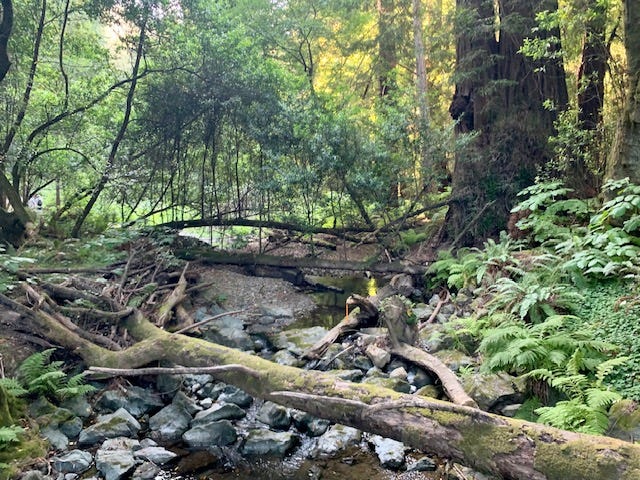
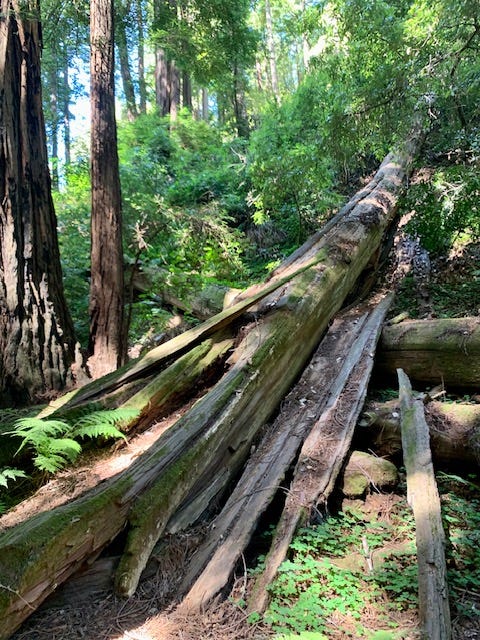
We can see quite a few fallen and dead trees, but they do not need to be taken away because they serve essential functions for the ecosystem.
The trees that fall to the forest floor are important because they help keep the soil moist by soaking up rainwater as well as serving as a shelter for many of the insects, amphibians, and mammals in the forest. They continually replenish the soil by slowly releasing nutrients. One of the most important roles for these fallen trees is serving as a nursery for young seedlings. As the logs lie on the ground, leaves and cones accumulate on top, slowly decomposing, and turning into soil. Seeds fall into this fertile soil, growing into young seedlings.
~ Muir Woods National Park Service
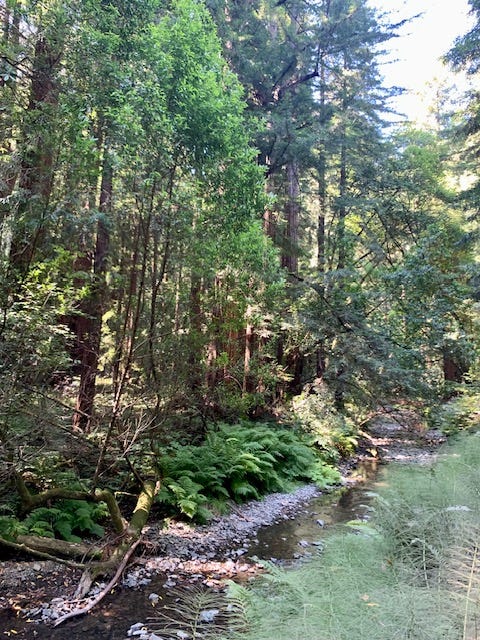
Redwood Creek is the primary stream in the monument, home to the Coho salmon and steelhead trout. On a quieter day when there are fewer visitors, we can hear the stream loud and clear.
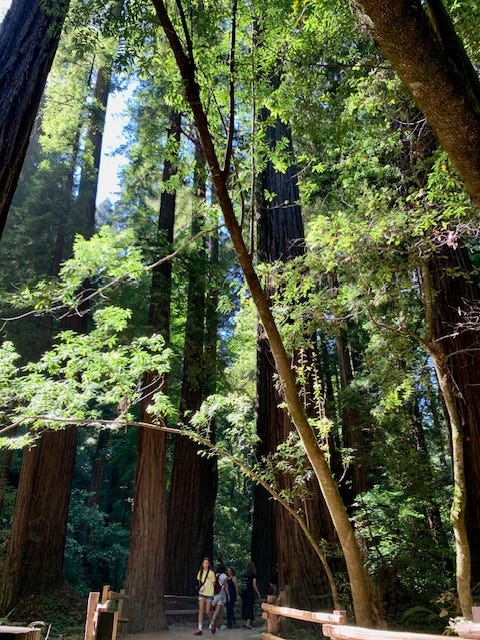
I like the bending trees because they provide natural and beautiful arches for the people while walking by.
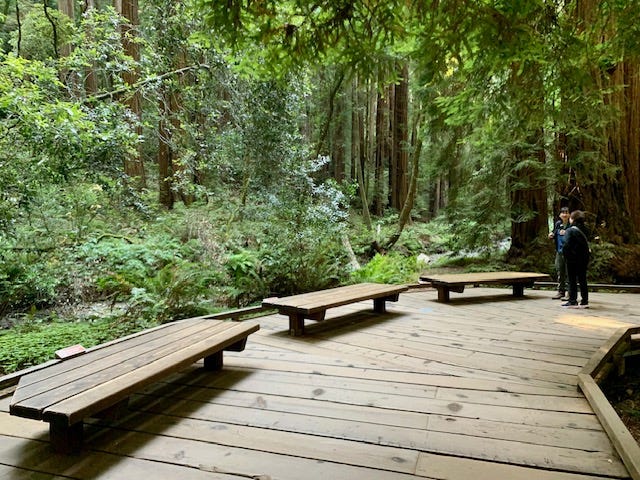
Although this is not a strenuous walk, people can easily find benches along the path for breaks or pure appreciation of the sacred ground.
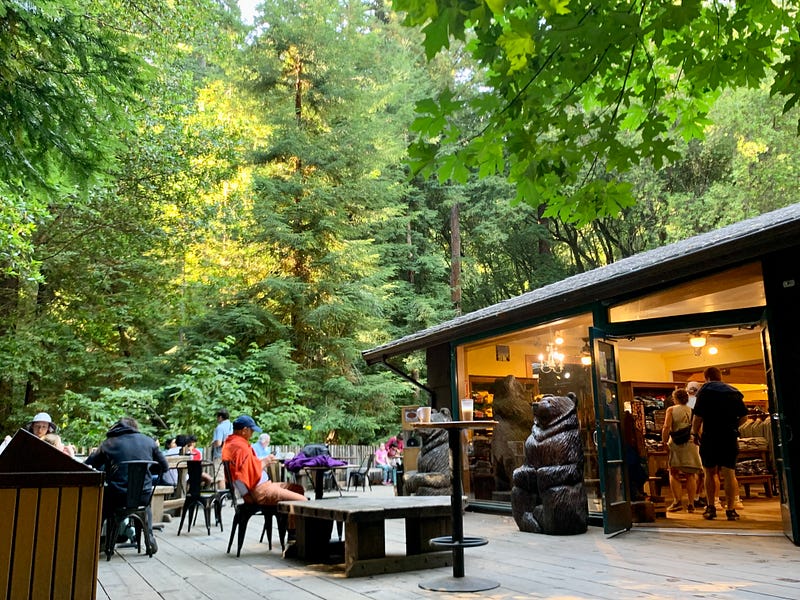
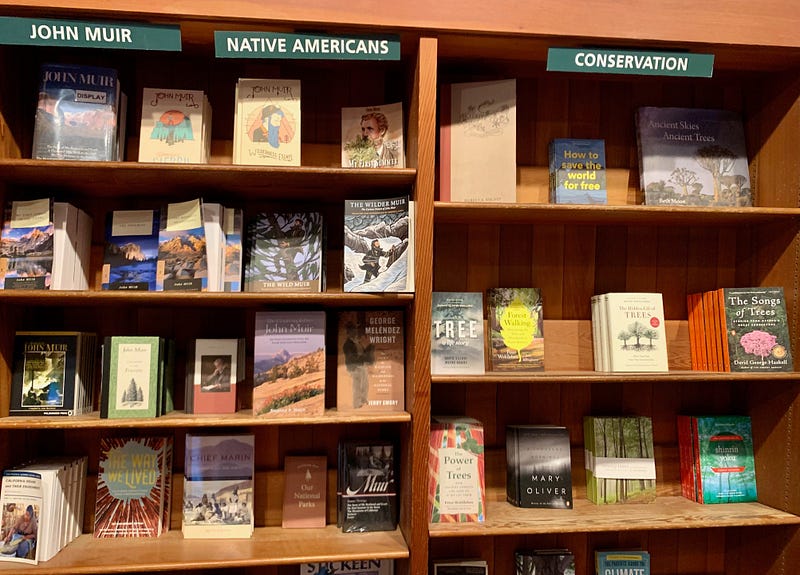
Before we left Muir Woods, we visited the bookstore near the entrance.
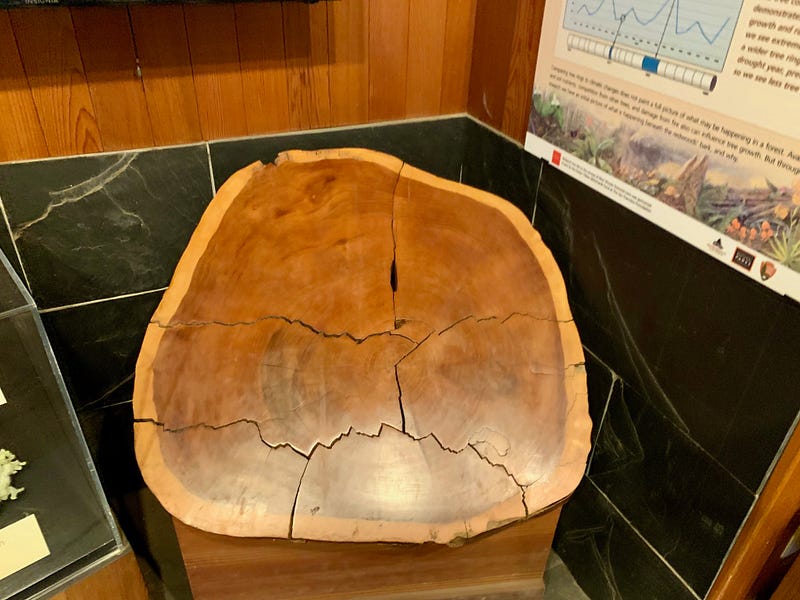
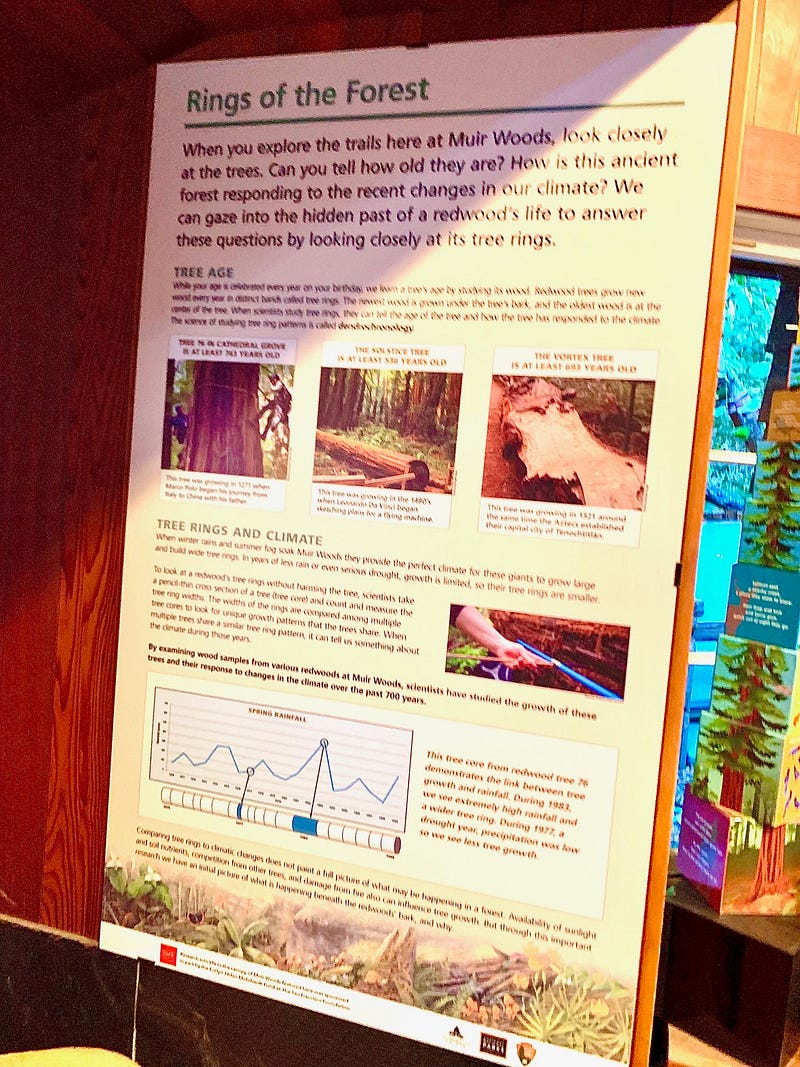
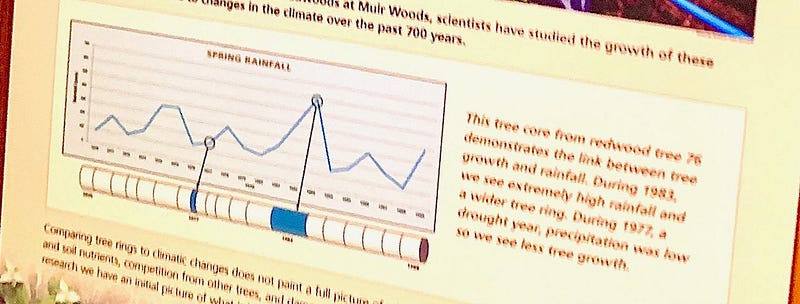
To tell how old the tree is, the scientists study its wood. Every year, the redwood grows in distinct bands called tree rings. The oldest wood is at the centre, while the newest is just beneath the bark.
To see how the trees respond to climate, scientists take a pencil-thin cross-section of the tree core and measure the widths of the tree rings. When multiple trees share a similar tree ring pattern, it can tell the scientists the climate during those years.
You can see from the chart below the lower the rainfall, the thinner the tree ring, and vice versa. 1983 had abundant rain, and the tree ring was pretty wide.
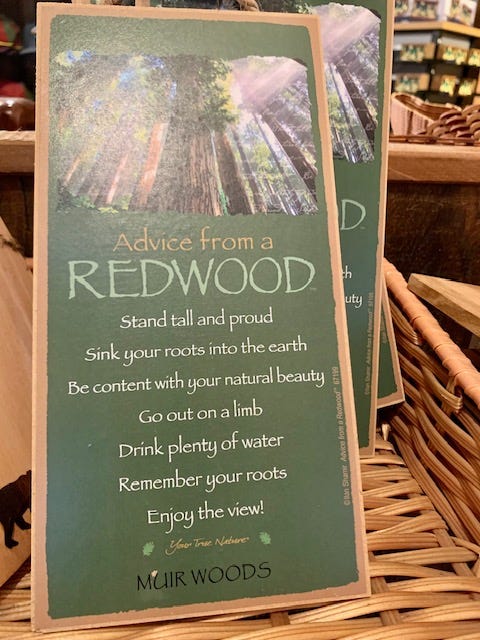
How fitting to take the advice from the old redwoods:
Stand tall and proud
Sink your roots into the earth
Be content with your natural beauty
Go out on a limb
Drink plenty of water
Remember your roots
Enjoy the view!
This is in response to Sahil Patel’s nature prompt in Reciprocal: Unveiling Nature’s Whispers: The Profound Power of Trekking in the Wilderness.
Thank you for this beautiful prompt. It brought back memories of the calming walk in Muir Woods and awe under the giant redwoods. Any stress melted away after the forest bathing.
The forest is like our mother, a sacred place, a gift to us humans from the divine. It is a paradise of healing. Mother Nature fills us with wonder and curiosity and invites us in. All we have to do is accept the invitation. Mother Nature does the rest.
Dr. Qing Li from the book, Forest Bathing
Before closing, I would like to share my favourite reads from 2 fellow writers. Their stories are visually pleasing and charming.
Jillian Amatt - Artistic Voyages
Thank you for reading!
Resource:


