
Beyond Being Beautiful, Trees Are Vital to Your Well-Being
How trees can be the roots of better physical and mental health
“I think that I shall never see A poem lovely as a tree.” —Opening verse of Trees by Joyce Kilmer, 1914
Trees bring us beauty, a sense of awe, nourish us with oxygen while removing carbon dioxide and pollutants, protect our land and improve our physical, mental, and spiritual health all the while serving as a good financial investment. Let us protect them, nurture them and encourage their planting, especially in urban settings.
Trees are critical to health and social well-being.
Trees take in carbon dioxide and store the carbon; they release oxygen, and they remove nitrogen, ozone, and small particulate matter. They reduce heat, reduce stress and stress hormones, improve mental health, improve immune function and decrease blood pressure. By removing small particles from the air, trees decrease the risk of stroke, cardiac disease, lung cancer, and asthma among others. Trees have a big impact on soil and water through removing pollutants, improving water quality, and reducing stormwater runoff.
Time spent in nature, especially in and around trees, benefits health. For example, some 19,000 participants in the British “Monitor of Engagement with the Natural Environment Survey” offered data on time spent in a natural setting in the previous week. “Compared to no nature contact last week, the likelihood of reporting good health or high well-being became significantly greater with contact ≥120 mins. Positive associations peaked between 200–300 mins per week with no further gain. The pattern was consistent across key groups including older adults and those with long-term health issues.”
It is clear from many evaluations that living in a “greener” environment leads to, among other benefits, lessened obesity, diabetes, heart disease, and mental health issues including improved self-reported health and a general sense of well-being.
Most new hospital buildings now incorporate some form of gardens or views of trees and it has become almost an essential aspect of creating new assisted living facilities. “The notion that the fresh breezes, dappled sunlight and fragrant greenery of a garden can be good for what ails us has its roots in ancient tradition and common sense. But a much-cited study, published in 1984 in the journal Science by environmental psychologist Roger Ulrich, now at Texas A&M University, was the first to use the standards of modern medical research — strict experimental controls and quantified health outcomes — to demonstrate that gazing at a garden can sometimes speed healing from surgery, infections and other ailments.”
Forest Bathing
The Japanese have a concept, Shinrin-yoku, that can be roughly translated as “forest bathing” or spending time in the woods. One of many studies in Japan had 12 individuals walk into a forest one day and a city the next in 24 different locations across Japan. “The results show that forest environments promote lower concentrations of cortisol, lower pulse rate, lower blood pressure, greater parasympathetic nerve activity, and lower sympathetic nerve activity than do city environments.” Time in nature, especially in the woods, improves mental health, reduces blood pressure, reduces stress hormones, and gives the cognitive part of the brain a break. Although not everyone can spend time in a forest, a garden, a park, or even a few trees along the street can offers a somewhat similar impact.
Urban Trees
Urban trees are critical. Their presence in ample numbers will reduce mortality, decrease heart disease, decrease stress, and decrease depression. The impact of urban trees on children’s physical and mental health is immense. The presence of adequate trees improves learning outcomes and increases the child’s cognitive development. Of course, these observations while accurate, are correlations and correlations do not prove causation. There may be other factors that are equal or more important in urban areas that do not have trees. These are likely socioeconomically deprived areas that have critical problems that impede learning such as healthy food availability, safety with limited options for exercise, and overall stressful living. Without question, however, adequate trees in urban areas have positive social impacts. For example, they shade hot sidewalks to encourage walking and increase social interactions.
Again, some study results.
Here are few examples of studies on the value of trees in the environment on childhood health and development.
A study from the University of Exeter published in Nature Sustainability followed 3,568 students ages 9–15 among 31 schools in London. The study tracked cognitive performance and mental health over the early adolescent years. “We showed that, after adjusting for other confounding variables, higher daily exposure to woodland, but not grassland, was associated with higher scores for cognitive development and a lower risk of emotional and behavioral problems for adolescents.” It was interesting that better cognitive development occurred for the children exposed to trees but much less so to grassland environment. There are some caveats however. Did the children who were more exposed to trees come from families that were more prone to offer better home life, less stress, better food, etc.? But there are many consistent reports of the benefit of trees and greenspace, suggesting that the correlation is valid.
Another study found that living in and around “green areas” meant less depression in later teen years, especially for those living in areas of higher population density, i.e., urban locations. Using data from the 11,346 participants in the “Growing Up Today Study,” (an offshoot of the Nurses’ Health Study II) the Harvard researchers looked for highly depressive syndromes in later teen years. Depressive syndromes inversely correlated with “greenness” in the child’s neighborhood, especially in more urban areas with greater population density.
Greenspace in the neighborhood reduces aggressive behaviors among children. These results from the long-term assessment of “Risk Factors for Antisocial Behavior Study” were not different when accounting for age, gender, race, or socioeconomic status.
The Economic Value of Trees
The United States Forest Service estimates that in Boston, Massachusetts, one London plane tree 24 inches in diameter annually conserves 1,843KW of energy, filters 3,244 gallons of stormwater, stores 3,145 pounds of carbon, and removes 3 pounds of pollutants. That one tree saves the city approximately $187 per year. Of course, that same London plane tree has the health and social benefits noted above.
In other analyses of the economic value of trees, especially in urban environments, The American Forestry Association estimated in 1992 that a single tree was then worth about $73 in savings in air conditioning costs, $75 in erosion control, $50 in reduced air pollution, and $75 for wildlife shelters. In Washington state, an analysis by the College of Business at the University of Nebraska-Lincoln found urban trees contribute $2.9 billion in total quality of life and environmental benefits each year, including carbon sequestration, air pollution removal, and avoided stormwater runoff.
Heat Vulnerability
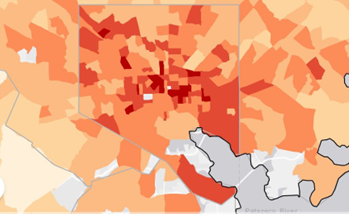
The Yale Center for Climate Change and Health issued a report in December 2022 focusing on the disparities in heat vulnerability across the United States. They observe that the burden of heat related illnesses is inequitably distributed due to the disparities in heat exposure. Yale therefore designed a heat vulnerability index (HVI) as a single measure to quantify the socioeconomic, demographic, biological, and exposure determinates of heat vulnerability. As the graphic demonstrates, Baltimore has multiple areas of high heat vulnerability whereas the surrounding county has substantially fewer. Downtown Baltimore has high heat vulnerability but so too do some residential corresponding to areas with minimal trees, mostly the economically distressed areas to the west, south, and east of central city.
What Happens When an Area Loses Its Forest Cover Completely?
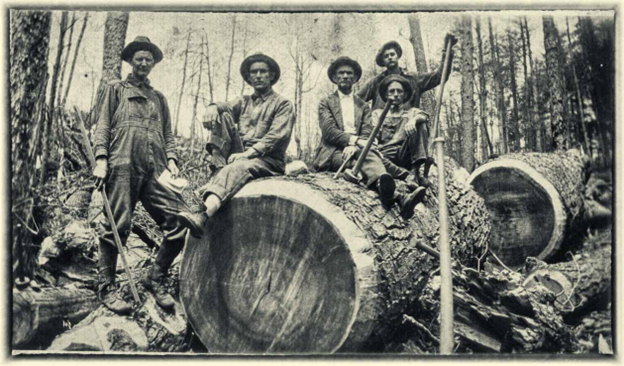
Canaan Valley, WV, high on the Allegheny Plateau, was an impenetrable wilderness-a wilderness so thick that settlers simply bypassed it as they marched westward seeking new sites for homesteads. But the valley was appreciated by others as holding the potential for great wealth. A boreal forest replete with huge trees-hardwoods of cherry, beech, birch and maple along with red spruce that were taller and thicker than anywhere else in the United States and hemlock with its bark for hide tanning. Getting to that vast store of natural resources would be a major advance, progress in the new industrial age. There was one insurmountable problem-no transportation to move the logs out to where they were needed. So, Canaan Valley remained a veritable wilderness with only a few intrepid souls venturing in to hunt or fish until, in 1884, the West Virginia Central and Pittsburg Railroad arrived. Timbering the magnificent virgin forest began immediately. It was a point of pride for the lumbermen to “leave nothing larger than a 2x4.” Red spruce became the frame for homes and pulp for paper, hardwoods for fine furniture, and hemlock bark for tanning hides.
In forty years, the forests in Canaan Valley and the surrounding areas were completely gone-only a denuded landscape remained. The humus, often as deep as 12 feet, dried out in the sun. Sparks from the locomotives and lightening ignited that humus; it burned for years. Then came the rains which washed the remaining top soil down the creeks and into the rivers. The despoiled land no longer was hospitable to the towering forests of the past.
Eventually, much of the land was bought by government as wildlife refuge, wilderness, and parks. Now 100 years later the forest is slowly recovering. But it will be hundreds of years if not millennia before the majesty of that once incredible virgin forest fully recovers.
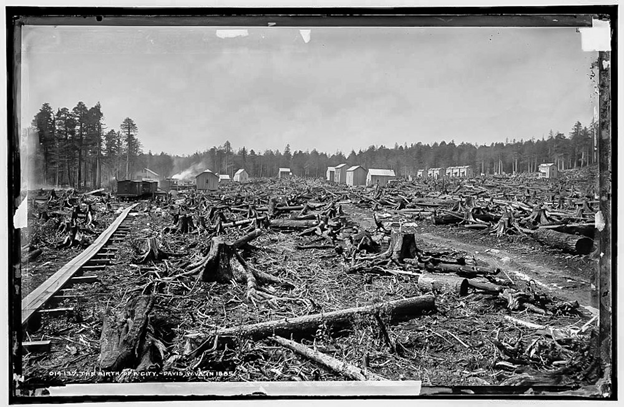
Canaan Valley had been a place of speculation and exploitation. Enormous wealth was garnered by a few and good jobs were the benefit of many. Canaan Valley certainly has been the site for “Fortune Seekers In The Promised Land.”
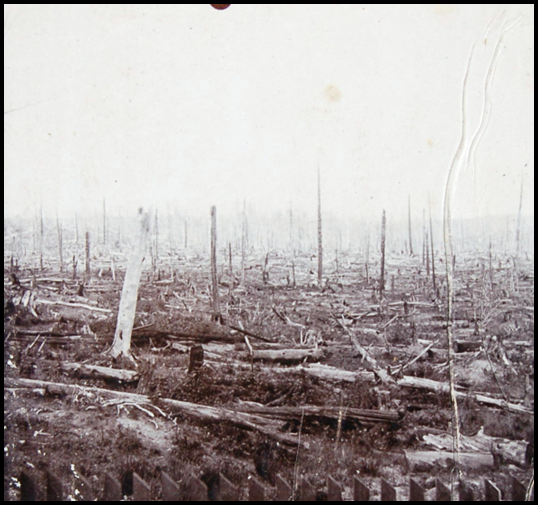
Canaan is an excellent example of the price of progress. In looking back, an important question will be whether the jobs, the products and the other benefits of timbering were worth the environmental price of clear-cutting that is still being paid today and will continue into the future. Will we have learned from the past or will we once again despoil the land in another rush for profits?
What Can You Do to Use Trees for Your Health and Wellness?
You know you should walk or do other aerobic exercise every day for 30 minutes, so get the added benefit of trees. Instead of using a treadmill or a stationary bike in a gym, get outside and walk in the woods or along a shaded street or go sit in a secluded garden. If none of those are options, sit by your window and look out at the trees nearby. Any of these will lower blood pressure, reduce stress, benefit your immune system, and improve your mood. Your sense of well-being will heighten and you will reduce the chances for developing a variety of chronic diseases. You saw above how being in a green environment helps children learn better, be less hyperactive, more social and less aggressive. So, help you kids and grandkids benefit as well.
What Can You Do for Our Environment?
Each of us can do our part to improve our environment. While we need trees, trees need us to protect them. Plant a tree. But maybe you have no place to plant one or your physical status won’t allow you to dig and plant. You can donate to organizations that do so. Or volunteer in a group that advocates for tree planting, especially in urban areas of high population density but which are bereft of trees. And when trees must come down for reasons of age or blight, advocate for their replanting in short order.
It is good to remember an old proverb: “A society grows great when old people plant trees under whose shade they will never sit.”
In summary, trees bring us beauty, a sense of awe, nourish us with oxygen while removing carbon and pollutants, protect our land and improve our physical, mental, and spiritual health all the while serving as a good financial investment. That’s pretty impressive!
Stephen C Schimpff, MD, MACP, is a quasi-retired internist, professor of medicine, former CEO of the University of Maryland Medical Center and co-author with David Miller PhD of Fortune Seekers in the Promised Land — A Tale of Exploitation and Development in the Canaan and Blackwater Region of West Virginia


