
Traveling in Unusual Times
It was time to venture out. We evaluated the risks and decided to go for it.
My husband and I didn’t plan on a whirlwind vacation. Not only has the pandemic isolated us for the past eight months. Moving my 101-year-old mother in with us has meant additional constraints and changes to our lifestyle.
But when my brother agreed to take care of our mother for two weeks, my husband and I seized this rare opportunity to travel. Like so many others, we have canceled plans, put travel on hold, avoided friends and sheltered in place for almost a year.
It was time to venture out, if we could travel safely. We evaluated the risks and decided to go for it.
The first day of our vacation, we drove nine hours to my brother’s, then another hour to his beach house. He had offered us the use of it, a condo perched on the dunes overlooking the Atlantic Ocean, and we arrived in time to watch a sunset blaze beyond the water’s edge.
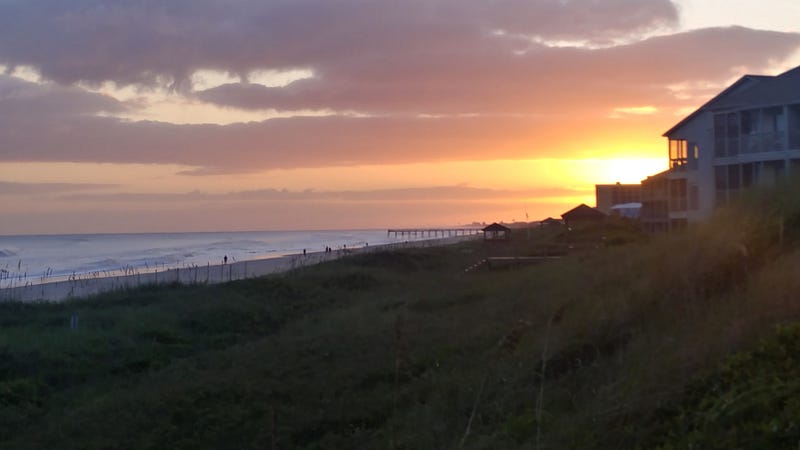
This being the off-season, there was no problem social distancing from other beachcombers.
It had been a long time since we had experienced the crash and thunder of ocean waves, the ebb and flow of tides that speak to something deep within the soul.
We walked for hours, restored and revitalized and humbled by the unchanging vastness and power of the sea.
Our riskiest activity was having dinner at Amos Mosquito’s, an iconic, bustling restaurant overlooking Bogue Sound, a small portion of the 3,000-mile Intracoastal Waterway.
In compliance with state mandates, the restaurant was limited to 50 percent capacity and all staff wore face coverings. We requested a seat by an open window, a breezy spot with a view of sound. And unlike the woman behind us, we didn’t demand that our window be closed!
The next part of our trip was more daring. We left the ocean and flew to Minnesota, where we spent four days with our son, daughter-in-law and their three children.
Before deciding to fly, we did our pandemic homework and discovered a study by Harvard researchers that was encouraging. According to their research, face coverings are a “pragmatic and effective” option for controlling the spread of disease in an aircraft, as long as everyone is masked up.
The flight turned out to be one of our best ever, without the overcrowding that typically makes flying uncomfortable. Every middle seat was empty, and with travelers silenced by masks, the flight was a quiet one. People didn’t clog the aisles, and bathrooms were pristine.
My daughter-in-law, gregarious and active, had made reservations for the Minnesota Landscape Arboretum, founded in 1958 at the University of Minnesota. The day after our arrival, she presented us each with a “Minnesota Nice” mask and we drove to the more than 1200 acres of gardens, rare plant collections and accessible trails.
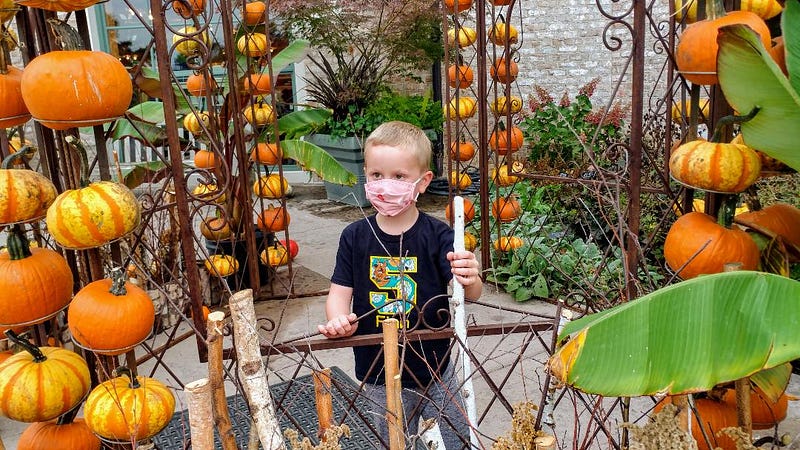
Some indoor parts of the Arboretum were closed because of the pandemic, but there was enough to see outside.

My son and daughter-in-law are as into hiking as we are, so on the third day of our visit, we hiked a small portion of the 4,900-acre Elm Creek Park Reserve near their home in Maple Grove. The well-paved trails offer a variety of landscapes, including woods, prairie and wetlands. We glimpsed a Bald Eagle flying low, and spotted a few Sandhill Cranes foraging in the marshes.
As much as we enjoyed time with the grandkids, our daughter-in-law decided we needed some child-free time, so after the hike she recruited her sister to babysit and we headed to Minneapolis.
We planned on eating outside, but a brisk Minnesota wind blew away the last remnants of warm weather. We ducked into the Yard House Restaurant, our Covid worries dispelled when we wound up with an entire quarter of the restaurant to ourselves.
Along with her spicy jambalaya, my daughter-in-law, a born and bred Midwesterner, ordered a snit, which was something new to this Southerner. Her Bloody Mary arrived with a beer chaser; a pint glass of beer along with her drink. The snit and Minnesota Nice, (which means unusually nice and courteous), are the most recent additions to my small store of esoteric knowledge.
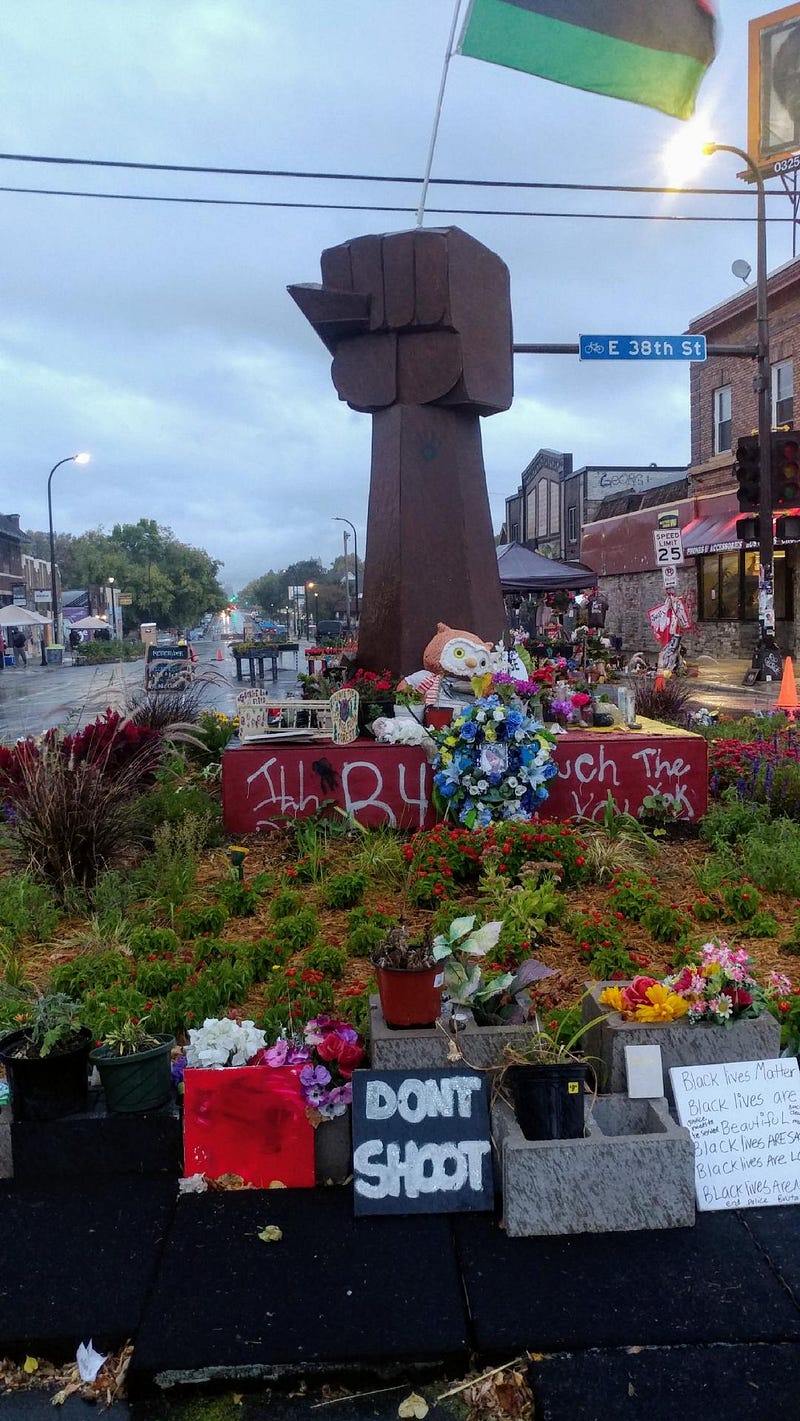
After dinner, we drove to 38th Street and Chicago Avenue, the site of George Floyd’s tragic death. The area is closed to traffic, so we parked a few blocks away and walked through a cold, spitting rain until we reached the area dedicated to Floyd. The street, rain-slick and dark, was almost deserted, and finally, sobered by the memorials and all they signified, we headed back to our car.
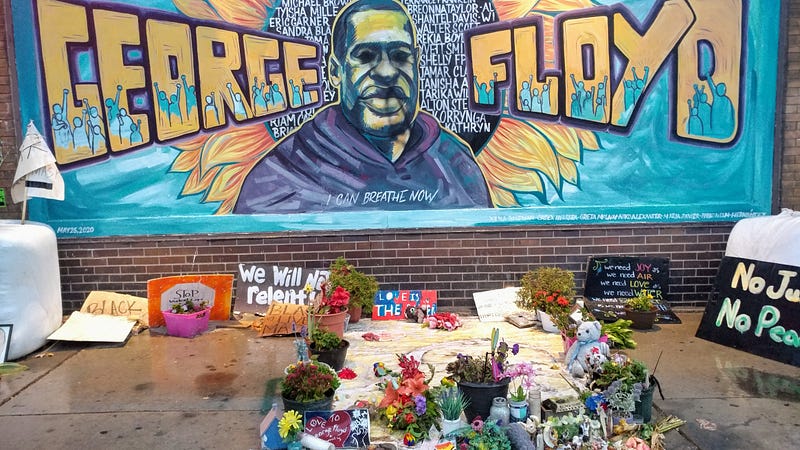
Now, two weeks later, we are back home. It was good to get away, and like everyone else, I long for a pandemic-free world; for travels to resume, unfettered by fear of a virus. But more than that, I long for a world where human life is revered and respected; a world unfettered by hatred.
We should all be able to watch sunsets blaze, to hear the crash and thunder of ocean waves, and experience the ebb and flow of tides that speak to something deep within our soul.


