
Transitions
Why the US should walk like an Egyptian into the future
I didn’t hear the final result until at least 25 minutes later. But I felt it.
Tired of endless repeats on CNN and feeling uncontrollably sleepy, I went to bed, never thinking the next update would be IT. I slept. I woke, but my body felt like I’d been sideswiped by an 18-wheeler. All the tension, all the stress, the terror that it could all go wrong, were draining away and left me wiped out.
A friend later asked if anyone else had heard bells pealing in Paris. Not consciously, but was that what made me pick up my phone? One notification after the other slide down the homescreen. It was nearing 6pm Paris time. It felt like the end of the war.
Earlier in the day the Janus symbol popped into my head. Janus, the god of beginnings and endings, of gates and transitions, looking backward and forward at once.
Looking back seemed to be all that was available to us, stuck, spinning our wheels in the mud, unable to move forward, holding our breath. Thwarted at every turn politically. Personally unable to make plans because the future was so uncertain with the pandemic worsening and the elections hanging over us.
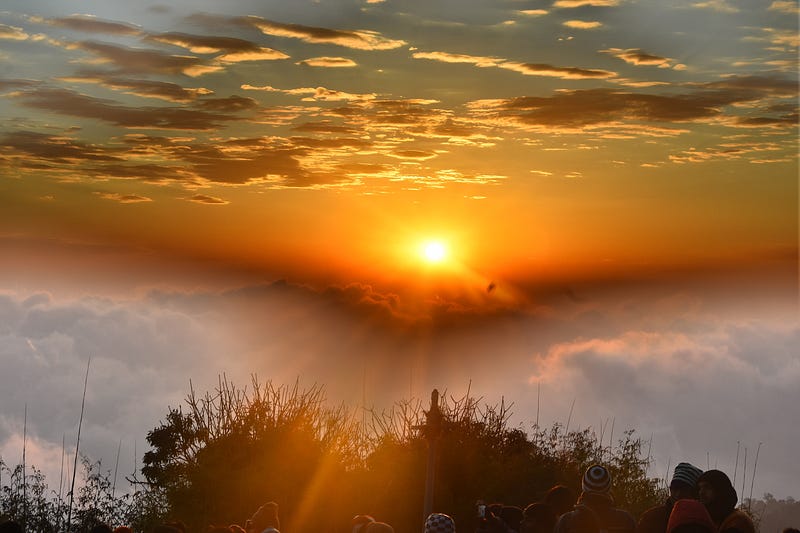
Suddenly there was a breakthrough. Something good finally came of 2020. A sparkling horizon lay ahead.
From enforced looking back we were hurled into a new world, causing whiplash as the head spun around to look forward into the unknown.
I’ve had more than enough of looking back. I even pulled out a pile of old journals recently in a bid to clear out my office. But looking ahead? How exactly do you do that?
An older and wiser friend once told me a story about a couple she knew who were downscaling into their retirement years. They bought a house that tickled their fancy but then suffered so many awful mishaps you nearly had to laugh not to cry. The point of telling me about them was they hadn’t thought it through.
How do you truly plan for the future? How do we plan our own lives and what kind of world we want to live in? Every once in a great while I read something that gives me a glimpse of what could be if we just thought bigger, just stepped away from what we see around us and listened to what we really wished were possible but never dared believe it could be.
This morning I read a couple of articles rejecting conservatives’ calls to reach out and get on. I understand them. They echo my own anger and sense of injustice. They are right — some things are so bad they can never be forgotten. We don’t have to forget, but while our field of vision is filled with wrongs we are not creating rights.
This future isn’t just about the next four years, just as the past isn’t the last four.
If you ever wondered what all the lions, bulls, and rams were about in ancient Egyptian art and architecture, they were the zodiac symbols representing the roughly 2,000 year period of each age, as determined by the precession of the equinoxes. The earth not only spins on its axis each day and orbits around the sun each year, it also wobbles. One complete wobble takes 25,920 years, while the sun rises against the backdrop of one of the twelve zodiacal constellations at the vernal equinox for a little over 2,000 years.
So the Egyptians didn’t take the short view of things. Temples and tombs were built with eternity in mind. The earthly abode of the king was temporary. Take the magnificent soaring temple of Medinet Habu, built on the site where the gods were said to walk the earth, close to Luxor. If you walk around the side you find a low row of mud bricks, the last remnants of a royal palace.
So how does a king with eternity in his sights rule an empire? According to the principles represented by the goddess Maat — order, truth, justice, harmony. Things that don’t go out of fashion. So much so the empire endured for 3,000 years, until ultimately conquered by the Romans, who brought our friend Janus.
Enduring principles are one thing, but change is also an ineluctable part of life. Each age brings different needs, influences, desires to achieve.
What would the giants of the past say to the monuments of the present, such as the glitzy, tawdry towers for which our present leader has sacrificed the lives of those whose fate is in his hands, sacrificed the environment, the very order of the rule of law, truth, harmony between the people?
They are monuments to greed, to a short-sighted parasitic existence and not to man’s higher nature.
A leader can do much to influence the mood and behavior of a nation, but he or she cannot do it all. It takes a common vision in which we all set our sights much, much higher and reaching farther into the future.
Now I’m not saying this is the end of an empire or the beginning of a new one. I’m not qualified to say. What is clear is the world we’ve known is no more and a new one must be built.
We can do worse than draw inspiration from those who built to last.