
Tragedy in the Jungle: the Jonestown Massacre
The Jonestown Massacre is one of the most horrific occurrences in contemporary history, a dark chapter filled with deceit, fear, and the death of innocent people. This tragedy occurred in the isolated jungles of Guyana, South America, in November 1978, and was headed by the charismatic but terribly unstable personality Jim Jones.
The Rise of Peoples Temple
The Jonestown Massacre can be traced back to Jim Jones’ Peoples Temple, a religious sect started in Indianapolis in the 1950s. Jones began by preaching concepts of racial equality, social justice, and community life, and he quickly gained a varied and dedicated following. However, as the 1960s continued, doubts about his dictatorial leadership and claims of physical and psychological abuse within the organisation grew.
Migration to Guyana
Faced with greater scrutiny, Jones sought safety for his flock away from the prying eyes of the US government and media. In the mid-1970s, he led hundreds of followers to Guyana, where he founded the “Peoples Temple Agricultural Project,” also known as Jonestown. Jones envisioned the isolated jungle commune as a utopian community where his followers might escape the oppression of the outer world.
Cult of Personality
Jim Jones’ power over his followers was fostered by his seductive and deceptive nature. He described himself as a messianic figure, combining aspects of Christianity with socialist beliefs. His authority over the town was absolute, and he employed intimidation, mind control techniques, and “White Nights” (simulated emergencies) to retain control. Jonestown residents were isolated from the outside world, and any opposition was dealt with harsh punishment.
The Tragedy Unfolds
Concerns regarding the safety of Jonestown residents reached a breaking point when Congressman Leo Ryan paid a visit to the colony in November 1978. Ryan, accompanied by journalists and concerned families of Peoples Temple members, set out to investigate abuse allegations. As he prepared to leave, a handful of Jonestown residents voiced their wish to accompany him back to the United States. However, their attempt to depart elicited a violent response. While boarding a jet on a Guyanese airfield, they were assaulted by armed guards acting on Jones’ orders. Congressman Ryan, three journalists, and a Peoples Temple defector were slain in the incident.
Mass Murder and Suicide
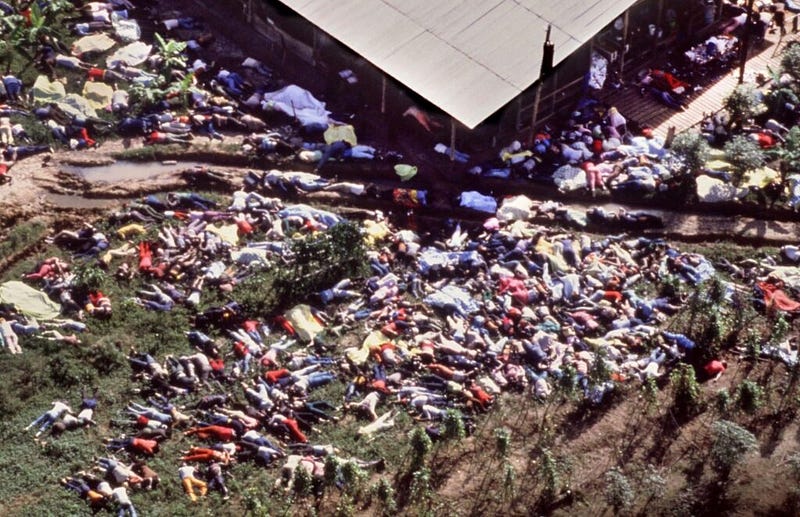
Jim Jones planned a mass murder and suicide in anticipation of the Guyanese government’s intervention. On November 18, 1978, he ordered the poisoning of a vat of fruit punch (laced with cyanide and sedatives), forcing his followers to consume the lethal mixture. Those who resisted or attempted to flee were shot by armed officers. In a couple of hours, 918 people, including over 300 children, were killed, making it the biggest loss of American civilian life in a planned act until September 11, 2001.
Aftermath
The Jonestown Massacre horrified the globe and triggered considerable investigation into cults and their leaders. The incident sparked concerns about the power of charismatic personalities, the risks of mindless obedience, and the necessity for control of organisations that may abuse the vulnerable. Jonestown, decades later, remains a haunting reminder of the dangers of unfettered power and deception within cults. The survivors, victims’ relatives, and the worldwide community are still dealing with the devastating aftermath of that fateful day in Guyana’s woods.