
Traditionalism: Just a fancy name for oppression
Behind all its pseudo-intellectual jibber-jabber, Traditionalism is a political philosophy which sugarcoats a fascist / feudal nightmare for everyone but the few
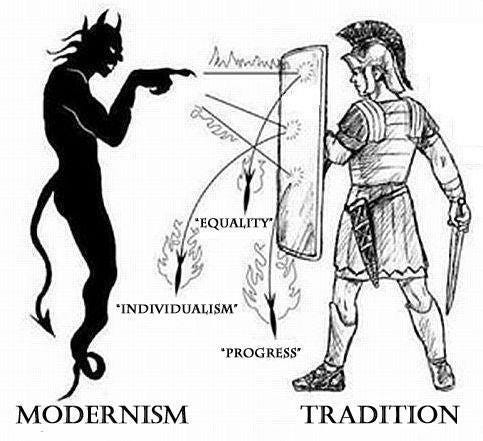
Thanks to tiresome rise of the Alt-Right, as well as the distasteful resurgence of totalitarian / ultra-nationalist movements around the planet, you may have heard about this political philosophy called ‘Traditionalism’. You may have seen it mentioned in news articles about Russia or Turkey, Brazil or Hungary. You may have heard it in reference to far-right religious movements. It can be referred to by any number of names, but the philosophy behind it is usually just a variation on a theme. If you don’t know what Traditionalism is, brace yourself. You are in for a rude awakening.
“Kingship was the supreme form of government, and was believed to be in the natural order of things. It did not need physical strength to assert itself, and when it did, it was only sporadically. It imposed itself mainly and irresistibly through the spirit.” — Julius Evola (Revolt Against the Modern World)
Prior to a couple years ago, I couldn’t have told you what Traditionalism was myself, simply because (like you) it was so far in the realm of fringe bizarro thought that it never came close to pinging my radar. Then, in the last couple of years, I started hearing more and more about Aleksandr Dugin, known euphemistically as “Putin’s Rasputin”.
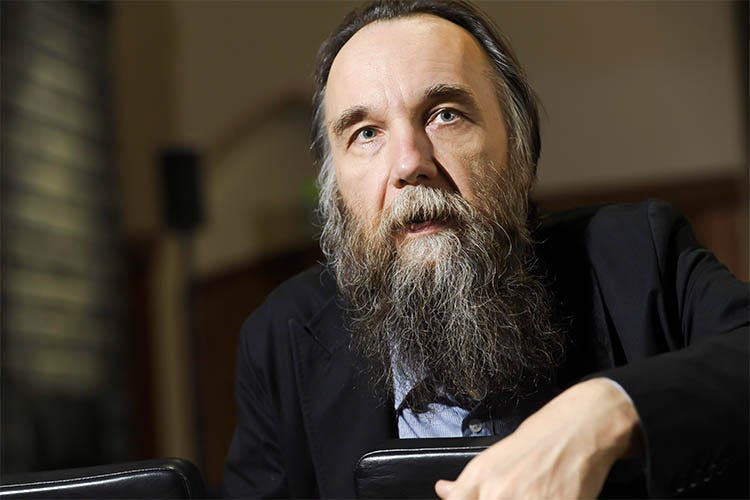
Dugin is a political advisor to Putin and his gang of oligarch thugs, and it is his twisted ideal of “Eurasianism” which is driving policy in Putin’s Russia. Eurasianism as defined by Dugin is his own take on Traditionalism, and one which should frighten any thinking and freedom-loving person.
As I researched both Dugin and Traditionalism further, it was with growing malaise. I was being exposed to a right-wing philosophy so disturbing, so out of touch with reality, and so regressive that it sounded more like the plot of a dystopian novel than anything out of real life. One would not be surprised to find Dugin wearing an eyepatch, stroking a white cat, and saying “We meet at last, Mr. Bond.”
But Dugin is a topic for another read.
I want to take you through traditionalism, or better put, traditionalist conservatism, and the ideals to which its adherents proscribe.
I’ll warn you: Buckle up. If you don’t cringe or make the 😬 face, I’ll be very surprised. What I’m about to describe is what I have learned of traditionalism, and I was ill-prepared for this level of disturbing madness.
Reading these ‘philosophies’ was, quite frankly, my wake-up call. Dugin and those like him who subscribe to traditionalism must be stopped, and the surest way to do so is to expose such mad people and their demented philosophy for what it is.
What Are Traditionalists About?
Without quibbling over minutia, most Traditionalism (or more specifically Traditionalist conservatism) is not dissimilar in its adherence and advocacy of ‘the old ways’. Traditionalism blames all modern progress for the woes of the world. Democracy, equality, individualism, self-determination, these are all ultimately derided by Traditionalism as the cause of all our problems.
Much of traditionalist thinking insists that “non-modern forms, institutions, and knowledge” are where the world should be heading in order to return to a ‘Golden Age’. This is the mystical and ordered world from which our societies have fallen, a way of life in the hazy past where society was holistic, people were satisfied, and the world was stable and made sense.
Such a Golden Age covered all aspects of society, including religion, politics, social strata, gender, and the individual’s relation to his or her society. The Traditionalist blames our abandonment of these ‘traditional’ forms for each and every ill of the world.
Traditionalism desires that we return to ‘traditional’ social structures, both in terms of class, gender, religion, and politics. These forms, traditionalists argue, ensure a cohesive and united society which follows the ‘natural order’ of things. Hierarchy, adherence to doctrine and custom, a return to the ‘old ways’ are at the center of all Traditionalist thinking.
In effect, we would all be happier if we went back to the days of castes, feudalism, and strict religious control. All this freedom of thought, of individual liberties, of gender and race equality is the enemy of the Golden Age, and as such, should be abandoned in favour of the way things used to be.
A Brief History of Traditionalism
Traditionalism is a broad topic, made up of many schools, ranging from architecture, to religion, to music, all the way to politics. Each of these traditionalist movements is a fundamental reaction to the state of the modern world, and a desire to return to more ‘traditional’ forms.
There have been any number of ‘traditionalist revivals’ throughout history, most of them a reaction to progress and what traditionalists saw as a debased form of this or that. “Back to tradition!” is the rallying cry. “Back to old forms, the way we USED to do things, back when things worked.”
The modern political traditionalist conservatism is itself an old movement, extending back to the times of the French Revolution. It is not surprising that this would be the time of such an anti-modernist movement. The French Revolution, the American Revolution, both took place in the latter 1700s. Both revolutions (and those like them) saw a time of rejection of classical political and religious values in favour of a more modernist take on society. Social justice, individual liberty, representative government, these were particularly strong political themes at this time, and as such saw the rise of democratic republics on the ruins of old monarchies and empires.
Political traditionalism rose up as a reaction to the rise in modernist thinking. British Whig politician Edmund Burke is considered the forefather of traditionalist thinking. Burke believed in all things old-fashioned, that it was our duty to accept of the old ways and traditions which had been the foundation of empires in general, and the British Empire in particular.
“We fear God, we look up with awe to kings; with affection to parliaments; with duty to magistrates; with reverence to priests; and with respect to nobility. Why? Because when such ideas are brought before our minds, it is natural to be so affected.” — Edmund Burke
In essence, Burke expected the classic hierarchies to be honoured, for people to reject modernist / liberal ideals (even those espoused back to the Enlightenment, that is, he rejected the Enlightenment ideals of reason over faith) in favour of old forms of conservative values. God, then King, then priests, then nobility. Everybody else down at the bottom where they belong.
So far, so big surprises, right? Nothing one wouldn’t expect from a reactionary mindset back then. Things in these disorganised and chaotic democracies were out of step with the values of our forebearers, etc. Back to the old ways, reject all this progressive / modernist crap. Things were better way back when, etc.
Let’s fast-forward to the 20th century. Traditionalism spent 150 or so years languishing as a fringe philosophy of the right, an extremist ideology which clung on to conservative political thinking like a tumour.
Traditionalism was, by and large, relegated to the backwater of political thought as the modern age marched on. Most conservatives of the times were ill-inclined to associate with the ideals of traditionalists in their most radical form, and for good reason. As the modern age advanced, the philosophies and ideologies of traditionalists drifted further and further into radicalism, their own grim reaction to the egalitarian, liberal democratic societies they saw rising up all around them.
It wasn’t until the mid-1930s, with the early rise of fascism, that traditionalism got itself to a rolling boil. One traditionalist philosopher in particular, Julius Evola, was considered the philosophical grandfather of all traditionalist thought to come.
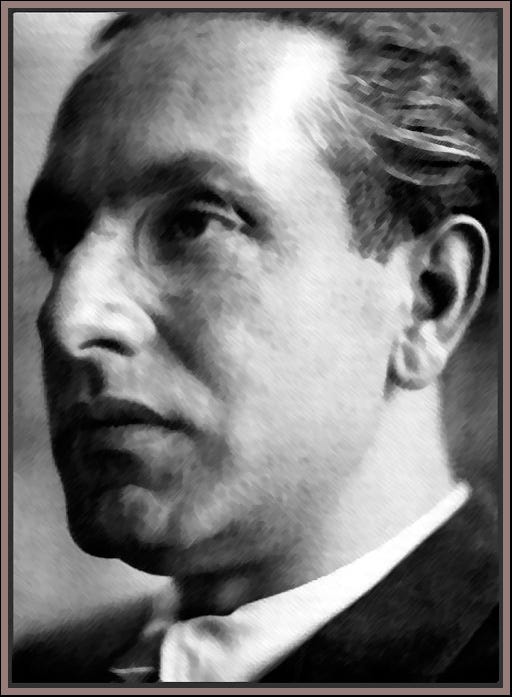
Evola believed fundamentally in a long-lost “Golden Age”, under which all people lived in the far reaches of the past. He described this Golden Age in his book Revolt Against the Modern World. In this pseudo-historical Shangri La, everyone knew their place. The peasant, the warrior, the king, the high priest, all lived in perfect and balanced equanimity with one another. Everyone saw that the material world was of secondary importance to the spiritual world. All acts in this material world would be reflected in the metaphysical life, and thus the need to maintain the old ways and structures of society.
Evola wholly rejected modernity as an abomination, an aberrant decline of human society (specifically Western European society; Evola was a virulent racist and white supremacist). His ideals were that we would return to a society fully structured upon old feudalistic and religious lines. Castes and rigid positions in society, according to Evola, were our ‘natural order’, so why then bunk so much preceding history? Men superior to women, the religious over the irreligious, the king above all, and everyone ‘naturally’ in their place.
“No idea is as absurd as the idea of progress, which together with its corollary notion of the superiority of modern civilization, has created its own “positive” alibis by falsifying history, by insinuating harmful myths in people’s minds, and by proclaiming itself sovereign at the crossroads of the plebeian ideology from which it originated.” — Julius Evola, Revolt of the Modern World
Writers and ‘philosophers’ like Evola thrived in and around the time of Italian fascism and Nazism. Why? Because it was these very philosophies which directly led to fascism and Nazism. Evola and others like him were the intellectual base from which such authoritarian and tyrannical regimes sprang. While Evola rejected any populism in Fascism and Nazism as degenerate, his ideals and racism found a welcome audience among Nazi intellectuals. Mythological imagery of a Golden Age and the old ways returning was certainly appealing to the Nazi imagination of their Fatherland and the sacredness of the Aryan race.
All of Evola’s ahistorical drivel probably rang nice in their ears as well.
Now let’s fast forward just a bit, and see how traditionalism was not simply a by-product of the fargone past.
In the 80s, a growing conservative Christian movement out of the US embraced and espoused traditionalism in religion. The Traditional Values Coalition emerged as a far-right reaction to what it saw as society turned permissive and debased.
Founded by Rev. Louis P. Sheldon to oppose LGBTQ rights, the Traditional Values Coalition was a loosely-affiliated group of Christian religious groups keen on seeing the “Old Time Religion” return to full primacy across the US and the Western world.
America and most Western societies, they stated, were based on Christian religion and ‘values’. These, they claimed, were being toppled in favour of a multicultural, progressive society which was the source of all our ills.
As such, since its founding, the Coalition fought tooth and nail to see their traditionalist Christian vision return. What does that look like? While never 100% explicit in terms of what that idealised Christian nation would look like, the Coalition did have some ideas. From Wikipedia, the Great and Powerful
- Right to life (against abortion and euthanasia but in favor of capital punishment)
- Sexual fidelity in marriage and abstinence before marriage
- Opposition to homosexuality and “other deviant sexual behaviors”
- Opposition to pornography
- Patriotism (supporting national boundaries, the armed forces, political participation, free enterprise, limited government, low taxes, and personal responsibility)
- Opposition to “liberal” immigration reform without first securing the U.S.-Mexico border
- Freedom of Christians’ attempt to convert non-Christians
- Cleanness from addictive behaviors (with opposition to gambling, the legalization of addictive drugs, alcohol, and smoking)
You get the idea. Let’s get back to the ‘good times’ of Judeo-Christian morality and mores.
These are just a few tastes of traditionalism. Have a look around. The would-be new Caliphate, known as ISIS, was an offshoot of such traditionalist thought in Islam. Russia and other Eastern European nations have used traditionalist reasoning in recent years to make homosexuality a crime. Judaism’s far-right sects are fraught in oppressive policies and beliefs, much of them driven by traditionalist thinking. Find a dictator, a religious demagogue, an oppressor, and traditionalism isn’t far away.
Why Traditionalism is a Crock
Let’s break this down as quickly and cleanly as possible. All traditionalism is ultimately a critique of modernity / progress. It claims that things were better ‘back in the day’, and that we need to get back to that. Our society is overrun in debauchery and decay, and that’s why we’re miserable.
So let’s examine this a moment, shall we?
A Golden Age for whom?
Let’s start with the fundamental premise of a “Golden Age”, where everyone was happy and fulfilled and knew their place, where the physical and the metaphysical merged into a societal Nirvana.
Nothing could be further from the truth. Look first at the life of peasants, those making up the lion’s share of society (approx 85% of the population).
“It is the custom in England, as with other countries, for the nobility to have great power over the common people, who are serfs. This means that they are bound by law and custom to plough the field of their masters, harvest the corn, gather it into barns, and thresh and winnow the grain; they must also mow and carry home the hay, cut and collect wood, and perform all manner of tasks of this kind.” — written 1395
Peasants owed allegiance and complete docility to the nobility, religious leaders and their hired goons. Unquestioning fealty and obedience were strictly enforced. Any dissent immediately led to their imprisonment or execution, irrespective of the circumstances.
Peasants were expected not only be servile and do all the work, but to also pay tax / tribute to their liege lords and the church. Peasants had to pay rent for use of the land to their lord as well as pay a tax to the church called a tithe. This was a tax on all of the farm produce they had produced in that year. A tithe was 10% of the value of what was farmed.
Peasants were expected to work for free on Church land, growing crops for the clergy free of charge, time which they could have used growing their own crops.
All peasants worked six days, seven if it was deemed ‘right and just’ by either their lord or by the clergy. There were no weekends, very few festival days, and work went on from before the sun came up to after it went down.
Due to harsh working conditions, mistreatment, malnutrition, and the broad effects of poverty, few if any peasants lived to see their 40th year of life.
Religion had a veritable death grip on society. All castes were ultimately beholden to the church, royalty included. The Church ruled everything and everyone. No ruler could be said to be legitimate unless ‘anointed by God’, which of course was doled out from the clergy as they saw fit.
Any belief systems which were in any way variant from those of the Church were considered heresy, apostasy, or witchcraft, and were punished ruthlessly. Any and all ‘deviance’ sexually, or any women seen as getting out of their station were ruthlessly punished, publicly flogged, burned at the stake, or imprisoned for life.
Public education and individual liberty were, of course, non-existent. Justice did not exist for peasants when it came to any dispute with nobility or the church. One was superior and the other was not. God and religion were wielded as a club against any thought of freedom or self-determination.
Irrespective of where in the world you look, traditional societies were hardly paradise for the masses. One need only peruse the history of civilisation to find traditional societies of the past as invariably cruel, brutish and short for the majority of humanity. A sliver of powerful few ruled over the top, keeping any and all power and spoils for themselves. From Feudal Japan to the Islamic Empire to Western Europe’s medieval age, we see suffering and privation, a repressive and tyrannical society meant only for the rich, the landed, and the powerful. If you can imagine all of us living in North Korea under the Glorious Leader, you start to get some semblance of what traditionalists believe is a Golden Age.
What they mean by a Golden Age is really a Golden Age for them, for it clear any such society set up would put them in a vaunted station. It is highly unlikely any traditionalist would relegate themselves to the station of the unwashed, oppressed and battered masses.
Modernity was a natural reaction to Tradition
With the lives of the majority of humanity in medieval Church/State-imposed hell on earth, it is not surprising that something else would eventually rise up to overthrow the old order. A society thus structured as were traditional ones were unjust and repressive. With the passage of time and the advance of knowledge, so came the desire for individual freedom from the masters. Slow but inexorable, voices and revolts for change began to show themselves across traditional societies.
The basic nature of the old-world ways was one of blatant inequality and oppression. All the pretty words of traditionalists like Evola cannot unwrite historical fact. As the centuries and millenia rolled on, peasant revolts grew in size and frequency, all of it leading up to the advent of the modern age.
Peruse this list of peasant revolts. In and around the mid 14th century, we see a massive increase in the peasantry fighting back.
Why? The fall of traditional social orders had many factors, but a clear driver was that the majority of people were fed up with their treatment by their ‘betters’. Peasants revolted, or moved to towns where they could secure a better life for themselves. The scientific revolution beginning in the Renaissance led to the Age of Reason, a time when logic and science openly questioned such notions as the divine right of nobility, the unquestioned status of the Church.
As species evolve, so do societies. With the advancements of the human race in science and technology, so came societal changes with them.
Modernity is the natural order of progression from traditional societies, not an aberration of them. As knowledge, science, and reason spread, so did the understanding that the traditional societies were made for kings and popes, lords and priests, never for the beaten millions who were the real source of power.
Religious Traditionalism: That Old Time Religion was no Heaven on Earth
Let’s fast-forward past medieval times into modernity. Anyone selling the idea that traditional religion was the binding glue which made a moral and healthy society tick is either deluding themselves or trying to sell you something (likely both).
Fundamentalism, the traditionalist branch of religion, has been defined as ‘ideological intransigence’, in essence a complete unwillingness to accept anything which differs or contradicts religious texts or leaders. The words of the Bible / Koran / The Upanishads are TRUE. They are FACT. Any questioning of the Divine inspiration of their words from the Golden Past is heresy.
Fundamentalist religion has been the reactionary force against any number of scientific discoveries and social advancements, in particular those which grant women, minorities, and LGBTQ people any semblance of equality with the society’s majority population of men.
Fundamentalism in religion has been linked to oppression and violence against women and LGBTQ, repression of reproductive rights, and any number of hard pushes to deny basic human rights to anyone they deem ‘immoral’ or ‘degenerate’.
In the sciences, fundamentalism has been a driving force against the teaching of evolution, the accuracy of the scientific age of the earth, stem cell research, just to name a few. Instead, such religious adherents would have us revert to an intellectual dark age, in which the earth is a mere 6,000 years old, humans are the product of divine construction, and any/all science which would usurp the ‘Will of God’ are actively suppressed at every turn.
The Flat Earth movement, that fringe rabble of tin foil hats who claim science is a lie, the Earth is flat and gravity doesn’t exist (“Things just fall” is their answer), has its roots in traditionalist religion, believing that the round earth ‘hoax’ was set up to turn people away from God.
Religious traditionalists want nothing more than to undo any progress or scientific discoveries which run counter to their beliefs. From the Catholic Church and its heresy trial against Galileo, to the Salem witch trials, all the way down to the near-countless attempts by these groups in modern times to stop any and all advances of women’s and LGBTQ rights, one must look askance at any attempt to paint traditionalist religion in any light other than repressive.
Traditionalism: A philosophy based in fear, meant only for the few
In the final equation, when one looks at traditionalist movements, one sees a fear-based reaction to change. Rather than tackle the complexities of our modern society and civilisation, traditionalists recoil from the task, seeking to force our species back to the worst humanity has to offer. “Back to the past” is a slogan with its roots in a terror of the inevitable chaos of the present. The past always feels more secure, for everyone thinks better of that which is dead and gone.
Fear drives traditionalists to seek simple, hard-and-fast rules to the woes of life. Far easier is the path of enforcing draconian rule over the masses than to truly deal with the varying ebb and flow of post-modern human interactions. While anyone would agree that we face a wide swathe of social ills which are the byproduct of modern society, traditionalist thinking imagines that those social ills can be cured with a toxic brew made of subjugation, superstition, and unquestioning obedience to those in power.
Which brings us to the most important point of all: Traditionalism is, like so many despotic philosophies, simply a pretense for the rule of the very few over the very many.
No more equality, no more social justice for all, no more progress. Those who try to push traditionalism on us are corrupt seekers of power. It is they who believe themselves to be our betters, and would seek to create once more the kind of barbaric and undemocratic societies most of us look upon with revulsion and dread.


