
THE SOUNDS OF WELLBEING
Traditional Irish Music Sessions Celebrate the Resonance of Soulful Friendship
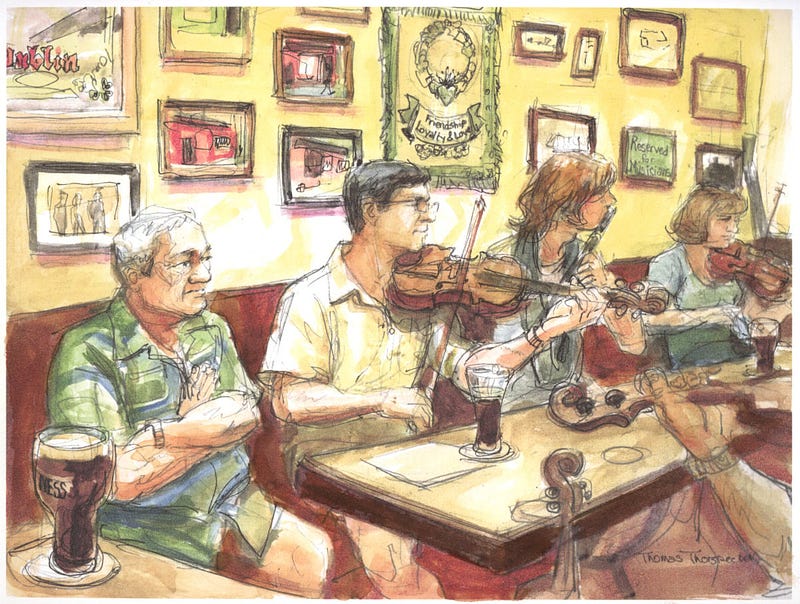
In pubs, homes, and dance halls throughout the world, a very special type of musical alchemy is brewing that transforms strangers into friends, friends into family, and families into a universal community of soulfulness.
It is a magical, musical celebration that transcends the limitations of time, space, race, gender, and social class.
It heals loneliness, uplifts the human spirit, and binds countless human souls in a supportive, nurturing community of resonant, joyful camaraderie and wellbeing.
So what is this remarkable, celebratory phenomenon? For me, the answer is simple: it is the experience known as the traditional Irish music session.
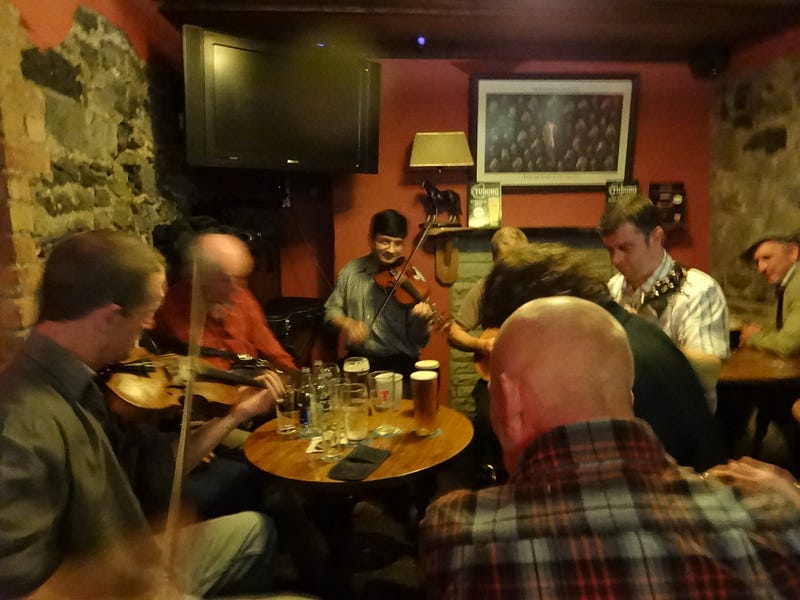
What is a Traditional Irish Music Session?
An Irish traditional music session is a casual gathering of musicians who meet to play traditional Irish music (also known as “Trad” or, more affectionately, as “the Music”).
The basic contours of the Music and the typical Irish trad session are relatively simple: traditional Irish music consists of a vast collection of thousands of different traditional Irish tunes that players arrange into sets (usually three tunes to a set).
The richness, complexity, and vitality of the Music comes from its living, alchemical fusion of tunes, players, and audience.
Unlike the rigid formality of classical music, Irish music is highly dynamic, improvisational, and collaborative. There are no fixed combinations of tunes to a set, and players are free to arrange tunes in sets in new and creative ways.
Thus, the living essence of Irish music is much like human DNA.
Energy, life, and soulfulness are born from the endless varieties of dynamic tune combinations that are forged when ceoltoiri (Irish for musicians) gather and play.
Irish Trad music is visceral and intuitive. There is no sheet music or conductor to constrain the organic flow of the music.
Ceoltoiri learn their tunes by heart, play by ear, and shape their musical voice by developing a close rapport with the style, energy, and tempo of each of the other players.
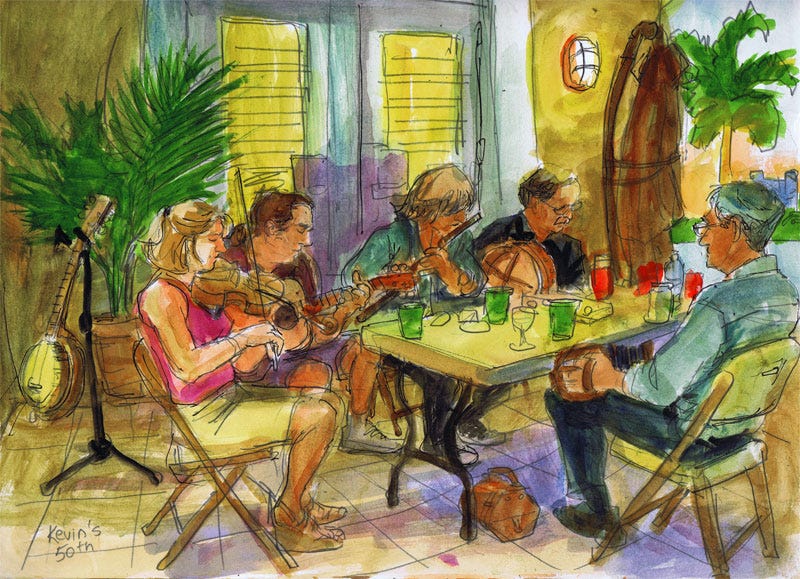
Trad music also fosters invigorating inclusiveness among musicians. If you have some proficiency with your instrument and the Music, and if you cultivate the ability to show respect, listen deeply, and adjust to the musical vibe of others, then you are likely to be welcome to play in any session in any pub in the world.
While most sessions are held in pubs, the flexibility of the Music allows them to flourish as well in a wide variety of informal settings, including private homes, community centers, streets, and other outdoor locations.
For example, during music festivals in Ireland, it is common for the streets of the town to come alive with players, dancers, and onlookers from numerous impromptu sessions.
What makes traditional Irish music sessions so special?
When the players are in sync, the punters (onlookers) are lively, and the tunes (and pints) are flowing; a tangible, transcendent, magical energy infuses the entire experience.
What words can describe or explain this special energy?
The Irish often use the word “craic” (pronounced “crack”) to describe the energy of a good session. Craic means “fun or a good time”, and it almost always conveys a sense of revelry and banter in the presence of good friends (and almost always in the context of being “out” somewhere).
There is no question that “mighty craic” is a vital part of any good Trad session. But craic alone does not come close to describing the beauty, mystery, and even sacredness that suffuses the experience of weaving the magic of the Music with fellow ceoltoiri.
In recent years, numerous scientific studies have shown that the experience of hearing and playing music with others has a host of positive cognitive, social, and emotional effects. Studies have shown that playing music with others 1) increases our ability to connect, coordinate, and cooperate with others, 2) boosts oxytocin levels in the body (which enhances our feelings of trust and generosity towards others), 3) strengthens our capacity for empathy, and 4) reinforces social bonding and cultural cohesion.
All of these are benefits that I have received during my twenty years of playing the Music. However, even these studies don’t explain the magical fullness of the Trad session experience.
For the most complete and meaningful description, I rely instead upon the wisdom of ancient Irish spirituality and the Irish spiritual term anam cara (Irish for “soul friend”).
The soulful friendship of the Anam Cara
In his book Anam Cara: A Book of Celtic Wisdom, the late Irish poet and scholar John O’Donohue beautifully describes the ancient Irish spiritual concept of soulful friendship:
In the early Celtic church, a person who acted as a teacher, companion, or spiritual guide was called an anam cara. It originally referred to someone to whom you confessed, revealing the hidden intimacies of your life. With the anam cara you could share your innermost self, your mind and your heart. This friendship was an act of recognition and belonging. [Anam Cara, p. 13]
While the ancient Irish concept of anam cara was used to describe a religious (and often monastic) relationship, for me this term also beautifully describes the richness of the musicians’ relationship with each other.
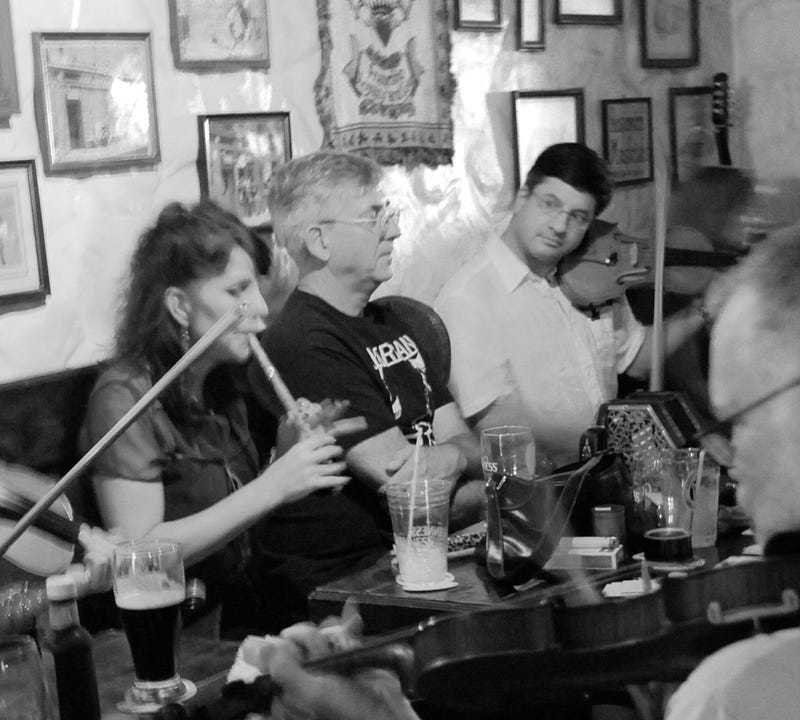
The act of making the Music is an act of soulful friendship.
In making the Music, the ceoltoir summons the voice of their soul and offers it to the other musicians. Each musical note and phrase is an offering, a confession, a rich and resonant moment of vulnerability, celebration, and intimacy.
It is in these moments that the anam cara magic of soulful friendship is born.
By offering the music of your soul to the group, you reveal your innermost mind, heart, and self. And when the Others receive your voice, and respond with their own, in synchronicity and harmonic resonance with yours, you bask in an uplifting, healing, exhilarating moment of recognition.
The voice of your soul has been recognized, accepted, supported, and joined in companionship and love with the soulful voices of the Others.
And in those moments of recognition, as you merge your soul voice with the others to generate and bring the tune to life, there arises a precious and healing sense of belonging.
In that rich, resonant, and timeless space of musical beauty and soulful friendship, you abide in a shared, sacred space where your soul, and the souls of the other ceoltoiri, truly belong.
This intimate communion of shared voices transcends the sense of friendship and family. It is a pure celebration of the human spirit that knows no boundaries or limitations.
For me, there is no better example of the intimate beauty, resonance, and soulfulness of anam cara friendship than the musical partnership of East Clare fiddler Martin Hayes and the late American guitarist Dennis Cahill. Guitar accompaniment in Irish music is often a barrage of frenzied, percussive strumming, but Dennis’ attentiveness, responsiveness and attunement to the flow of Martin’s melodic lead creates a symbiotic rapport that uplifts them both.
In my view, the magic of anam cara connection is the true essence of what makes the experience of traditional Irish music (and Irish music sessions) so special.
The experience of the Trad session, and of the Music itself, is a celebration of the power and promise of human intimacy, recognition, and belonging.
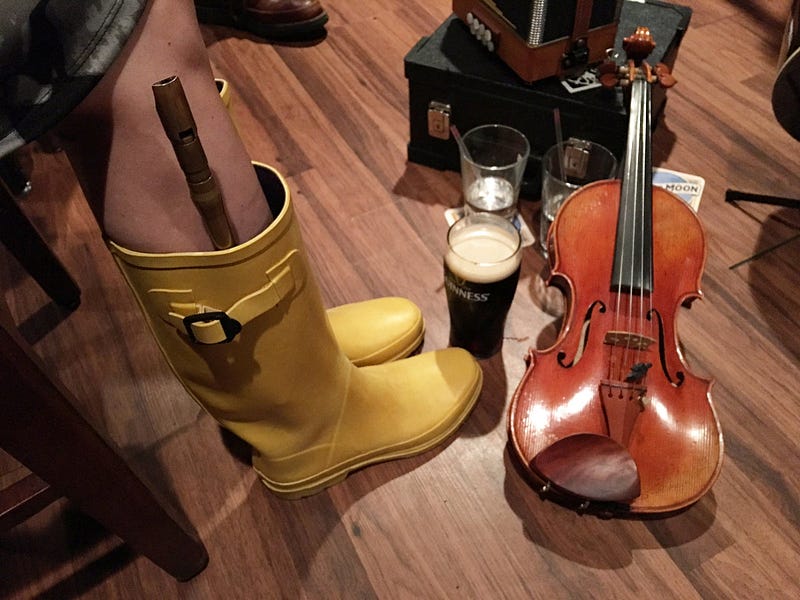
There is so much more I could write, but the best way to feel the joys of the Music is to experience it yourself.
If you have never had the pleasure of experiencing the magic of a Trad session, check out The Session.org, which has a searchable database that lists the dates, times, and locations of regular sessions in nearly every major city in the world. Find the session in your town, and go join in the craic!
If you are a musician interested in Irish Trad, the folks at Dublin-based McNeela Instruments have a really good website with detailed tips and information about session etiquette, how to join a session, Irish cultural centers, and other good stuff.
Thanks very much for reading, but I gotta go now. I have a session tonight, and the new tune set I’m gonna share with my friends needs a final polish…
Footnotes
[1] Anam Cara by John O’Donohou, Page 13.
If you are not a paid member of Medium, feel free to follow this link to bypass the Medium paywall to read all of my posts and articles.
And follow this link to subscribe to receive an email every time I post a new article!