
Toyon
Will this plant help you remember you forgot it?
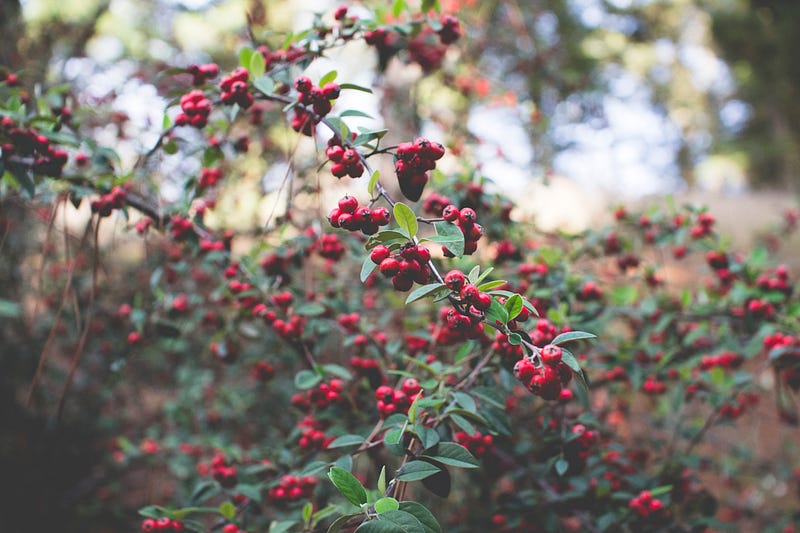
Today’s New York Times Spelling Bee letters:
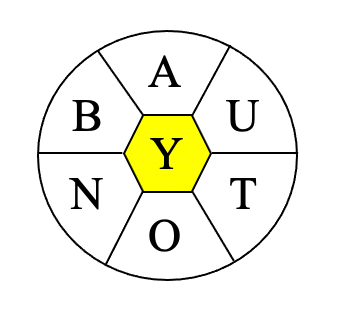
A, B, N, O, T, U, and center Y (all words must include Y)
Merriam-Webster says…
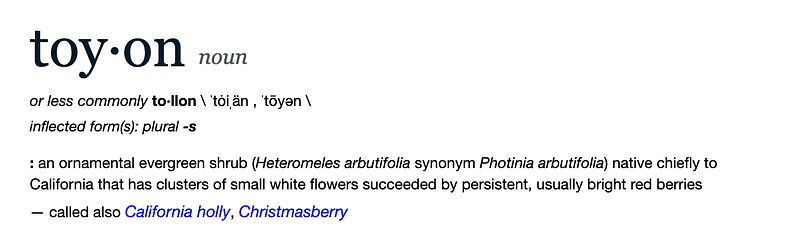
Silly little dictionary! Don’t you know that toyon can’t possibly be a word if the New York Times says it ain’t?
For further fascinating facts, check out the Spelling Bee Master.
What’s your favorite dord* from today’s puzzle?
My Two Cents
Would you be surprised to find out that the city of Los Angeles has an official native plant? By plant I mean vegetation, not a factory. And no, I’m not going to make a joke about how the official plant of Los Angeles is likely made of plastic. That would go better with Hollywood. And Hollywood is not in L.A. Oh, wait…
Coastal sages
Not wise men who hang out at the beach. These plants, known also as coastal scrub or soft chaparral, are commonly found in the coastal areas of California. The smaller shrubs include the California sagebrush and the California buckwheat. The larger ones include the lemonade berry and our daily dord*, the toyon.
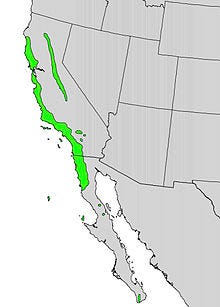
Heteromeles arbutifolia is the sole species of its genus, and can be found as far north as Oregon and even British Columbia. Here is its natural range in California, just in case you want to look for some coastal sage while you’re there.
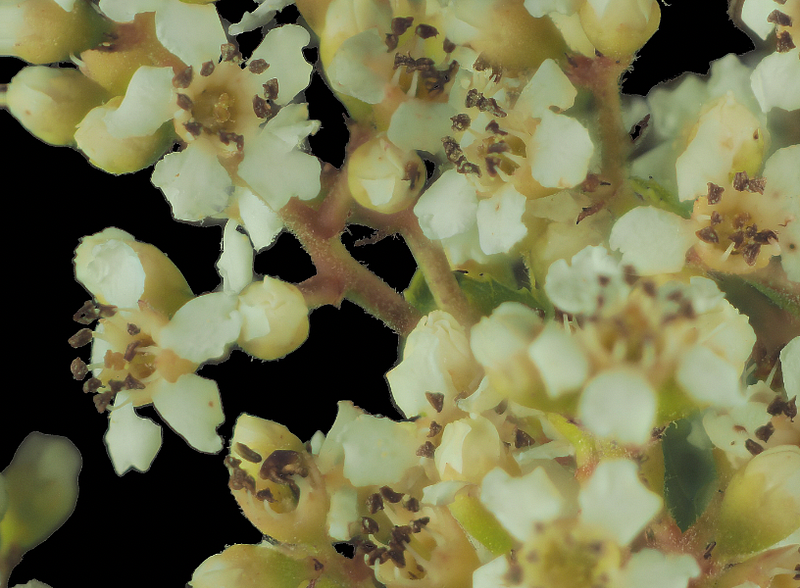
It’s a hardy perennial with evergreen leaves and can grow up 30 feet in height, although typically it’s about half that size. It is cultivated in domestic gardens because it requires very little work, and also because of this:
And this:
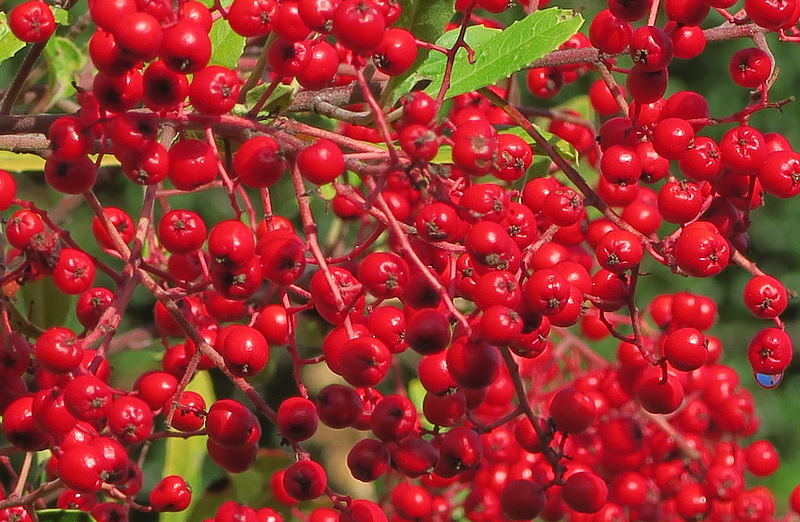
Now, although the fruits look like berries, they are actually tiny apples. Not literally, of course, but the toyon plant belongs to the Rosaceae family, which includes cherries, peaches, almonds, raspberries, pears, and apples. The latter two are types of fruit known as pomes. And so is the fruit of the toyon.
This fruit has been found to contain several compounds that may be of interest in the treatment of Alzheimer’s disease. A study published in 2016 explained the following:
“Senile dementia, now commonly called Alzheimer’s disease or vascular dementia, was known among California Indians before Europeans came to California. The condition was commonly treated with a native plant, Heteromeles arbutifolia, also called toyon or California holly. The medicine consists of about 5 g of the dried berries which are slowly chewed and swallowed by the patient. The medicine slows down the progression of the disease and helps patients continue to have productive lives.”
Because of its bright red pomes, the toyon has been a popular Christmas plant. In fact, rumor has it that collecting toyon branches during the holidays became so popular in Los Angeles that California had to pass a law forbidding this on state-owned land.
And speaking of California…
Bear with me state
Most people who have seen California’s flag have guessed that the grizzly bear is the state animal. If you don’t know what the flag looks like, here it is:
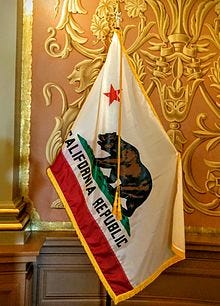
Can you guess what the state animal is? Oh, wait… O think I gave away that spoiler already.
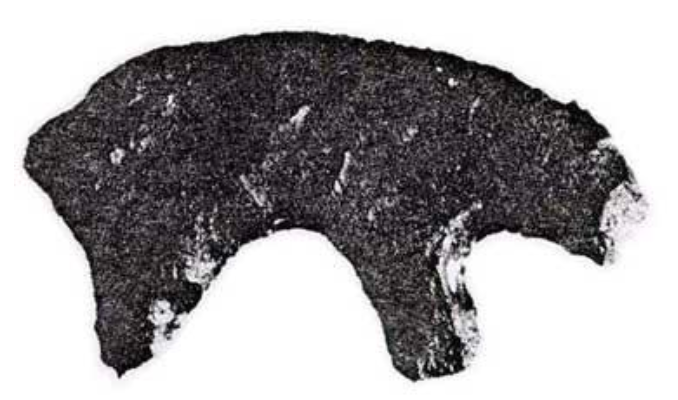
It turns out California loves to name things as their “state something”. There amphibian is the red-legged frog. In 1991 California became the first state to designate a prehistoric artifact as an official state symbol: a chipped stone bear found several years earlier, estimated to be about 8,000 years old.
But wait, there’s more. The California quail is the state bird, the marine fish is the garibaldi, and there is not one, but two prehistoric beings on the list of state things. One is a type of hadrosaur (the state dinosaur) and the other is the saber-toothed cat (the state fossil). The state flower is the poppy, which brings us to the state holiday: Poppy Day, every April 6 since 2010.
California’s state rock is the serpentine, its state tree is — of course — the redwood, its state folk dance is the square dance, and its state fabric is denim. In case you’re wondering, in some areas of California it’s Denim Day every day.
Now, when Antonio Villaraigosa became mayor of Los Angeles in 2005, he was probably a bit concerned about California hogging up every single living and non-living thing as a “state something”, so he quickly asked the city council to adopt a resolution naming the toyon as the official native plant of his city.
Well, maybe not so quickly, since it did take him seven years to do it after getting elected.
Now you know. If you are ever in Los Angeles, take a selfie with a toyon, tweet it, and post it to your insta. Just don’t rip out its fruit-laden branches; I’m not sure if that’s legal or not nowadays.
Perhaps if enough people do that, the editors of the Spelling Bee will stop thinking that toyon is a dord.*
You can check out my previous entry on another dord* here:
*What the heck is a dord, you ask? Here’s the answer: