
Toxic Masculinity, Men’s Rights, and the “Not All Men” Argument
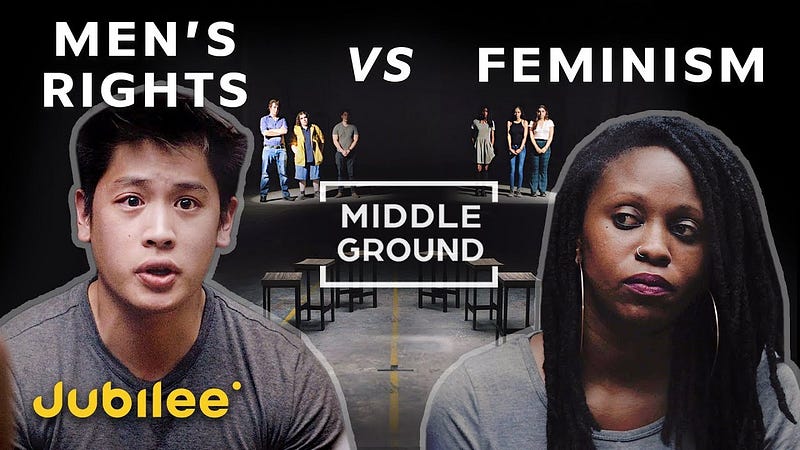
Jubilee Media recently released a video titled “Men’s Rights vs Feminism: Is Toxic Masculinity Real?” via their YouTube channel, in which a group of six men and women who identify as feminists and men’s rights activists address their conflicting stances on gender equality.
The disparities between the genders, along with their roles and expectations within society, is not only a hefty topic to confront but also a complex one. Issues related to violence against women, the wage gap between the sexes, and the harmful effects of enforcing archaic patriarchal views of masculinity on boys and men were brought up by the women that identified as feminists.
On the other side, those that considered themselves men’s rights activists addressed systematic disadvantages that men face. Particularly, in the justice system, where they argued men are being disproportionately sentenced to and executed in prison compared to offenders of the opposite sex.
Despite their differences, some participants were able to see eye to eye on how men can be denounced as victims to abuse due to the expectations placed on men and boys to be the stronger and dominant sex.
There were also many issues that were hardly, if ever, touched on in the video though, such as women still belonging to the minority in our government and other male-dominated industries such as media, automotive, and STEM fields.
Ultimately, some might find that there was little to no middle ground to be found by the end of the heated discussion which doesn’t prove conducive to a productive understanding of the matter from either sides’ perspective.
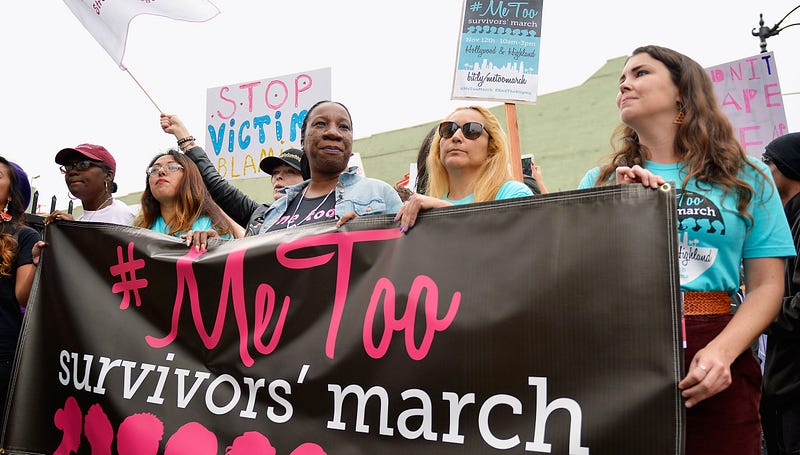
Toxic masculinity has become an especially hot topic since the rise of the #MeToo movement in 2017. According to Urban Dictionary, the phrase can be defined as,
“A social science term that describes narrow repressive type of ideas about the male gender role, that defines masculinity as exaggerated masculine traits like being violent, unemotional, sexually aggressive, and so forth.”
This term was brought up often in the Jubilee video and is largely discounted by many men’s rights activists who do not believe that toxic masculinity exists and thus not at fault for violent events that are often carried out by men. However, in spite of men rights’ activists like Paul Elam, founder of the organization and online publication A Voice for Men, claiming that men within the movement are being scapegoated for the violent and spiteful mentalities behind the acts of mass shooters and brutal attacks on women, the rhetoric alone used by activists like Elam can prove harmful to both men and women.
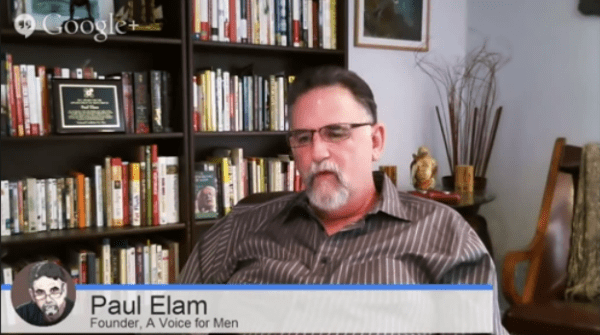
In the launch of his publication’s radio podcast, Elam stated,
“…our current gender zeitgeist is one that has promoted and enabled such a degree of female narcissism and entitlement that it has now produced two generations of women that are for the most part, shallow, self-serving wastes of human existence — parasites — semi-human black holes that suck resources and goodwill out of men and squander them on the mindless pursuit of vanity. Is this all women? No, of course not.”
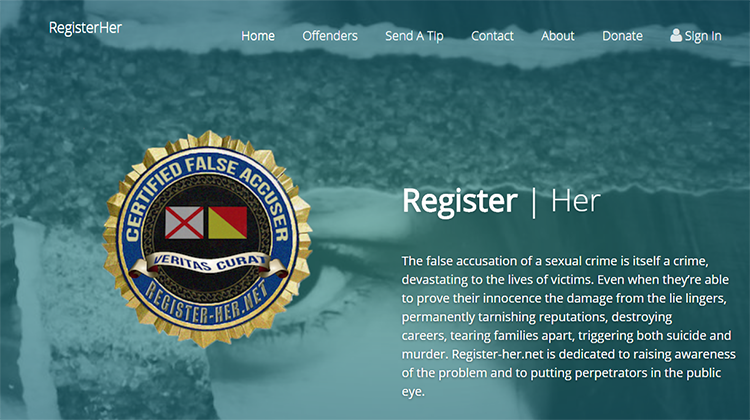
On top of his criticism towards women, feminists, or anyone that proves to be on the opposing side of the movement’s ideals, Elam has also advocated for making rape legal on private property, has “satirically” suggested making October “Bash a Violent B*tch Month” where men should defend themselves by unleashing violence against women that would raise their hands to men, and is the creator of the website register-her.net, which publishes personal information on women who have been deemed false rape accusers or convicted for making fake rape allegations against men.
Oddly enough, despite his scathing criticism towards women, Elam eventually relents that he does not think that “all women” exhibit signs of being “self-serving wastes of human existence”. For some, it might be fair to assume that the only women that Elam exonerates from this harsh portrait are those that agree with his thoughts on how modern society has instigated the emasculation of men.
It’s hard to remember that ideologies like Elam’s might be in the minority among how men overall view women. Especially when behaviors that reflect the entitlement and hostility entailed within these ideas present themselves on a regular basis to women in both traumatizing and fatal ways.
In the statement above, Elam’s choice of words not only prove ironic but reflective of an argument that is often made by men who feel as though they have been unfairly lumped in with those of their sex who exhibit oppressive behavior or commit heinous crimes against women.
While “not all men” is a fair argument to make in certain cases, the user might often make the mistake of sounding as if they are disregarding the valid concerns that women raise when speaking on the power imbalances that exist where the relationships between women and men are concerned.
Generalizations can be harmful and frankly unfair when related to any particular group they’re applied to; this includes men. It’s not fair to say “All men are trash” or “I hate all men” but sentiments like these can be found all over social media. In truth, not all men are tyrannical, violent, or think themselves superior to women simply because of their gender.
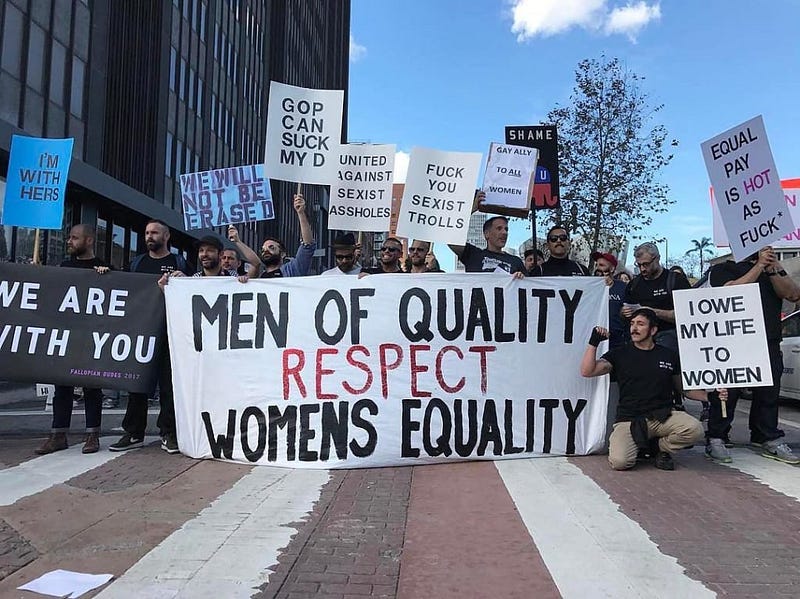
It’s also true that plenty of men display at least one of these characteristics, if not all of them, but there are also men that consider themselves feminists and proudly stand with women in their battle to gain equality.
For women though, encounters with men that do enforce their physical and systematic privileges over them can be an overwhelmingly habitual occurrence throughout the span of both their girlhood and womanhood. What feminists, or even women that do not identify as such, have long fought and still fight to procure for themselves are things that should be considered basic human rights. This includes, but is not limited to, the right to equal and fair living wages, the right to have a say in their bodies and physical health, and the right to say no without facing repercussions in the form of harassment, assault, or even death.
When it comes to debating the rights of men and women and who is at a higher disadvantage in our current culture, it should not be about blaming the totality of either sex for the issues that each one faces. It should be about holding up issues such as violence and inequality and not only acknowledging the fact that both women and men can be victims on varying levels but doing the work of highlighting which group has proven more at risk or unjustly susceptible to the social and systematic bias and inequity that is still perpetuated by both men and women.
Though the discussion would surely produce contrasting, and not to mention heated, opinions and evidence on either side it’s clearly a discussion that we, as a society, need to take more time and care to examine and confront.
References
Belanger, Henry P. “Meet the Men’s Rights Movement.” The Good Men Project Magazine.https://goodmenproject.com/ethics-values/meet-the-mens-rights-movement/. Web. 02 Dec. 2019.
Jubilee Media. “Men’s Rights vs Feminism: Is Toxic Masculinity Real?” YouTube, 01 Dec 2019. https://www.youtube.com/watch?v=hOUGNGWmN0k.
“Male Supremacy.” Southern Poverty Law Center. https://www.splcenter.org/fighting-hate/extremist-files/ideology/male-supremacy. Web. 02 Dec. 2019.
“Register Her.” Register-Her.net. Web. 02 Dec. 2019.
“Toxic Masculinity.” Def 1. UrbanDictionary.com. Urban Dictionary. Nov. 2017. Web. 02 Dec. 2019.


