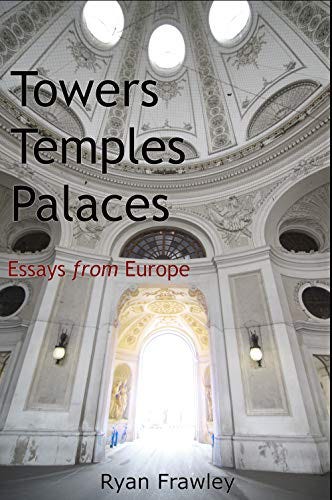
Towers Temples Palaces: Ryan Frawley’s Essays From Europe
A writer’s memoir of living elsewhere
“For as long as my heart keeps knocking in my ribs, I’ll always be home.”
This is how Ryan Frawley travels, likening it to the life of a hermit crab.
The title, Towers Temples Palaces, is a way to see the world, whether we are speaking of navigating tourists and tourism, or the temple of home within our very selves, or the forests or rivers, or aged buildings from other times — our palaces.
I’ve been reading Ryan Frawley’s work here on Medium for the past months, and I sought out his books, and purchased this. (Next will be his novel, Scar.)
This is a collection of pieces, each discrete (though they do build), each resonant. The sort of book I like to pick up, read a section, ponder, ponder my day, my place, and put away. Pick up again. Life affirming. Art affirming — that comes through. Why we choose to have lives of imagination.
In these days of not being able to travel readily, it was added delight.
“Forfeit awe, and the universe becomes a marketplace.”
“The boats jostled one another gently, the soft slap of the water against their sides like a kiss.”
“I watched a fat yellow moon rise slowly above the sleeping ships, distorted by heat and warm air to look twice the size it should.”
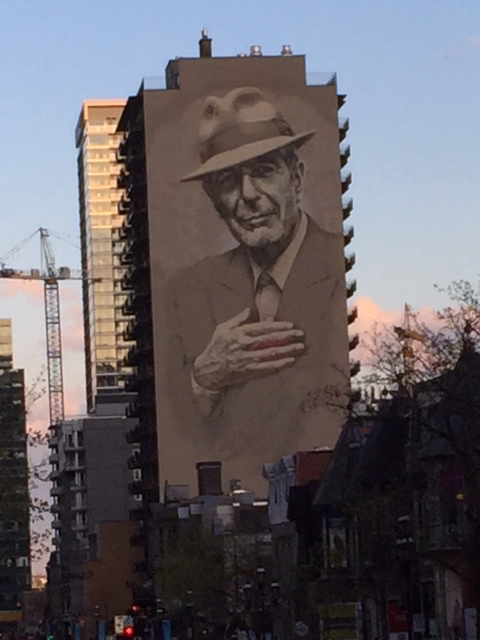
Everyday miracles. Does not make them less miraculous. Art is life-sustaining force. One piece/chapter, tribute to Leonard Cohen, opens with Frawley’s memories of the day the poet died. And ending, again, on the resonant note of the role of Art in our lives: it saves us. Of artists, he says, “we’ve forgotten how to make them.” Later, in the pieces, there are questions of the role of money in our lives — questions I ask daily. And the wondering over children playing the same games we did as children. Wondering over what it is to simply live. To appreciate.
Another piece takes the reader to the trenches of World War One in the forest on the Italy and Austria-Hungary border. Frawley went alone to that place, and the piece has that sense —lone encountering ghosts. And how easily WWI does not “fit” the good/evil of WWII. The senselessness of it. Mental and emotional trenches.
Another opens and closes with a French bus driver lighting a cigarette on a break on his bus, and speaks to culture and pleasure… Each piece is a treasure of reflection: what gives our lives meaning and depth? What are we willing to give up? Always, with the thought to go out into the world, and savor. The Life is beautiful written over the walls of Prague.
Everyday magic — the church built on an island off coast of Montenegro on the stones piled by grateful fishermen. Spontaneous singing of the Marsellaise in Toulouse.
“But love is an unknown, a big black dog I can’t bring myself to trust, and even to name it seems like an incantation that will only bring misfortune and disturb dark gods.”
City after city, country, towns. And the character of each. Evoking yearnings and creating glimpses for the reader. A rich read indeed.
“It’s that sky, the same light that bewitched Picasso and Monet, blue… I’m trying to steal with a clumsy pen.”
A pen that draws and paints beauty and blue.
Thank you for this, Ryan.
Choose your next read from one of the following:


