Towards Trust Networks and a Bullshit Meter
I wrote this piece several years ago but never posted it. Posting it now in case any of the ideas here are useful.
Statement of Problem:
False information presented as fact and shared on social media is obviously a serious problem.
Popularity of an item does not generally equate to truthfulness. So ‘like’s, even pagerank, is not a reliable indicator of actual truth. We need some sort of score that does a best-effort attempt to estimate the real world truthfulness of any given statement.
First, what do we mean by statement? A statement for this purpose is a blob of text + some form of identification of the source or source chain, which may include the poster, the site its posted on, and possibly the poster’s source and original source of the statement.
Next, what do we mean by truth? The truth of a statement is its accurate representation of events or measurements in the real world, which may include what someone said or didn’t say using digital media. Truth generally propagates from first hand accounts and/or reliable data accumulation, sometimes thru expert or trusted mediators. There may be logical checks of truth (ie if a person was born in 2000 he could not have seen or said something in 1996)
The design of a solution should include several parts:
- how to represent and where to store statements, sources, and source chains
- how to estimate the truth of a given statement + source combination. Reliable existing sources such as Snopes will probably be key sources to propagate from.
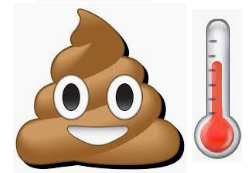
- how to represent the estimated truth in a useful way to the end user. One possibility could be a ‘bullshit meter’ snippet that could be easily embedded into social media sites and posts, generating recognizable image from an API call, with some security or legal copyright protection for its use. Posts choosing not to embed the ‘bullshit meter’ would be automatically suspect; and its use could be automated on some popular sites.