
Torn Apart: How Authoritarian States Exploit Political Division to Destroy Democracy
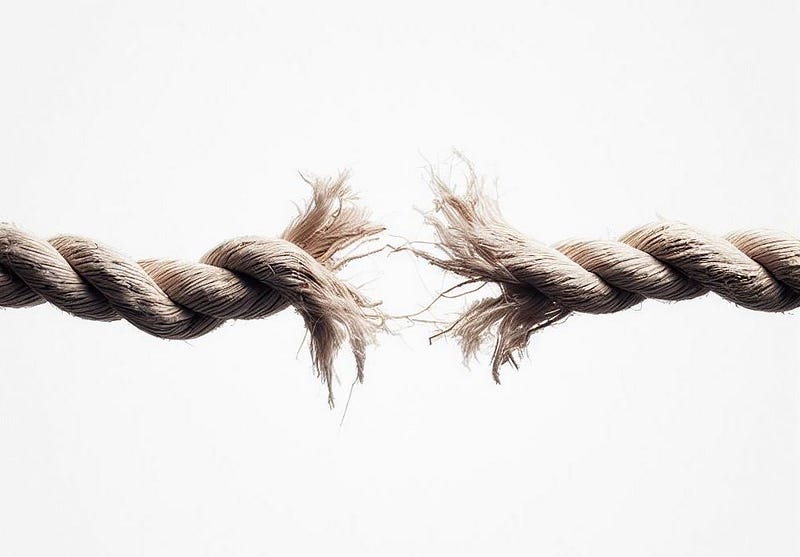
It’s not a coincidence that we are witnessing an epidemic of hatred and polarization in democracies around the world. While there are numerous reasons for this trend, a significant portion of it is politically intended and deliberately being fueled.
Authoritarian states have identified social cohesion as the Achilles’ heel of democracies. They seek to divide Western societies and undermine public trust in democratic institutions by amplifying extremist voices and spreading disinformation about divisive political issues, such as Black Lives Matter, immigration, and gun control — with resounding success:
In many democracies, opposing political camps are tearing each other apart, overlooking the devastating consequences of their childish animosities. Blinded by hatred, they fight against their own brothers and sisters, while their real adversaries sit back, watch with satisfaction, and goad them on.
Few seem to realize that political tribalism (“us vs. them”) doesn’t help anyone — except the enemies of democracy. Constructive political discourse, a fundamental pillar of democracy, is rapidly crumbling. And events like the January 6 Capitol attack are cause for celebration in Pyongyang, Tehran, Beijing, and Moscow.
What can we do about it?
Whether we are politicians or ordinary voters, we need to understand the geopolitical significance of disinformation and political polarization: When we insult, belittle, and dehumanize our political “foes”, we may temporarily feel a sense of satisfaction, but in reality, we are not helping ourselves. Instead, by fueling hatred and division, we are aiding authoritarian regimes in their struggle to destabilize democracy.
To avoid this, we need to find our way back to peace and reason. We must escape the tunnel vision of hatred — or, as “bridge-builders” Peter T. Coleman and Pearce Godwin put it: break up with our love of blame. And realize that despite even the deepest differences in opinion, we are all sitting in the same boat, rapidly heading towards a mighty, thundering waterfall. If we fail to work together and steer this boat in a meaningful direction, we and all our freedoms will plunge into the abyss and meet a brutal end faster than many expect.
It’s like in a Disney movie: The only effective weapon to protect us from this fate is love.
We must be brave enough to cultivate empathy, kindness, and understanding towards the people who do not share our political views. Not out of altruism, but because it is essential for our collective survival. To put it in the words of Marianne Williamson: “The practice of forgiveness is our most important contribution to the healing of the world.” Or, as the old saying goes, “United we stand, divided we fall.”
The hatred and disdain that people experience from others often make them return the hatred — and keep the cycle of hate going. We must be wise and strong enough to break free from this toxic pattern before it is too late.
“I think that’s when we’re at our best: when we support each other. Not when we cancel each other out for our past mistakes, but when we help each other to grow. When we educate each other; when we guide each other to redemption.”
(Joaquin Phoenix)
As humans, we are all driven by hopes and fears, and we all make mistakes. But most of us, deep down, are pretty decent. Across political camps, our basic desires and needs are often very similar. Even though we may act differently at times, at heart, we all want safety, health, peace, and justice.
Naturally, there are variations in how people define these values and how they wish to achieve them. In order to arrive at a collective solution — a compromise that incorporates the key needs and the most promising ideas from all sides — we need a fair and respectful democratic discourse, a functioning marketplace of ideas. And this crucial function, this vital organ of democratic societies is under attack.
Does this mean I shouldn’t stand up for my political convictions anymore?
None of the above implies that you should abandon your political beliefs or refrain from actively advocating for them. On the contrary: democracy thrives on active exchange and debate — but only if there is a level playing field on which this exchange can take place.
This essay is not about what we discuss, but how. It is about a fundamental stance, a basic respect, a faith in humanity that must never be lost.
Many dangerous viewpoints and harmful behaviors simply arise because people haven’t had the privilege of learning certain things and gaining new perspectives, not from malicious intent. If you want to reach these people and introduce them to alternative viewpoints, an attitude of hostility and condemnation will not take you far.
Even when it appears challenging, try to focus on seeking common ground and highlighting shared values rather than emphasizing differences from the outset. Build your arguments from this foundation and always strive to maintain a kind and open-minded approach.
Give your opinion, share your ideas, but also listen to what other people have to say. No matter how incomprehensible their opinions may seem, stay respectful and do not place yourself above them. Never assume that your viewpoint is the only valid one, be prepared to critically reflect yourself, and always remain open for new arguments. No matter how immature your counterpart is, stay strictly non-violent in action and words.
Adopting this mindset will make it easier for you to connect with people across the political spectrum and, if your arguments are sound, persuade more effectively than with a confrontational and judgmental stance. To tie back to the title of this piece, this approach is crucial to restore social cohesion, and make democracy more resilient against disinformation and foreign interference.
Naturally, tackling this global threat requires more than just a shift in our mindset. Regulatory steps are also required to bolster democratic resilience. For instance, the immense influence of money on politics diminishes trust in democracy and urgently needs to be reduced. Similarly, social media sites that, driven by profit, exacerbate hatred and frequently serve as a platform for disinformation campaigns should be subject to more effective regulation.
I will address regulatory aspects in a separate post. Given that politics often moves even slower than the general public in responding to global threats, this first piece has emphasized the human element — which, while not a standalone solution, remains essential for any meaningful progress.
***
If you enjoy my work, consider supporting me on Patreon: https://www.patreon.com/PalaNajana
Thank you ❤


