
AN INFORMATIVE ARTICLE ON
Top technological innovations to incorporate in the Education sector
by embedding digital learning platform and innovative ideas

Education is one of the basic elements of today’s human life. Like all other elements, education is also affected by this current global pandemic.
It is one of the hardest-hit sectors in this pandemic. Globally, a total of 1,215,881,292 learners are affected (which is 69.4% of total enrolled learners). It resulted from 162 country-wide closures. Till now, the highest recorded impact was on April 5. School closures were in 194 countries, impacting 1,598,099,008 learners (91.3% of the enrolled learners) on that day. [1]
You can see the visualization in the following link from UNESCO.
UNESCO has listed down the list of solutions and platforms to help the sector during this time. The site consists links of available platforms, covering: • the resources for digital learning management systems, • a mobile-based learning system, • MOOC platforms, • self-directed learning contents, • mobile reading applications, • live-video support, • external content repository, • psychosocial support resources, • Teachers’ tools for creating digital learning contents etc. [2]
How the countries are responding during the pandemic [3]
To tackle the scenario, every country has come forward with different approaches. The approaches vary because of socio-economic and cultural aspects. The following are a couple of examples.
• Hong Kong introduced Interactive apps based learning. • China implemented the live television broadcast of classes in affected areas. • Nigeria incorporated asynchronous online learning tools (i.e. Google Classroom) with video interaction. • In some schools in Lebanon, online physical exercise is launched. It encourages students to capture videos of their athletic learning for instructor review). • China provided subsidized mobile data and telecommunication packages for low-income range students. • In France, lending of devices and printed assignments were provided to 5% of the learners, who doesn’t have internet access. • U.A.E. established a hotline for teachers and students to seek technical support in case of difficulties. • In Portugal, Govt. suggested partnership with post office services to deliver class working sheets to the students in home.
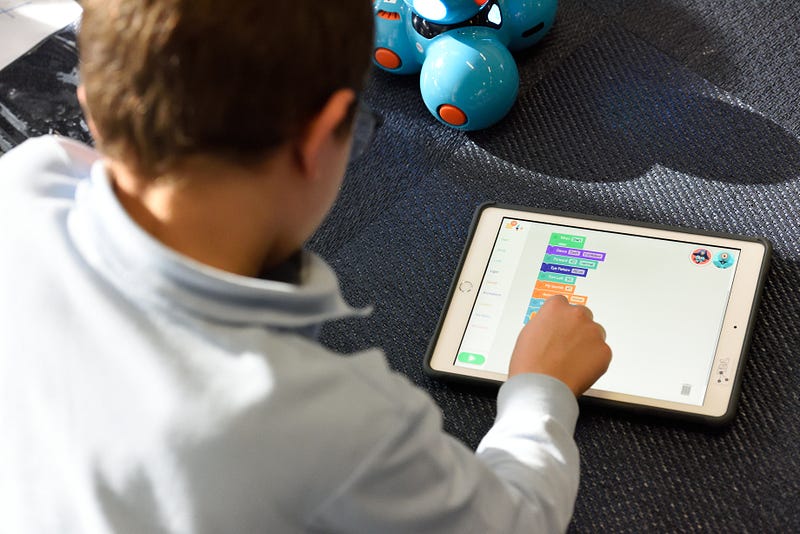
Corporations are also coming forward to support the education sector. Examples include Microsoft and Google in U.S. Samsung in Korea; Tencent, Ping An & Alibaba in China, etc.). [3]
Reasons to write this article
Vulnerability of the sector
Underdeveloped countries are trying to incorporate relevant changes based on their capacity. But it is difficult to make changes within this short period of time to adjust. Even with advanced technology and economic scenario, developed countries are struggling to mitigate the disruption.
We all realized the vulnerability of this sector during this challenging time.
Career and skill-set gap
The majority of students in our educational institutions are from ‘Generation Z’ and will be proceeded by ‘Generation Alpha’. These generations are defined by technological embedment and digital consciousness is part of their identity.
Based on the Dell technologies report, 85% of the jobs in 2030 (where these generations will be taking part) are not created yet. [4]

So, I thought to write this article to mention a couple of ideas and innovations in this regard.
I understand that the sector is not strong across countries. But ideas are always worth exploring.
The new world view requires positive changes. And ideas can bring forward the changes quicker.
Adaptive, interactive, digital learning platform for the learners

This one is already in place for many countries.
Like the university blackboard, all the learners in schools can progress towards the ‘blackboard’ or ‘whiteboard’ option.
The ‘blackboard’ is an online dashboard and a portal for learning. It can consist of courses, grades, activities, and development plans.
The dashboard can incorporate the online learning tools for each learner. Learners can also track their progress, course/class updates on the dashboard.
For kids, the parents will have control over the dashboard.
Incorporation of game type platform for online learning

Younger students and kids definitely like games and sports. If the learning platform is based on the gaming model, it will be a lot easier for them. Learners can learn life-lessons from different interactive games and tools. It doesn’t have to be graded, rather than based on participation and development tracks.
With flipped classroom methodologies, the learners can take a major role to learn and teachers can help the learning. Shared group work between learners will increase. Learning and social interactions based on the game mode will enhance their interest to take part.
Embedding software applications in learning platforms
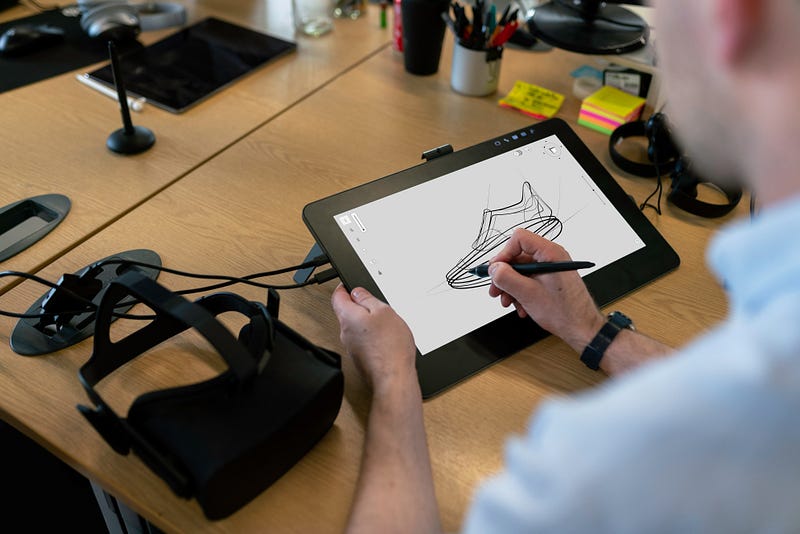
Accessibility to mobile and tablet devices is increasing in our world. In a couple of countries, software application-based learning is already in place.
Audiobooks for listening to lectures is another great tool out there.
When the kids can learn from the applications built-in the cell-phone, or tablet screen, it will be a lot easier to deliver the learning, without moving to a physical space. Social networks, WhatsApp, or SMS are other viable options to use. Microsoft Team, Zoom, and relevant other software can be incorporated for classroom sessions.
Television and media broadcasting

China has already put this into action when the global pandemic hit. [3]
So, dedicated channels or TV media to broadcast the learning or teaching can be incorporated. It can be done locally or state-based.
Yes, there will be questions on how to exhibit the lessons on TV, how it will interact, and how to answer the question. My point here is not to build the education system based on TV media, rather they can incorporate it as a part
The same can be done with radio channels, where dedicated channels can broadcast the learning in their frequency. Radio broadcasting can cut the screen time of the kids. It can improve listening skills, and also it will be easier to reach the most number of kids.
Short video interactive learning
Because of the connected media, our attention span is lower than our previous generations. A similar thing is happening with the learners today. So, online interaction/study contents have to be divided into smaller bits to keep their attention.

Based on the developed curriculum, relevant instructors can create learning videos. Based on the implementation strategy, it can be created city-wise, province-wise, or country wise.
The learners can also conduct skill-sharing content creation. They can share created content with their instructors for review. In that way, the relevant development plan for each learner can be crafted.
One example of it is ’10 Minutes School’ in Bangladesh. They have developed 17,000+ video tutorials, 49,000+ quizzes and 900+ smartbooks. They are covering the courses from schools and has expanded their horizon into University programs also. [5]
Incorporation of Wii game platform in the education sector
Now, people will call me crazy. Probably I am.
One of the major drawbacks of online learning is, no available ways of covering physical skill development. It also doesn’t have in-person interaction. Incorporating a Wii based platform for physical activity can cut the drawback (slightly).
What is Wii? It is a handheld pointing device for gaming developed by Nintendo. Wii detects movement in three dimensions for the game. [6]

Now, imagine similar things can be done for physical activities and exercises. Combining with Virtual Reality(V.R.) technologies, there is a huge possibility to make it worthwhile. Imagine, kids are doing physical activities by Wii and VR, which will be a sort of gaming mode for them. And it will help to incorporate physical exercise sessions for the learners.
Probable Drawbacks: • Increased screen-time, • Technological challenges, • Screen-addictions.
I get it, but here I’m talking about ideas without limitations, so please bear with me for more time.
Cross-border learning
‘Online learning’ means the knowledge is not limited in a particular space. With this invention, the countries can share their learning content to other countries, if deemed reasonable.
Probable drawbacks or controversies: • Teaching skills and credentials across countries, • Difference in curriculum • The difference in social norms and culture, • Information security issue.
Augmented Reality and Virtual reality-based learning
AR/VR based learning is already in place in some fields, being crafted for advanced learning stages (masters, Ph.D. field, etc.). With this technology, kids can have a detailed learning and skill development opportunity. It will ensure immersive experiences & simulation.
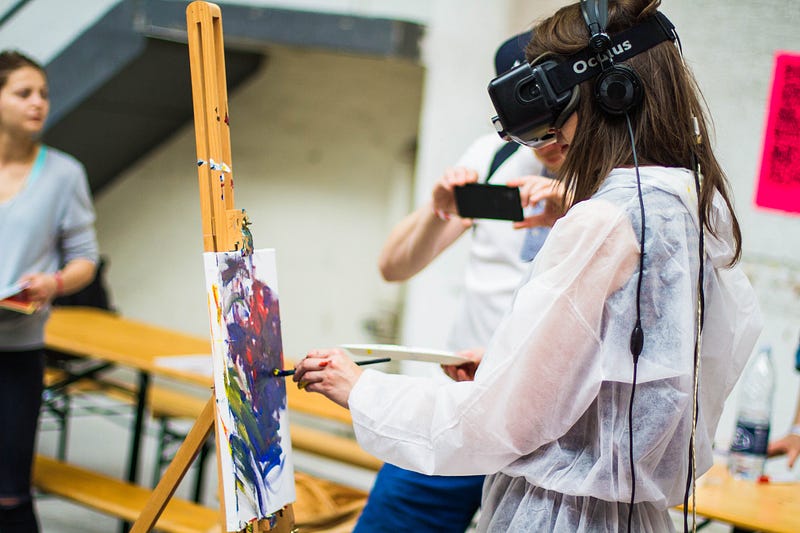
Within a country, the incorporation and transfer of the AR/VR show tool will be much easier. Imagine, kids are learning about dinosaurs with the help of AR/VR technology. Innovation will drive more curiosity and creativity for the kids.
Google is already being into the forefront in this segment. They have introduced experimental learning in schools through this technology. [7]
A.I. based learning and classroom environment
Instructors will be more benefited from the A.I. directed classroom. A.I. will be able to highlight specific things for improvement purposes. With the support of A.I. instructors can get detailed information on the following: • class monitoring, • lecture delivery, • speech tone variability, • timing, • attendance, • safety and security, • Lecture delivery improvement options, etc.
Instructors can improve their performance by getting reports from A.I. on the lecture delivery. An example is: which part to develop, which part of the content requires stronger words etc. With A.I. instructors will have so many tools to improve their class performance.
Probable drawbacks: • Instructors can feel insecure because of constant monitoring, • A.I. can be developed to take place of the teachers.
Replacement of quiz and tests with development path design
Most of the schools have quizzes, tests, and grading systems to rank the students. The false feeling of ranking is detrimental for the learners. When grade and ranking are considered, there is always an unhealthy competition. Mentally and physically, it can exhaust the learner.
Instead, it should be a skill development dashboard for each learner. The development dashboard will include their participation, interests, and relevant interactions. With the Flipboard method, learners will interact with their instructors in the dashboard.
For kids, parental controls should be there. The great thing is, it can guide them to get life-long skills and behavioral skills in simplistic ways. The focus should be developing the learners, not to rank them.
Digitally interactive class, 1 day a week
Suppose, none of the ideas are worthwhile. Let me ask you one question. When the pandemic is over, do you think the current model of learning should be there or do we need to prepare ourselves for such kinds of events?
Should we prepare ourselves with relevant practices to minimize future disruption?
Hence comes, a day a week digital class/online class.
It means that out of the 5 school days a week, one day will be dedicated to online/digital learning. Instructors will be interacting with the learners through a digital platform (blackboard learning). They can deliver online lectures, can provide pre-recorded content, and can have an interactive session with the learners.
Once we can make digital learning a part of our learners’ life, we can be better prepared to cut disruptions in the future.
Webinar and podcast sessions

Webinar and podcasts are already popular for events, marketing, interviews, and business sessions. Incorporating this plug-in will enhance the learning capacity of the learners.
The learners can develop their skill-sets through webinars and podcast sessions. It can consist of skills, classes, norms training, etc. Relevant specialist in the sector can conduct the session for learners. It will definitely add momentum to their development plan.
Other ideas that can be researched:
• Content creation game or dashboard for the learners. Like Youtube content creation, but to showcase skills in a particular field, etc.
• Blockchain technology for development and skill recognition for the learners.
• 3D printing can be introduced for the contents. It is already being used in Universities for engineers, system designers, and digital marketers program. [7]
• Smart technology with biometrics can be implemented. Though facial recognition, eye tracking, voice recognition, and fingerprints, the school operations can be streamlined further. It can also be merged with A.I. to monitor and to provide access for learners. [7]
• Access to a digital library for the students. It can be done through cloud computing technology. The academic institution will provide access. The tool should be tracked by the learner, institute, and for kids cases, their parents.
Challenges

After reading all these parts, you must have lots of questions in your mind.
Most of the ideas are not implementable right now.
There are questions on the development, timing, and implementation structure of the ideas.
All ideas come with the challenges. So, I have listed down a few challenges in this regard.
• Economy: Except for the developed countries, all other countries are not at the right stage to implement these. However, there should be alternative ways to develop their sector.
• Infrastructure: If any country doesn’t have the required infrastructure, the ideas are out of the question.
• Accessibility: If tools are not accessible to the learners and are difficult to develop, it will not be possible to ensure the digital reach.
• Security: Security breaches and hacking are big threats. If proper firewall and information security protection are not ensured, confidential information can go to the wrong hands.
• Adaptability: Another challenge might come from the social norms, culture, and social structure of a country. If the new ideas are not adaptable to the mentioned, the ideas are worth nothing in these cases.
• The total cost of development and ROI: If the total cost of developing the ideas are significantly higher than the forecasted benefits, there will be no execution of these ideas. Also, if the forecasted benefits are not that significant, the ideas are not worthy.
“The hardest part of learning something new is not embracing new ideas, but letting go of old ones.”- Todd Rose
Innovations in-place

Coursera, Udemy, Udacity, Skillshare, and EdX are the biggest names in the online course platform. Universities have already incorporated digital learning platforms for their programs. [8]
Century, a British-based company is providing training and access to its platform. This platform is helping schools in 17 countries, including China, Vietnam, South Korea, Japan, the UK, and Nigeria. Century platform is combining neuroscience and AI to individualize learning in those schools. [9]
Finnish non-profit HundrED is researching innovations from 150 countries. They have already studied around 5,000 academic platform innovations and have listed 1,164 of those innovations on their website. [9]
Stand-alone innovations like the following are also mentionable [10]: • Robot-teachers (Telepresence Robot) in South Korea, to address the shortage of English teachers in South Korea • ‘Forest Kindergarten’ models In Denmark (popularized in Northern Europe in the 1960s, currently a couple of schools in the U.S. are also with this model)
Concluding notes
We require to ensure that the learners get relevant interventions for developing critical thinking, problem-solving, leadership, and communication skills. We also need to ensure steps to minimize disruption in the sector for the upcoming time.
So we need positive innovations in this field to protect the sector, to improve ourselves as human beings, and to make the world a better place.
And I hope you would agree to this last part at least.

Sources used (links are mentioned for reference purposes, no affiliated links provided)
1. UNESCO. Link: https://en.unesco.org/covid19/educationresponse 2. UNESCO. Link: https://en.unesco.org/covid19/educationresponse/solutions 3. World Economic Forum. Link: https://www.weforum.org/agenda/2020/03/3-ways-coronavirus-is-reshaping-education-and-what-changes-might-be-here-to-stay/ 4. World Economic Forum. Link: https://www.weforum.org/agenda/2020/03/4-ways-covid-19-education-future-generations/ 5. 10 Minutes School. Link: https://10minuteschool.com/ 6. Wikipedia. Link: https://en.wikipedia.org/wiki/Wii 7. The Ame Group. Link: https://www.theamegroup.com/top-6-technology-innovations-education/ 8. Forbes. Link: https://www.forbes.com/sites/forbes-personal-shopper/2020/04/02/3-of-the-best-online-learning-platforms/#2242a4f44c51 9. QUARTZ. Link: https://qz.com/1826369/how-coronavirus-is-changing-education/ 10. Smithsonian Magazine. Link: https://www.smithsonianmag.com/innovation/seven-inspiring-innovations-in-education-from-around-the-globe-180955484/?page=1
Suntonu Bhadra is a 2020 joined writer in Medium, who loves to learn from surroundings and world wide web. He is a Business Consultant in the profession, a mentor of Sales productivity & a traveler by heart. In his newfound love- ‘Medium’, he is expressing his thoughts and is looking forward to engaging.