
Top Statistics Books for Machine Learning
I have looked at 5700 books in this year 2021 alone and picked the best books that were published, under review, preorder publications, including work-in-progress books, and free eBooks as well. I also started writing the reviews on the books to provide recommendations for the readers. These books were reviewed by me alone. Again, I’m not talking about a team of editors from publishing company in war mode reviewing all these books. I released a book earlier this year as well. I authored tons of articles this year. I’m authoring another book as we speak now. I have learned some incredibly new skills and algorithms this year and went through more than 5300 research papers this year. I have been a speaker on umpteen number of largest data science machine learning conferences and provided Calculus and Linear algebra demos in TensorFlow, Python, and Python.
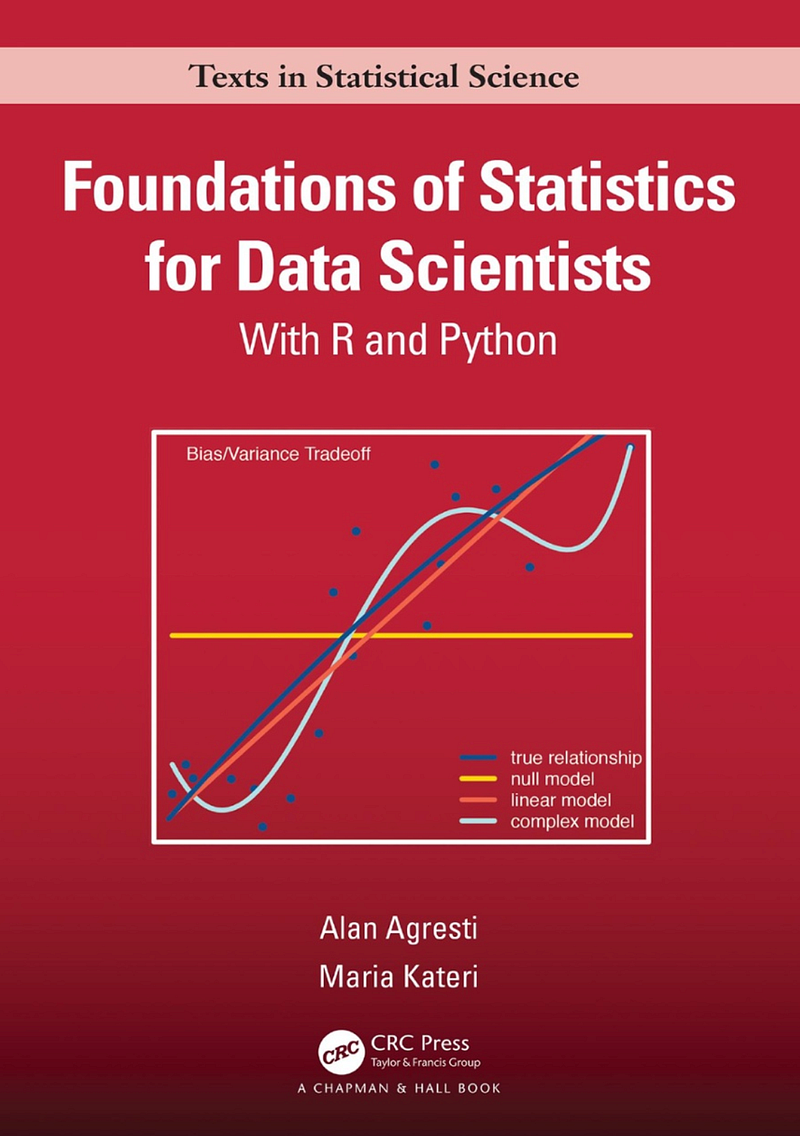
This book is introduced for students who can launch their career into statistics with the aid of programming language tools such as R and Python. The book intends to also extend the concepts to data scientists who would like to evolve into senior data scientists. The coverage on statistics include the probability distributions and linear modeling. The book provides the introduction of how to design a strategy for statistical and inferential statistics with data types and variables with techniques of data collection and summarization. Some areas of the book assumes the reader has some understanding of basic calculus before venturing into advanced concepts. Unlike several other statistics heavy books, the focus is more on R and Python implementations than on the concepts of statistics. Primarily covered in R. The data scientists can utilize 500 exercises with datasets and solutions.
The book provides coverage on bayesian statistics and estimation with confidence intervals, likelihood function and maximum likelihood estimation, significance tests, variability in linear modeling, classification and clustering, and linear discriminant analysis. There is an appendix that shows code in Python for the same examples that were illustrated earlier in R.
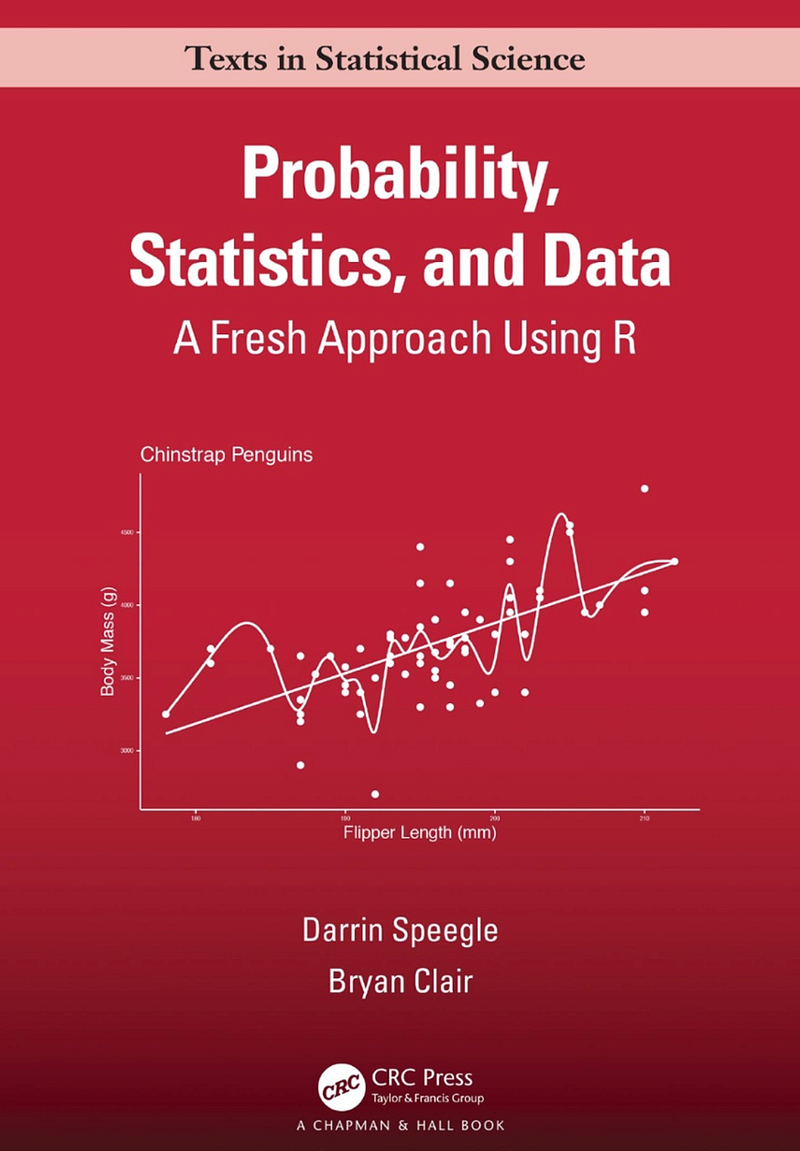
While the earlier book covers code implementations in Python, R, and sometimes in Matlab, this book covers exclusively in R. Though, there were many statistics books that came out in the market for simulations, this stands as the first book that introduces ‘calculus’ based probability and statistics. The book delivers several Monte Carlo simulation approaches based on calculus. As I said earlier in another article , the supercomputers rely on preventing nuclear weapons testing by using Monte Carlo statistical simulations.
“The best part of statistics is to create simulations, where there is not always a single mathematical approach available.” — Ganapathi Pulipaka
“A few decades ago, worldwide nuclear warhead programs used to destroy islands and make holes with nuclear bomb explosions. Just a couple of years ago, a supercomputer broke the world record for bomb simulations of nuclear weapons with the use of statistics and mathematics.” — Ganapathi Pulipaka
“Scientists don’t turn islands into holes anymore by exploding bombs before they first simulate the trillions of particles and rewind through their trajectories to understand the energetic characteristics. The supercomputer created a trillion files in under two minutes, which is a world record for this type of simulation.” — Ganapathi Pulipaka
So if you want to understand the behavior of nuclear bombs in certain situations there is no longer any need to set off hundreds of nuclear bombs to see what happens. These days we have the capability of testing in the virtual world rather than the real world. Leverage this book for generating such statistical simulations.


