Top Python Frameworks for Game Development in 2022

Introduction
Python is an unambiguous, easy-to-read, general-purpose high-level programming language which considers paradigms of structured, procedural, and object-oriented programming.
Python is a powerful programming language that is widely used in many industries today. Python is easy to learn for beginners and has many modules and libraries that allow for robust programming.
Python is a popular language for game development and there are many great frameworks available to help with game development. In this article, we will take a look at some of the top game development frameworks in Python.
Pygame
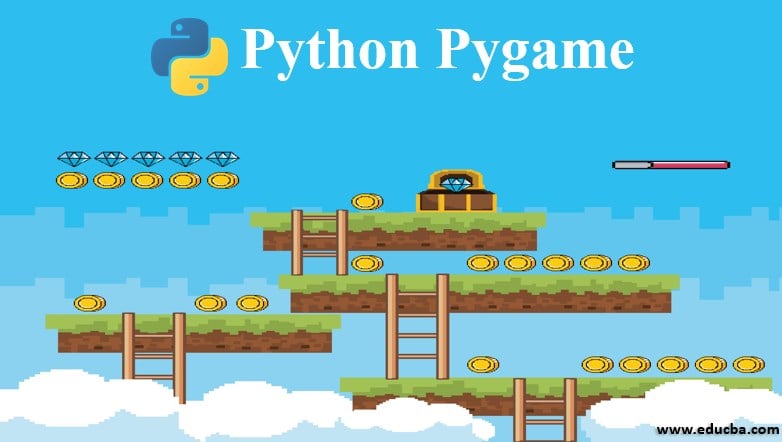
Pygame is a cross-platform set of Python modules designed for writing video games. It includes computer graphics and sound libraries designed to be used with the Python programming language.
Pygame is highly portable and runs on nearly every platform and operating system. Pygame is free. Released under the LGPL license, you can create open source, freeware, shareware, and commercial games with it.
For a nice introduction to Pygame, examine the line-by-line chimp tutorial, and the Introduction for python programmers. buffer, and many other different backends… including an ASCII art backend! OpenGL is often broken on Linux systems, and also on windows systems — which is why professional games use multiple backends.
- Multi core CPUs can be used easily
- Uses optimized C and Assembly code for core functions
- Compatible with multiple OS
- It’s Simple and easy to use
- Does not require a GUI to use all functions
- Modular design
PyKyra
Python users can take advantage of the PyKyra 3D gaming engine. It offers support for OpenGL, as well as sound in both 2D and 3D, physics, and networking, among other features. The Kyra engine now has an expanded version of this framework available. It is essential to have an understanding of the Kyra engine in order to work on PyKara.
- It is designed to support top-down, side and symmetric translation
- It is comprised of well-advanced toolchain including sprite editor and encoder
- Kyra is a fast, capable engine with specialized coded algorithms for rendering updates
- The engine supports color transformations and blending alpha values
- All objects in Kyra are embedded into a regulated hierarchy
- Complex objects can be pointed up or down when drawn. Or mapped in a pre-cached
- The screen can be divided into sub window views with each view having its own object transformations
Pyglet
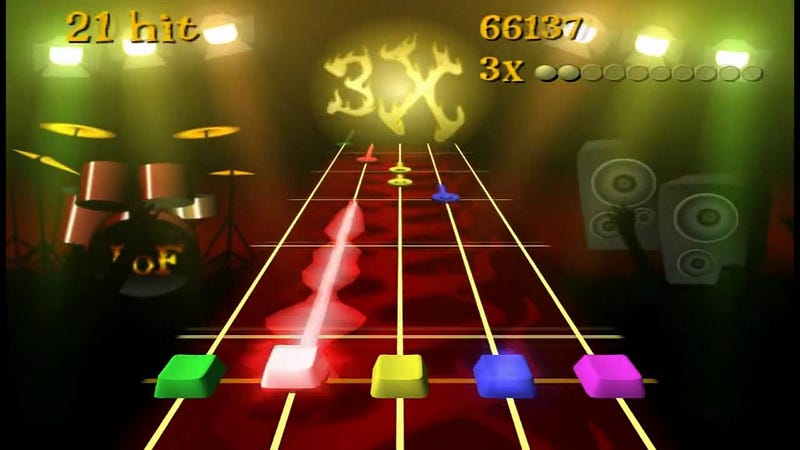
Pyglet is a library written in Python that may be used to construct 2D games and other kinds of multimedia applications.
The library offers a wide variety of functionality, such as the ability to handle events, the generation of windows and OpenGL contexts, the loading of resources, the loading of images and sounds, and sprite animation.
Pyglet is entirely written in Python, and it leverages the OpenGL ES 2.0 API in order to achieve accelerated 3D visuals.
PyOpenGL
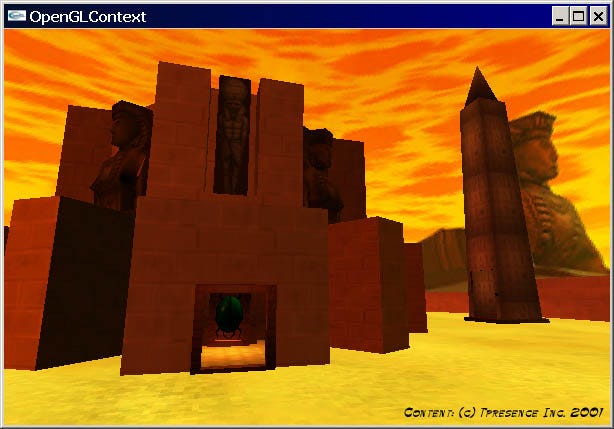
PyOpenGL is a Python connector to the OpenGL standard application programming interface that works across several platforms. OpenGL is an application programming interface (API) that is low-level and cross-platform. It is used to render 2D and 3D vector graphics.
PyOpenGL is a set of bindings for OpenGL that can be used with Python. This makes it possible for Python to take advantage of OpenGL’s features.
PyOpenGL is a framework that is commonly utilized in the development of graphical applications such as video games and simulations. Additionally, it can be utilized for the development of visualizations as well as the prototyping of novel graphics algorithms.
PyOpenGL is a portable, easy-to-use, and efficient graphics library. It is compatible with Windows, Linux, and macOS, in addition to all other major operating systems.
Kivy
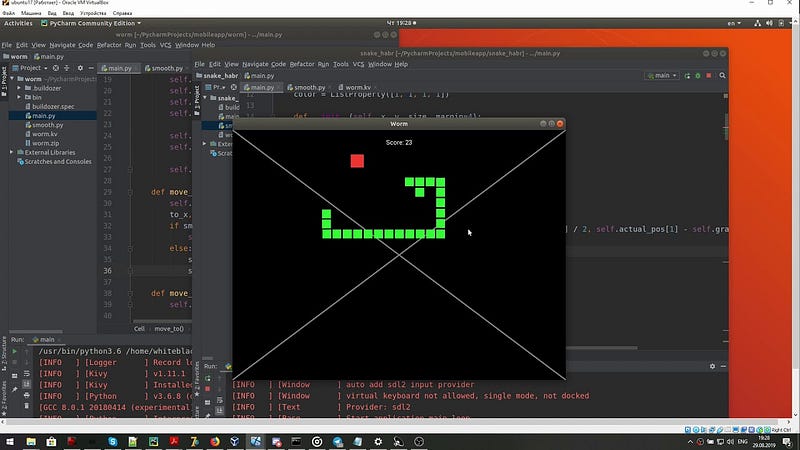
Kivy is a Python library for development of multi-touch applications. It can run on Android, IOS, Linux and Windows. The applications made using Kivy are cross platform, which means they can be run on any of the above mentioned devices without any changes in the code. Kivy is free and open source.
Conclusion
Python is one of the easiest languages to learn and use, and it is no different when it comes to game development. There are many different Python game development frameworks available, and each has its own advantages and disadvantages.
In this article, we have covered few of the most popular Python game development frameworks. Each of these frameworks has its own unique set of features and capabilities. So, which one should you choose for your next Python game development project? It really depends on your specific needs and preferences. However, all of these frameworks are widely used and well-supported, so you can’t go wrong with any of them.
Thank you for reading!
I write about data science, machine learning, and PyCaret. If you would like to be notified automatically, you can follow me on Medium, LinkedIn, and Twitter.