
Top 8 New Technology Trends For 2022
The Most Important Technological Trends For 2022

Understand the current technological trends is essential since it enables many companies to upgrade their company procedures so that potential clients may quickly integrate with them. Regardless, each trend, with its immense potential, enables people and organizations to remain relevant in the technological world.
Digitization has ushered in a world in which technological advancements occur at the blink of the eye. Businesses have put a lot of money into digital transformation during the last ten years. IoT, AI, block chain technology, and augmented reality are being implemented into companies’ core strategy, assisting industries in transforming their business models and speeding up the digital transformation.
1. 2022 Will Be The Year of The Metaverse
Metaverse, one of the year’s most popular tech ideas, will erase the barriers separating our physical and digital lives. Metaverse is a virtual world that employs a variety of technologies to alter how we enjoy our digital lives. This means that virtual or augmented reality can be used in conjunction with other techniques to create a future in which our virtual lives are as significant as our physical ones. Users all over the globe are estimated to invest more time in virtual environments with their colleagues and friends.
The metaverse is a digital world that allows virtual user engagement by mixing social networking, computer gaming, interactive system, virtual reality, and cryptocurrencies. The term “metaverse” can be used to describe anything on the web, including all of AR’s features.
We anticipate the metaverse will be immersive, pervasive, and open to all. It will be digitally centered and may include entertainment, social interaction, work productivity, and large-scale behavior modification. Developers, apps, advertisements, and new digital breakthroughs will all benefit from this ecosystem. Convenience, consumption, and effortless access to services will all be facilitated by the metaverse.
Facebook, the world’s largest social media company, is already attempting to make the metaverse a reality. Metaverse, according to the company, will be a space where formal meetings, combined study, shopping convenience, and other activities can take place. By making some changes to Meta, Facebook already have sold 10 million Quest 2 virtual reality headsets. People will be able to create their personal digital avatars in the Metaverse. Virtual reality is also being developed by tech giants such as Apple and Google.
2. Cybersecurity

Given its long history, cyber security may not appear to be an emerging technology, yet it is evolving at the same rate as other technologies. This is partly due to the fact that threats are continually evolving. Malevolent hackers attempting to unlawfully access data will not give up easily, and they will keep developing ways to bypass even the most stringent security measures.
It’s also due to the adoption of new technology to improve security. Because cybersecurity will continue to develop to defend against hackers as long as we have them, it will stay a popular technology.
The frequency of cybersecurity positions is expanding quicker than other tech jobs, demonstrating the high demand for cybersecurity expertise. By 2025, 60% of firms will utilize cybersecurity risk as a main decision in performing third-party transactions and commercial engagements, according to Gartner.
This technology trend will likely witness an increase in investments, training, and education for the next several years around the world. Personal data is in danger, so cybersecurity is more important than ever.
3. The Blockchain Technology Is The Most Popular
One of most talked-about technologies nowadays is blockchain technology. We’ve all heard how blockchain technology has the potential to transform almost every business. Any economic sector, including accounting, finance, retail, politics, and healthcare, may theoretically profit from the construction of a decentralized ledger tracking system and maintains data in various locations, removing the potential of fraud.
Blockchain, a new type of distributed network, allows businesses to trace transactions and trade with untrustworthy parties without the help of financial institutions. This novel technology reduces business disputes dramatically while also providing other advantages such as append-only information structures, accessibility, security, immutability, and decentralization.
Businesses are urged to begin researching blockchain technology since it is likely to provide considerable economic potential; according to Statistic, the worldwide blockchain technology market is expected to reach $23.3 billion by 2023.
Blockchain is a digital environment in which users have complete power. There seem to be no ownership or middlemen in a blockchain network. It is made up of thousands of dispersed and decentralized connected nodes (computers). Furthermore, blockchain networks are open to the public and hence transparent. There is no centralized authority that governs or manages the network. Blockchain technology has the potential to be used in a variety of industries.
4. Automation and Hyper-Automation Are On the Rise
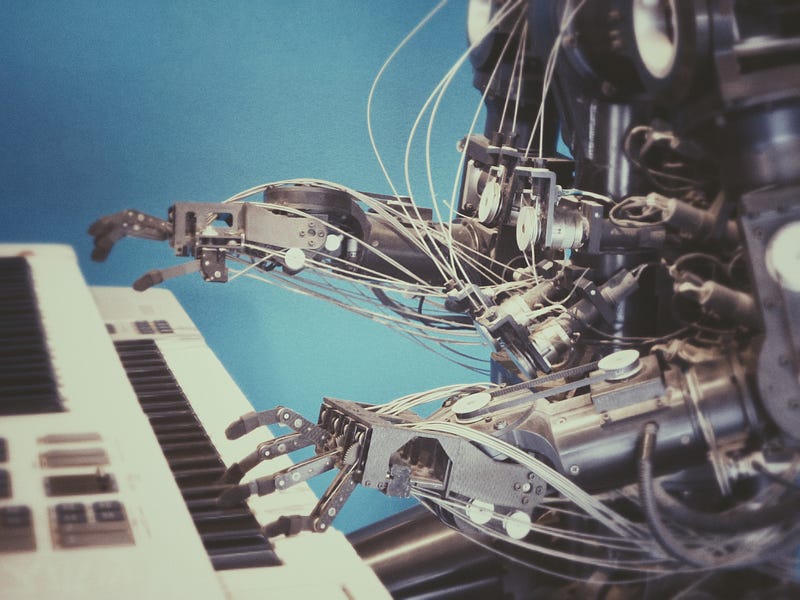
Automation allows us to reduce the amount of time we spend completing certain operations while also improving their accuracy. By swiftly identifying, testing, and automate so many more processes as possible, it promotes rapid expansion and company sustainability. In the year 2022, we will continue to install techniques and advancements that will help us speed up the completion of several duties.
We will also enhance our efficiency in doing them and continue to liberate ourselves from jobs that can be totally automated so that we can focus solely on those for which we can deliver a distinct value. Furthermore, hyper-automation will aid in improving decision-making without sacrificing quality, geometrically increasing speed and lowering operating expenses by up to 30%.
Mr Groombridge said that highest hyper automation groups focus on three important priorities: boosting work quality, accelerating up business processes, and increasing decision-making flexibility.
Hyperautomation helps organizations optimize workflow, amplifies the automation of work, improve productivity, unleash the power of data, derive insights from advanced analytics, increase agility, make better business decisions, identify areas for improvement, and more.
Hyperautomation refers to the application of modern technologies such as Robotic Process Automation (RPA), machine intelligence (AI) and machine learning (ML), decision management, natural language processing (NLP), and others to automate processes and augment human capabilities.
5. Cloud-Native Platforms Are Gaining In Popularity
Hybrid and increasingly distant work arrangements are taking the place of the traditional office-based approach. As a result, data infrastructure must develop to suit today’s and tomorrow’s geographically spread workplaces. This shift demands the use of decentralised services and infrastructure, which are best offered via the cloud.
Cloud-native platforms allow you to design new application architectures while embracing the benefits of the cloud computing delivery method, allowing you to adapt to fast-changing digital environments. Companies seeking to reuse their old application portfolios are embracing this architectural approach. It develops applications using cloud-native platforms based on containers, micro, serverless services, and immutable infrastructure, all of which are delivered using declarative code.
Cloud is becoming the focal point of modern digital experiences as a result of the outbreak and the growth in digital services. According to Gartner, global cloud sales will reach $474 billion in 2022, up from $408 billion this year.
Cloud has introduced new digital applications such as mobile payment systems in which banks have engaged in start-ups, energy firms employing cloud to better their customers’ retail experiences, or vehicle makers releasing new customization services for consumers’ safety.
6. The Advancement Of 5G Technologies
Following the IoT, 5G is the next technology wave to emerge. Whereas 3G and 4G technologies allowed us to access the internet, use data-driven services, improve bandwidth for streaming on Spotify or YouTube, and much more, 5G services are predicted to completely transform our lives by enabling services based on sophisticated technologies such as augmented reality and virtual reality, as well as cloud-based gaming services like Google Stadia, NVidia GeForce Now, and others. It is projected to be utilize in factories, high-definition cameras that aid in traffic management and safety, smart grid control, and smart retail.
Almost every telecom business, including Verizon, T-Mobile, Apple, Nokia Corp., and QualComm, is now developing 5G apps. By 2024, 5G will cover 40% of the globe and handle 25% of all cellular traffic data, making it an emergent technology trend to keep an eye on and save a position in.
7. Quantum computing Research And Development

Quantum computing is a new technology that employs quantum physics to address issues that are too difficult for traditional computers to solve. Quantum computing’s rapid advancements make it commercially viable, and new emergent business use cases promise to add significant value to industries.
Many industries are anticipated to be transformed by quantum computing. Cryptography, aerospace, data science, forecast, drug and materials development, banking, climate change, cybersecurity & information security, medical research, and other sectors and fields may be affected.
Quantum computers promise a significant increase in computing performance and capability. It is predicted to make significant progress in a variety of fields, including drug formulation, nuclear power, materials engineering, renewable energy, mitigating climate change, sustainable agriculture, and others.
8. Fitness Gadgets
Oura is a tech business focusing on health devices that will deliver precise data regarding our health. They’re also working on making the gadgets smaller.
For example, the health-tech startup Oura has developed a ring with embedded sensors that can detect temperature of the body and other vital information. Menstrual cycles will also be predicted by the ring. A start-up named Movano showed off a comparable device at the recent tech trade show CES, which collects data about pulse rate, temperatures, and other crucial stats.
If you liked this story and want to read thousands of stories like this on medium, you can become a medium member for as little as 5$/Month. If you’d like to support my writing, use my referral link below, I will get a portion of your membership without any extra cost to you.


