
Top 7 Hidden Life Lessons From 7 Leo Tolstoy’s Books of All Time
You’re born looking like your parents, and you die looking like your decisions.
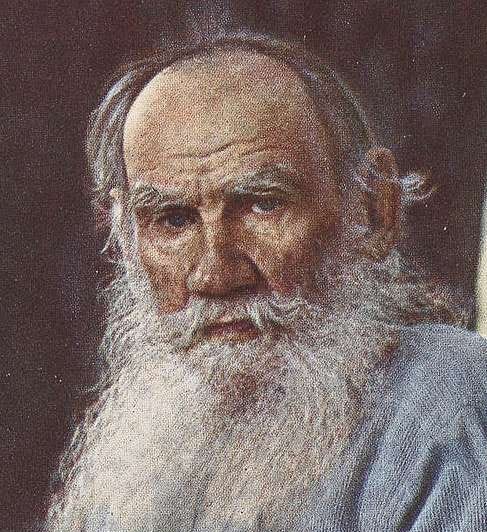
Besides being an influential writer, Leo Tolstoy had one of the best beards of the 19th century.
Except for Shakespeare, only a few writers have greatly protected the fabric of time. Leo Tolstoy’s writing is filled with wisdom that he embeds altogether in his 12 novels. “War and Peace” by Tolstoy has been around for more than 155 years. True.
So, after completing a chunk of Tolstoy’s work, I’ve decided to convey Leo’s lessons that I’ve gained through my hours, days, and weeks of reading.
Below are 7 hidden life lessons from Leo Tolstoy’s book that, if known, can change your life. After all, what (better benefit) is there to keep life lessons with me forever and never leak them?
1. All That Glitters Is Not Gold
Book: Anna Karenina
18-year-old Kitty was given a choice to select between two suitors — Vronsky and Levin.
Poor kitty landed her palm on Vronsky, who she believed was *charming.* But she did not know that Alexei Vronsky, a dashing military man, never had eyes for one.
Vronsky fell for every woman he would see. Kitty wasn’t the last one for him. The next target was Anna Karenina.
Leo Tolstoy says: what looks good from the outside doesn’t have the same taste from the inside. E.g., Orange. Looks soo tasty from the outside, but then you have to peel it to reveal the underbelly.
How to apply?
Two things that we always believe:
- The grass is greener elsewhere (❌!)
- All shiny things are gold(❌!)
Truth is, if you see greener grass every time, there’s a possibility it’s fake. Similarly, we don’t know if any shiny element is gold or not.
The problem is that we “judge quickly.” Shiny metals other than gold always lose their rub in the process. Give it some heat, and it gives up.
So if you’re not the jeweler of your life (nobody is), try to be a responsible decision-maker. Take time to analyze the decision.
And don’t fall for golden nuggets.
2. Be Humble and Learn
Book: War and Peace
As Napoleon’s army invaded, kiosks started to form in Russia. Tolstoy, in his book, highlights the problems and cultural differences. That’s when the quote by Leo comes to light:
“We can know only that we know nothing. And that is the highest degree of human wisdom.”
Wisdom is an ongoing process. We can never wake up one day thinking we’ve received all the information. It’s not possible. Getting knowledge comes with a price — be it a war or peace. If you have an ego, you’ll never be able to learn new things.
Tolstoy writes: we must be thankful for everything we know. Ego and pride must never stick with our wisdom. Just be thankful.
How to apply?
I recalled a saying by Jordan Peterson, he says:
“You should always be the dumbest in the room. That’s because then you know nothing. If you’re the smartest in the room, then you’re in the wrong room. Start shufflin’.”
Means that if we believe we know everything, then we are probably wrong. Nobody is the master of anything.
- And if you believe you are, change the room.
- If you think you know nothing, you’re welcome.
Of course, learning is a two-way process. Never be proud of what you know because there’s more to everything than the eyes meet.
Be humble, always!
3. Don’t Jump to Conclusions
Book: A Confession.
Tolstoy believes: we all can walk, stand on our feet, eat, drink and dance. So why do we bear the wrong?
Perhaps, wrong is wrong. No power can make it right. Adding oil to the mix increases the risk of us becoming equally responsible.
“Wrong does not cease to be wrong because the majority share in it.” — Leo Tolstoy.
Early in 2004, when Facebook was first launched, it only catered 18+ age group. But now, it’s available for everyone. Social media deeply powders out opinions and truths.
There is always an A team VS. B team. Since social media has given everyone the power to express their opinions, everyone has become their own “Judge Mama.”
And it’s getting harmful with every passing day.
How to apply?
In this busy world, we often forget:
- We have brains
True. We are no ones to judge anyone or conceal the truth. Even if a majority of people believe it, you must not go and ride on the ship.
Use your mind to think about the situation. Mostly, we take part in activities that weren’t even for us in the (1st) first place.
Go out. Get some fresh air and stick to your decisions only. Stop collaborating with truths you are not a witness to.
Tip: only believe what you see. All else is a lie.
4. Don’t Set Too Many Rules for Yourself To Shun Failure
Book: The Diaries of Leo Tolstoy
- In short, be a tortoise who wins the battle.
The diaries of Leo Tolstoy highlight fragments of his life. He believes that failure keeps us learning. It’s not a moment of shame.
According to him, “This is the second day when I have been indolent and failed to carry out all that I had set myself. Why so? I do not know. However, I must not despair: I will force myself to be active.”
When we all build boundaries for ourselves, we forget to make the Door. Living too much inside the walls makes us suffocate.
So many rules are harmful. If you make them, there’s a chance:
- You’re afraid of failure.
- Or you care about what people think.
No one targets or judges bees if they drop pollen from a flower. They simply go again and do it. The same is with spiders.
Tame your mind. Don’t be afraid of failure.
How to apply?
Humans come with two constant fractions:
- Failure
- Success
“Some problems are part of our life — they have been with us since birth. However, some issues we create for ourselves” says Robert Muller.
The world always had peace when nobody knew about our failures. It was okay to start again.
But let me tell you another thing, social media is not even a problem.
The problem is “the lack of confidence” you built-in yourself when you fail a problem. That’s where people catch you.
Remember, if you fail, don’t let yourself down. Wear self-confidence like perfume.
5. Life Is Short and Sour
Book: Ivan Ilyich
- Ivan Ilyich was a high court judge.
Tolstoy describes Ivan — a judge, as an intelligent, polished, and agreeable man. The book conveys life lessons of how a judge, a doctor, and an ordinary man die when it’s time.
“Can it be that I have not lived as one ought? suddenly came into his head. But how not so, when I’ve done everything as it should be done?”
No money and no relations can save us from extending our life. It’s as if we know where to put the mail and directly send it to God to elongate our life. Only if.
Tolstoy believes that we don’t know when our time will come. We don’t know what our last act would be.
Only one thing guarantees it all — being a nice and positive person.
How to apply?
Life is cruel because it ends early.
As life is short, do everything today that you promised yourself to do tomorrow. Repair all the relations. Speak nicely to people. Satisfy your needs. Do good.
Since social media has made our life soo busy, we often don’t hear the warning death bells.
- So either make yourself sterile to the alarming bells
- Or start doing good.
Works either way!
7. People Flow Like Rivers
Book: Resurrection
Leo Tolstoy argues: all men/women are different. He suggests that one can’t have certain (fixed) characters.
E.g., if you put a bolt in direct sunlight, even the bolt would change its ‘shape’ because of the heat.
That’s when says,
“Men are like rivers: the water is the same in each, and alike in all; but every river is narrow here, is more rapid there, here slower, there broader, now clear, now cold, now dull, now warm. It is the same with men. Every man carries in himself the germs of every human quality.”
Human beings are like one whole bowl. Every attribute resembles another one. It’s hardly possible two men/women sitting together have all the attributes differentiated.
When we connect with another person, we see the “matching traits.” It’s because we’re made of matching traits. All men/women are like rivers — they possess all the qualities.
How to apply?
Tolstoy believes that humankind has some fixed qualities dusted in each human being. some are:
- Being unhappy
- Stupid
- Foolish
- Over emotional
It’s our lives and how it shapes our qualities. Some spend a horrifying life, so it’s easier for them to connect with the “over-emotional” attributes.
Every human being possesses good/bad qualities. It’s us who shape it that way. In other words, it’s also called mindset changing.
Tolstoy writes, that “What we put our thinking towards, we attract.”
In short, we all have that “happy and satisfying” attributes. Most of us have (never) searched inside of us.
Final Thoughts:
If you try and you fail, congratulations! Most people don’t even try.
Believe that you’re one spot ahead of what you were a day ago. And these days will make into weeks and years. 365 steps forward in the end! Remember that it’s only you — you have to break this chain!
Hardships: it ends with us!
References
https://productivitybird.com/9-life-lessons-from-leo-tolstoy-s-quotes https://www.tolstoytherapy.com/12-life-lessons-to-gain-from-reading/


