
The Twilight Zone: 10 Episodes That Remind Us About Humanity
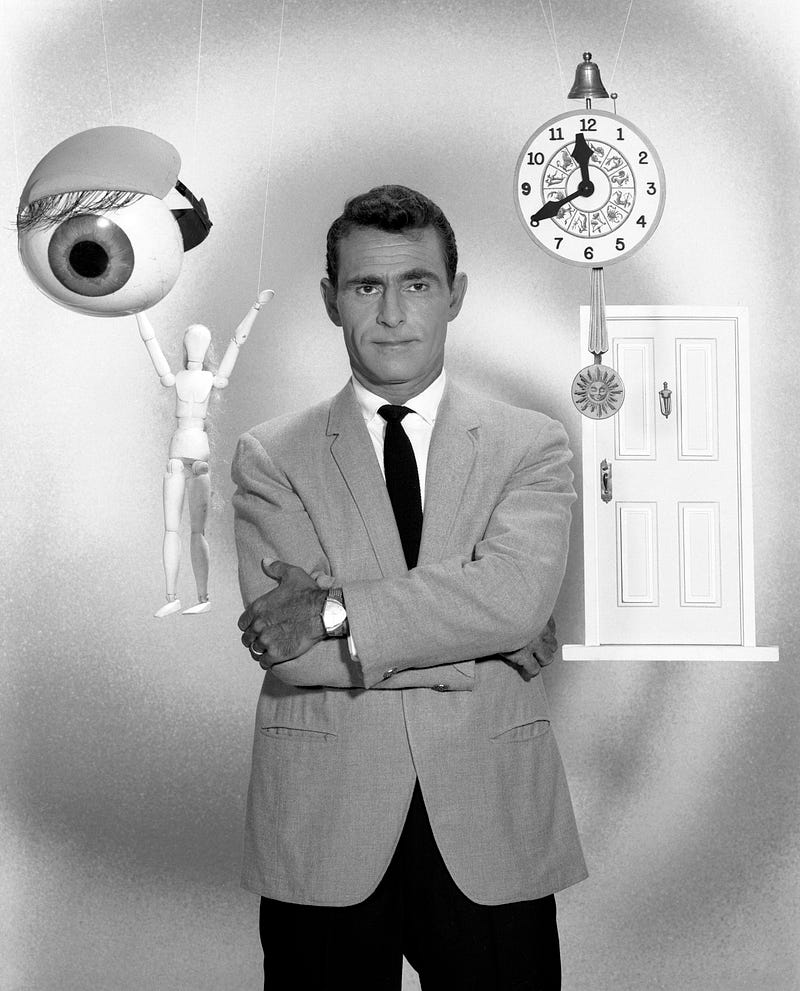
“You unlock this door with the key of imagination. Beyond it is another dimension: a dimension of sound, a dimension of sight, a dimension of mind. You’re moving into a land of both shadow and substance, of things and ideas. You’ve just crossed over into… the Twilight Zone.” — Rod Serling
There is no denying the wondrous imagination of Rod Serling, he took us into another dimension, a dimension not only of black and white, but of 50 shades of gray in between. A dimension with a message that reflects our reality and ourselves through a mirror as vast as space and as endless as time.
The Twilight Zone, this Sci-fi Fantasy Anthology series was certainly something of an anomaly, it’s unique because it said something about our humanity, our society, that we need a reminder of. Here are the top 10 Twilight Zone
10) Time Enough at Last
(Season 1 Episode 8) Watch here
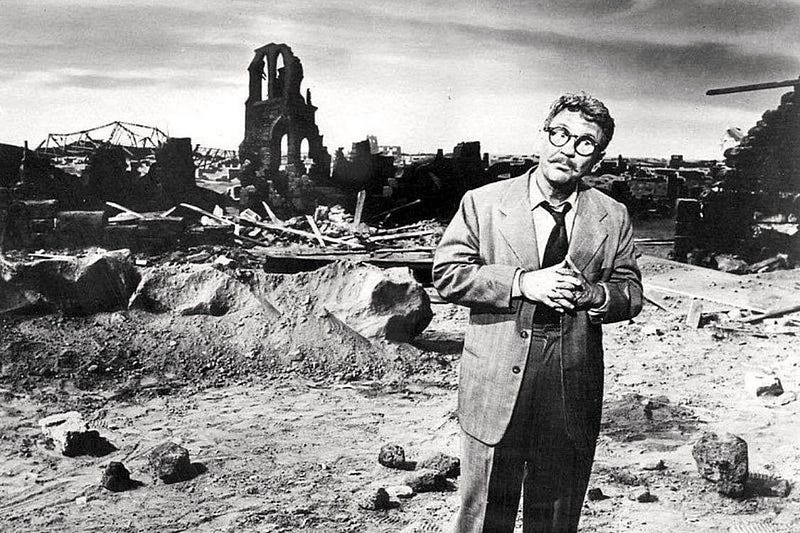
Glasses-wearing, book-loving, Mr. Henry Bemis loves to read but with such a busy life, there’s not enough time to do his passion. His boss reprimands him for reading. His wife snatches newspapers from his hands and tears books into pieces whenever he has one. All he wants to do is read and is persecuted for that. When a nuclear strike detonates around him leaving him the sole survivor in a sea of reading materials he’s overjoyed. He can finally ready all he wants without somebody persecuting him.
Our society has deemed reading obsolete, a waste of time when we can go to the movies, or stare at our smartphones, or find hundreds of other distractions.
9) The Monsters Are Due on Maple Street
(Season 1, Episode 22) Watch here
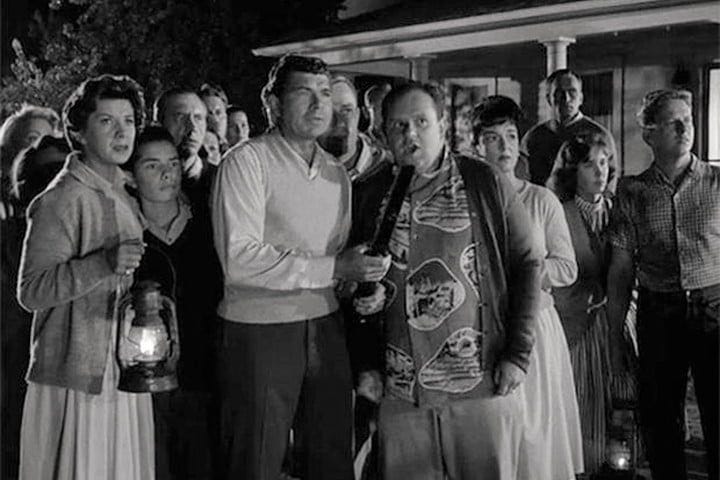
We’ve all been to Maple Street, many of us grew up there, a street located in the Twilight Zone. It is where neighbors’ paranoia supersedes trust and familiarity. Suspicions on Maple Street arose when the lights go out, residents say they saw a meteor. They are confused and don’t know what’s going on. A little boy claims there is an alien spaceship that caused the lights to go out. The residents are panic which can only lead to bad actions.
During the making of this episode, the cold war was at its climax. The Cuban Missile Crisis made people less trusting of each other, fearing there may be a communist trying to seek harm and destruction to American citizens. This foreign alien threat did nothing to them physically, however psychologically it caused much destruction. 50 years later and we still have not moved from Maple street, we still live with the threat of foreign and domestic terrorism where ever we go.
8) The Obsolete Man
(Season 2, Episode 29) Watch here
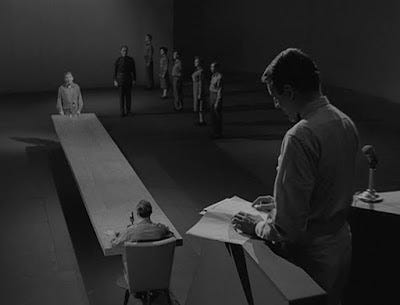
Wordsworth believes words and books have much worth than the power of the state. The Chancellor is threatened by Wordsworth’s simple livelihood of reading books. The Chancellor pushes a futuristic progressive ideology where they must get rid of the old and in with the new. Wordsworth does not see progress and is deemed obsolete by the State and sentenced to death. Wordsworth is relieved to hear when he is told, he has the privilege of choosing the manner of his death. The educated librarian has one final trick up his sleeve that challenges the State’s entire ideology.
Rod Serling shows a juxtaposition between authority and sovereignty. Serling has us question society and use skepticism if we should follow unreasonable laws and demands of a society or do critical cognitive thought that may scrutinize it?
7) “Eye of the Beholder”
(Season 2, Episode 6) Watch Here
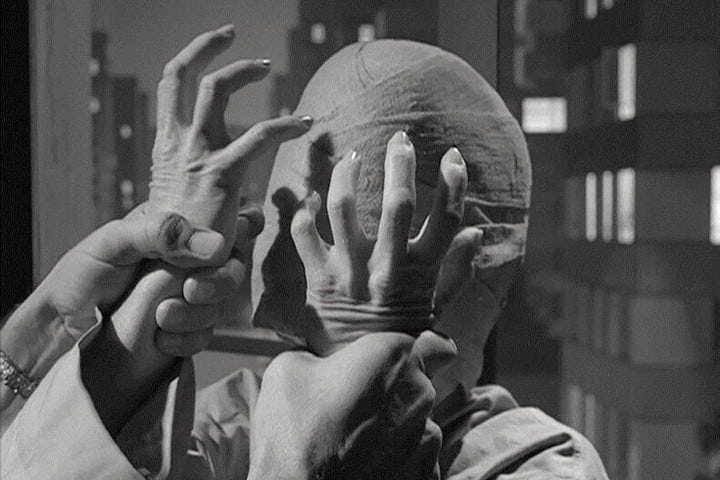
This episode is considered to have one of the best ending twists in the series. It says a lot about Like The Obsolete man, it takes place in a futuristic society with its own standards and beliefs. I woman is worried that she will never look “normal,” whatever that means. She’s undergone surgery multiple times but it hasn’t worked.
It’s inspired by an old proverb, “Beauty lies in the eye of the beholder,” Meaning the observer chooses what is accepted and what is not. Serling is saying we should not give in to other’s standards and acceptations, rather just accept ourselves.
6) ”It’s A Good Life”
(Season 3, Episode 8) Watch Here
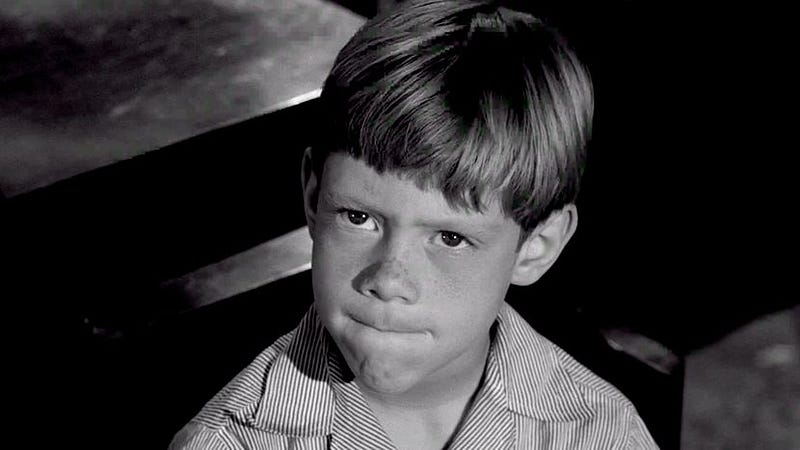
A little boy posses omnipotent godly mental powers that allow him to do anything, however, he does not possess empathy, benevolence, or any signs of emotional intelligence. He disappears anything that doesn’t please him, he is something of a true demon incarnate. The people of Peeksville, Ohio must think good thoughts, say good things, and think of such a good life they have because of this little boy.
Society is structured to think happy thoughts all the time no matter what. Even in the face of suffering, you can’t show sorrow or any type of negative emotion without being considered of having a mental disorder.
5) “Number 12 Looks Just Like You”
(Season 5, Episode 17) Watch Here
The Twilight Zone loves exploring futuristic societies in what life would be like under certain circumstances. In this society, everyone goes under surgery at the age of 19, which drastically alters their appearance to one of the 12 State’s approved appearances. In this future society, everyone looks the same there are no distinguishing mothers from aunts or brothers from uncles. There is an underlying theme to forces people to subscribe to unrealistic beauty standards that no one can meet. Even today our society values so much on appearances and celebrities. Young impressionable teens are the biggest targets.
4) “Will the Real Martian Please Stand Up?”
(Season 2, Episode 28) Watch Here
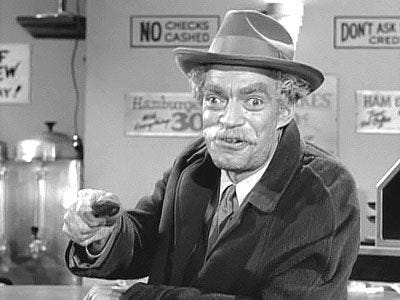
During a snowstorm, an unidentified flying object crash lands in the woods. State troopers follow footprints from the crash site leading into a Dinner. There is a bus in front of the dinner. At the Dinner, bus passengers are waiting for a bridge to be fixed. The bus driver says there were only six people on the bus, but there are seven people at the dinner. The bus driver insists that there were six people on the bus, creating the suspicion that one of them is an alien. The ending was unexpected and shocking, just as the whole premise.
As the audience, we are meant to play along asking us the old classic “Who done it” question? The police officers only have their suspicions, but they can’t charge anyone with the suspicion that they might be a monster, they need the burden of proof.
3) “The Brain Center at Whipple’s”
(Season 5, Episode 33) Watch Here
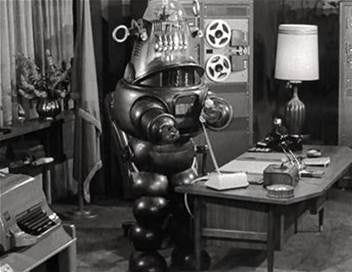
Mr. Whipple, a cold heartless CEO plans to automate his entire plant factories that employ over a quarter-million people. Two machines replace 114 men, they take no holiday, they don’t get sick and tired, they work indefinitely. Machines show progress and are the way to the future. Mr. Whipple is so consumed with machines and progress, he fails to recognize the humanity, dignity, and value of his workers. Mr. Whipple is asked when he’s dead who will mourn for him? Will he program a machine to do it for him? Will those machines be so devastated they will have to take some time off?
It is a battle between efficiency and compassion, steel versus flesh, and the mind of man versus the product of man’s mind. Today that same battle is ongoing with our technological advancements. We value technology in higher regard than the value of man. We care more about our phones than the people around us. If our phone breaks, we will get adamantly furious and blame someone for hurting it, as if they were hurting a good friend of ours.
2) Third From The Sun
(Season 1, Episode 14) Watch Here
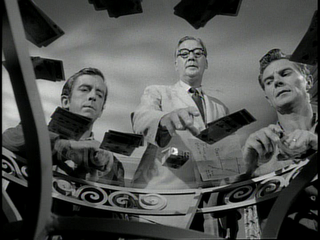
The Twilight Zone likes to play with the idea of the destruction of entire civilizations and the end of life as we know it. In this episode, a scientist and pilot are plotting to leave their earth to another planet, third from the sun. The government doesn’t tell anyone of this as it will cause panic.
The government will always hide its secrets from the public with good reason too. If the public knew and couldn’t do anything about it then what’s the point in telling them? Serling also encourages people to question their reality and authority. A scientist and a pilot are made aware of the truth that nuclear fallout is glooming over the horizon.
1) ”Nightmare At 20,000 Feet”
(Season 5, Episode 3) Watch Here
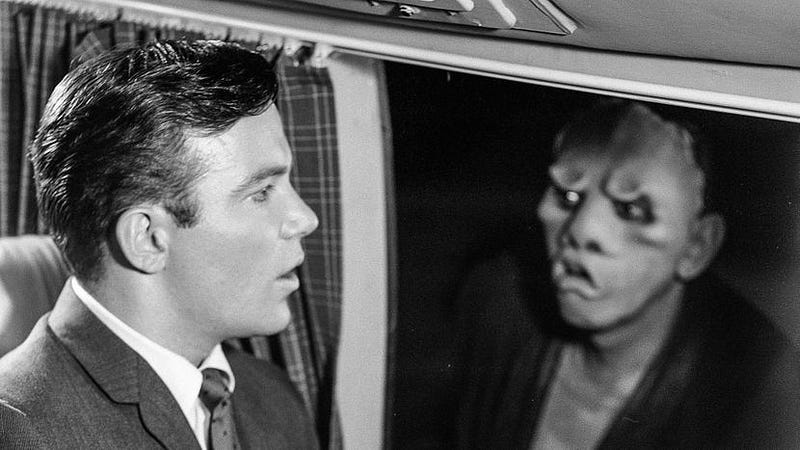
One of the most famous and psychological episodes out there is this one, when an airline passenger, Robert Wilson is convinced that there is a gremlin on the wing of the plane. Robert Wilson has a history of mental illness where he can’t tell the difference between reality and a hallucination. He had a similar mental breakdown 6 months ago on an airline just like the one he finds himself on again. Wilson is nervous that something will go wrong. Every time he looks out the window he sees the gremlin, when he gets somebody else to look they see nothing. Mr. Wilson finds himself questioning his own reality wherever he sees out there is real or just a figment of his imagination.
Gaslighting is a term when a person questions someone else’s sanity. Perpetrators who gaslight someone will say and do whatever to prove their case against them, even though the facts are wrong. Gas Lighting victims lose their sense of reality and develop a distorted view. Just by questioning their reality is a form of manipulation.
Takeaway
“It is the middle ground between light and shadow, between science and superstition” — Serling
The Twilight Zone is not like any other TV show. It questions our reality which is more than what meets the eye. In a nutshell The Twilight Zone is something that happens when your on a sinking boat and there are life boats and a helicopter coming to save you and than you just grow a pair of wings and fly away. The relevance of this creativity is so iconic that over 60 years later and we are still watching and talking about it. We can still see the same social issues reflected in modern times.
Disclaimer: This blog does contain Affiliate Links to make monetary gain for the blogger


