
Top 10 REST Interview Questions for Java and Spring Developers
These are the best REST Interview Questions for Java and Spring developers to prepare quickly
Hello guys, if you are preparing for Java and Spring Developer interview and looking for best Spring REST Interview questions then you have come to the right place.
Earlier, I have shared 13 essential topics for Spring Developer interviews as well as many questions on Spring Framework, Spring MVC, Spring Security, Spring Data JPA, Spring AOP, Spring Boot, Spring Test, Hibernate, Spring Boot Actuator, Spring Cloud and Microservices, and in this article, I am going to share frequently asked questions about REST and how to build REST APIs in Spring Framework.
While this is not a comprehensive list, it covers all the REST related questions from Spring Professional certification guide and touches important and essential REST concepts.
If you are in hurry for attending interviews, you can quickly go through this list of REST questions, won’t take more than 5 minutes to read and understand.
And if you more time, you can also always check my Book Grokking the Spring Interview where I have discussed more than 200 questions on different Spring topics. You can also use my code friends20 to get 20% OFF on Grokking the Java Interview book.
By the way, if you are new to Spring and looking for best spring course to build your spring concepts then I highly recommend you Spring and Hibernate for Beginners (includes Spring Boot) course on Udemy. This one courses covers all three, Spring, Hibernate and Spring Boot.
11 REST Interview Questions for Java and Spring Developers
Without wasting more time, here is a list of frequently asked REST Interview questions from Java and Spring Developer interviews. These question test your knowledge about REST API, REST concepts, and REST architecture.
So far, we have looked at the Spring interview questions which focus on Spring MVC and now we’ll see some questions which are based on REST concepts as well as how to implement RESTful web services using the Spring MVC framework.
1. What does REST stand for?
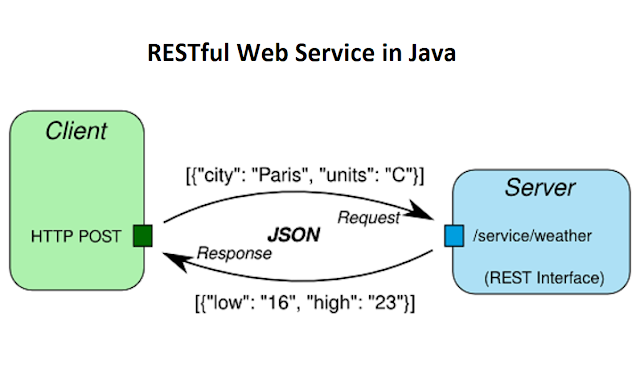
REST stands for the REpresentational State Transfer, which uses the HTTP protocol to send data from the client to the server,. a book in the server can be delivered to the client using JSON or XML. However, if you are not familiar with REST, I suggest you first check out the REST API design and development to better understand it.
2. What is a resource?
A resource is how data is represented in the REST architecture. By exposing entities as the resource, it allows a client to read, write, modify, and create resources using HTTP methods, for example, GET, POST, PUT, DELETE, etc.
3. What are safe REST operations?
REST API uses HTTP methods to perform operations. Some of the HTTP operations, which don’t modify the resource at the server, are known as safe operations, including GET and HEAD. On the other hand, PUT, POST, and DELETE are unsafe, because they modify the resource on the server.
4. What are idempotent operations? Why is idempotency important?
There are some HTTP methods — like GET — that produce the same response no matter how many times you use them, sending multiple GET request to the same URI will result in the same response without any side-effect. Hence, this is known as idempotent.
On the other hand, the POST is not idempotent, because if you send multiple POST requests, it will result in multiple resource creation on the server, but, again, PUT is idempotent, if you are using it to update the resource.
Even multiple PUT requests can be used to update a resource on a server and will give the same end result. You can take an HTTP Fundamentals course by Pluralsight to learn more about idempotent methods of the HTTP protocol and HTTP in general.
5. Is REST scalable and/or interoperable?
Yes, REST is scalable and interoperable. It doesn’t mandate a specific choice of technology either at the client or server end. You can use Java, C++, Python, or JavaScript to create RESTful web services and consume them at the client end. I suggest you read a good book on REST API, like RESTful Web Services to learn more about REST.
6. Which HTTP methods does REST use?
REST can use any HTTP methods, but the most popular ones are GET for retrieving a resource, POST for creating a resource, PUT for updating a resource, and DELETE for removing a resource from the server.
7. Is REST normally stateless? (answer)
Yes, REST API should be stateless, because it is based on HTTP, which is also stateless. A request in REST API should contain all the details required to process it.
It should not rely on previous or next requests or some data maintained at the server end, like sessions.
The REST specification puts a constraint to make it stateless, and you should keep that in mind while designing your REST API.
8. What is the HTTP status return code for a successful DELETE statement? (answer)
There is no strict rule about what status code your REST API should return to after a successful DELETE. It can return 200 Ok or 204 No Content.
In general, if the DELETE operation is successful, the response body is empty, return 204. If the DELETE request is successful and the response body is NOT empty, return 200.
If you want to learn more about REST API concepts and standards then you can also checkout REST API Design, Development & Management course on Udemy.
9. What does CRUD mean? (answer)
CRUD is a short form of Create, Read, Update, and Delete. In REST API, the POST is used to create a resource, GET is used to read a resource, PUT is used to updated a resource, and DELETE is used to remove a resource from the server. This one is another beginner-level Spring MVC question common amongst 1 to 3 years as an experienced programmer.
10. Is REST secure? What can you do to secure it? (answer)
This question is mostly asked by experienced Java programmers with about 2 to 5 years of experience with both REST and Spring. Security is a broad term; it could mean the security of a message, which is provided by encryption or access restriction that is provided using authentication and authorization.
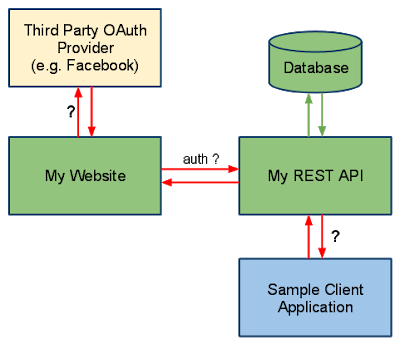
REST is normally not secure, but you can secure it by using Spring Security. At the very least, you can enable the HTTP basic authentication by using HTTP in your Spring Security configuration file. Similarly, you can expose your REST API using HTTPS, if the underlying server supports HTTPS.
11. Does REST work with transport layer security (TLS)? (answer)
Transport Layer Security (TLS) is used for secure communication between the client and the server. It is the successor of SSL (Secure Socket Layer). Since HTTPS can work with both SSL and TLS, REST can also work with TLS.
Actually, in REST, it is up to the server to implement security protocols. The same RESTful web service can be accessed using HTTP and HTTPS if the server supports SSL.
If you are using Tomcat, you can learn more about how to enable SSL in Tomcat.
That’s all for now about some of the frequently asked Spring REST interview questions for beginners and experienced Java JEE developers. These questions are also very useful to brush up on your knowledge about Spring REST if you are going to take VMware’s Spring Professional Certification.
Other Spring Tutorials and Interview Questions you may like
- Spring Boot + Kafka Examples for Beginners
- Spring Boot + Hibernate Example in Java
- How to @Autowired annotation work in Spring
- 15 Spring Data JPA Interview Questions with Answers
- How Spring MVC works internally?
- Top 10 Courses to Learn Microservices with Spring Boot
- How to log SQL Statement with Spring Boot?
- 10 Best Spring Framework Courses for Beginners
- 20+ Spring Boot Interview Questions for Java developers
- Spring Boot + REST API Example in Java
- Top 15 Microservice Interview Questions with Answers
- How to enable Spring security in a Java web application?
- 13 Spring Boot Actuator Questions for interviews
- How to fix no qualifying bean error in Spring
- 15 Spring Cloud Interview Questions with Answer
- 20 Spring Boot Testing Interview Questions with Answers
- 10 Advanced Spring Boot Courses for Experienced Developers
- 5 Best Courses to learn Spring Batch for Java
- 17 Spring AOP Interview Questions with Answers
- How to get ServletContext object in Spring controller
- Difference between @RestController and @Controller in Spring MVC?
Thanks for reading this article so far. If you like these Spring REST interview questions then please share with your friends and colleagues. If you have any questions or doubt, feel free to ask. Happy to answer any questions you have.
P. S. — If you are new to Spring and looking for best spring course to build your spring concepts then I highly recommend you Spring and Hibernate for Beginners (includes Spring Boot) course on Udemy. This one courses covers all three, Spring, Hibernate and Spring Boot.


