
Top 10 European Startups to Watch in 2020

This post is from 2019! Check out my newer post on European Startups to Watch in 2021 here:
By popular demand, I’m releasing another edition of my “Top 10 [Location] Startups to Watch in 2020”. This time I’ll be focusing on European Startups.
If you’d like to catch up on other startups to watch:
- Top 10 Indian Startups to Watch
- Top 10 Chinese Startups to Watch
- Top 10 Israeli Startups to Watch
- Top 10 African Startups to Watch
- Top 10 Middle East Startups to Watch
- Top 10 Latin American Startups to Watch
Each of these posts explores the unique characteristics of each startup market, ranging from the funding sources, past successes/failures, and growth trajectory.
Interested in Investing in Startups Like These?
Check out the Mitchell Ventures syndicate on AngelList here: https://angel.co/mitchell-ventures/syndicate
Europe’s Startup Environment in 2020
2019 was an exciting year for Europe to say the least.
We entered the year still very nervous about the impact of GDPR in Europe and around the world. Over the course of 2019, we wondered “will they or won’t they?” about the UK’s Brexit. That question was answered when the UK formally exited the EU on January 31, 2020 (although not much truly changes until the end of 2020).
Phew, what a busy year, and we didn’t even start talking about the business environment!
Europe still remains a difficult environment to start a business in 2020, but once startups find their footing (and usually secure their obligatory regulatory approvals), the moats they have from other continents are often very strong.
However, these moats are a double-edged sword. While the EU offers strong opportunities for intra-country expansion, expanding to the Americas, Asia, or Africa is often only reserved for the biggest and well-funded startups on the continent.
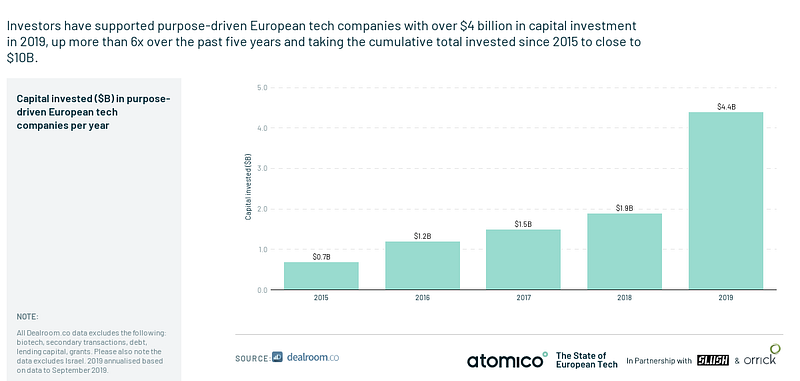
One sector of the EU startup market that grew rapidly in 2019 was purpose-driven companies. From 2018 to 2019, investment in purpose-driven tech companies increased from $1.9B to $4.4B (+132%).
These companies span Europe, including Infarm in Germany, which is building advanced vertical farms, telemedicine firm Kry in Sweden, and insect farming start-up Ÿnsect from France.
VC’s are also demonstrating concern about business purpose and impact. Almost 2/3rds of VC respondents to a recent survey agreed that in the last 12 months, investors across the EU have demonstrated a greater concern about environmental impact.
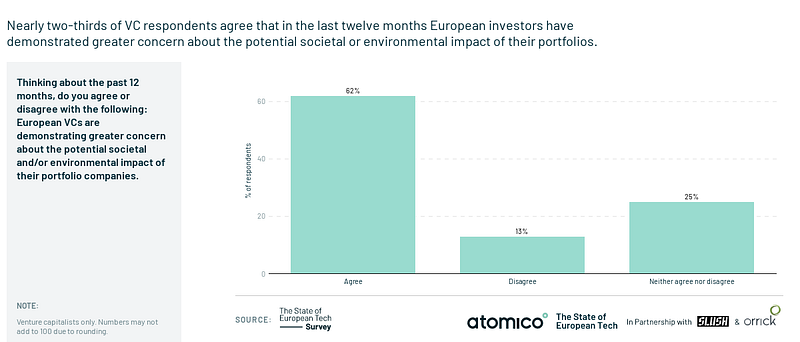
These survey results certainly make sense. With the EU already a leader in clean energy, zero-carbon impact, sustainability, privacy, and low-impact transportation, their startup environment looks similar. Investors are rewarding businesses that fit into regional values well.
European Unicorns Created in 2020
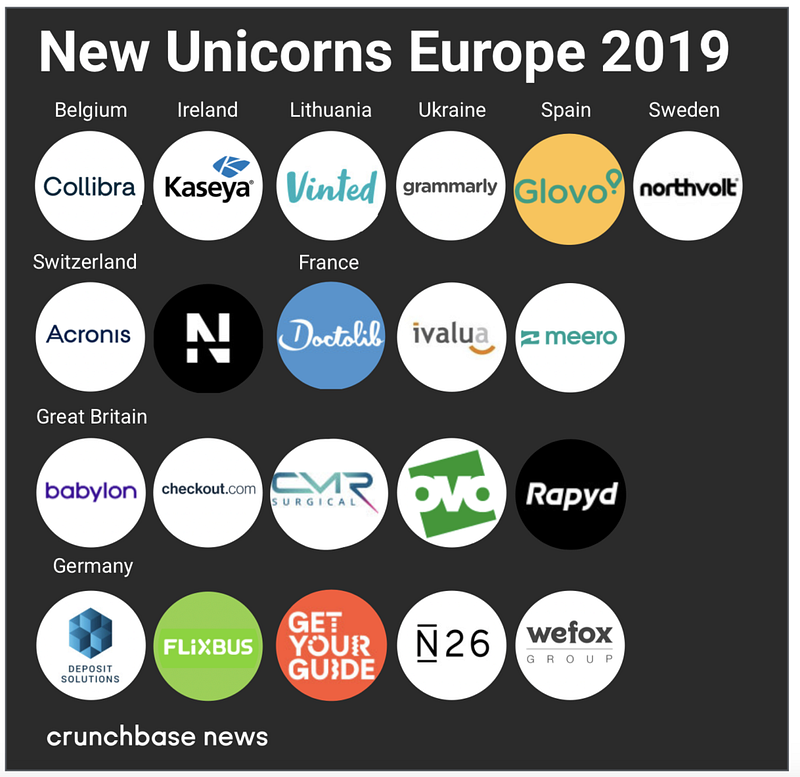
In 2019, 21 new unicorns emerged in the EU, matching the total from 2018.
New! A VC’s Perspective on Europe in 2020
I’m excited to introduce a venture capitalist’s perspective on the investment market in Europe.
Chinedu Enekwe and Mark Fleming are the founders of Aux21 Capital.
Chinedu Enekwe has an extensive history as a VC and currently serves as CEO and Managing Partner of AffinityVC and Co-Founder & Board Member at tiphub.
Mark Fleming is an experienced VC who has invested in consumer and fintech startups around the world; helping them to become more globally dominant. Before moving back to the United States, he lived in Hangzhou, China where he was working at Alibaba Group as a part of Jack Ma’s management globalization program.
Take it away Chinedu and Mark, I’m excited to hear what you think is in store for European startups in 2020!
Although the US and China are the world’s premier locations for investing in venture backed disruptive tech companies, Europe is having success in creating unicorn companies valued over $1B USD. Funding rounds of European companies valued below $500M has remained stable around $5B over the last five years.
Conversely, the funding of companies valued over $500M has increased from around $2B in 2015 and 2016 to nearly $7B in 2019. Furthermore, current market value European unicorns has nearly tripled from $4.2B in 2015 to $11.9B in 2019.
VC’s are beginning to see that large scale companies can be built in Europe. The key is finding funding teams and VC partners that understand the cultural and regulatory differences between countries and regions. Given these understandings, a positive trend emerges.
The US has a 300 million population and a median USD income per capita approaching $60,000 according to the World Bank. According to the South China Morning Post, China has a middle class of 400 million making over $4,000 USD income per capita. The European Union, and its population of 500 million has a median income approaching $40,000 USD according to Eurostat. This clearly shows that Europe has the population and income to support a robust startup environment.
Three areas that we are following in Europe are regulatory compliance, environmental tech, and fintech.
Unlike US’s states or China’s provinces, the European Union’s countries are sovereign and have a wide ranging set of regulatory rules and compliance mandates. In the past, this was a big reason that investors shied away from Europe but it could be a selling point for European startups.
For example, GDPR presents an opportunity for European startups to lead in data privacy. GDPR compliance continues to confound global tech firms and the fines on companies are mounting. Local solutions could not only help tech firms navigate the myriad of issues in Europe, but help companies with regulatory issues around the world.
Environmental tech is another area we are following in Europe. Much of the funding for European startups comes from local governments and sustainability is a key concern for governments. From battery tech, to sustainable food supply, to product supply chains, to carbon capture, there is no shortage of interesting startups in the environmental tech space.
Fintech is the sector with the most unicorns in Europe. German company N26 raised a $300 million Series D. I believe Europe’s success in creating fintech unicorns will translate downstream into earlier funding rounds. In one recent example, Checkout.com raised A $230 million Series A; the largest fintech Series A in Europe.
In 2020, we are watching the following European trends:
* The rise of startup hubs outside of London, Paris, Berlin, and Stockholm. 15 European cities have 50 thousand developers, 14 different countries have at least 1 unicorn, and over a dozen received $1B in startup investments in the last decade. We expect these cities to compete as regional startup hubs.
* Government assistance. We expect to see European governments relax rules for startups operating within each country’s borders as a way to convince highly capitalized countries to hire local workers. While this also comes with greater compliance issues with every country a company operates in, this is also a chance to arbitrage growth opportunities across Europe. I think we will see more carrots imploring companies to set up shop across the continent.
* US investors will actively invest more in Europe. Traditionally, European startups spend years building networks into US VC’s. A few years ago, US VC’s made up only 7% of European startup capital. This proportion reached 19% in 2018 and should reach 30% in the years to come.
Thanks, Chinedu and Mark! Now to the Top 10.
How Did I Choose This Top 10?
With so many great startups to choose from in Europe, how could I possibly narrow the list down to only 10?
For this list, I included many startups that are bringing successful ideas from other parts of the world to the regulatory-heavy EU (this isn’t easy!).
These startups have founding teams with experience leaping over these (often very high) hurdles. Enough background, let’s get to the list!
The Top 10 European Startups to Watch
- Noquo Foods: Plant-Based Cheese

If you didn’t notice, plant-based foods and meats were BIG in 2019. Beyond Meat went public in May 2019 and promptly soared 163% from its IPO price and reached a peak of $234.90/share before coming back to earth (as of this writing, it’s at $117.45/share). Both Beyond Meat and Impossible Foods got their share (and then some) of free press, thanks to highly visible partnerships with Fast Food restaurants like Burger King.
Noquo Foods is trying to capitalize on this macro food trend by developing the first plant-based cheese. They’re still in the lab currently, but have had some early success in development, which led them to raise €3.3MM in early 2020.
Nuquo still has many challenges to overcome, but if they can figure out plant-based dairy products, the opportunity is massive. According to ResearchAndMarkets, the global dairy market is expected to reach $593B by 2023 (!) with a fast-growing portion attributed to non-traditional dairy products (almond milk, soy milk, etc.)
Offices In: Stockholm
Total Funding: €3.3MM
2. Alan: Oscar (Health Insurance) for France
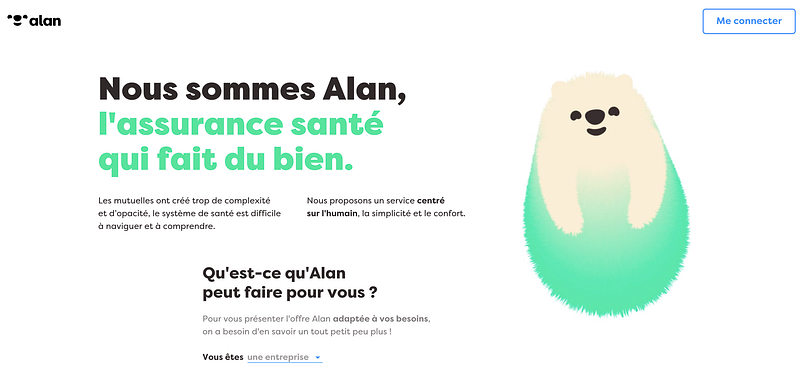
When Alan originally launched its health insurance product, it was the first new insurance company in France in decades! Since then, they’ve launched life insurance, more comprehensive health insurance, self-employed offerings, video calls with doctors, and more. To date, they’ve onboarded more than 4,500 companies and 70,000 members.
Alan is bringing a long-needed modern approach to health (and other) insurance in France. The opportunity in France alone is huge, but I’m optimistic that as the company scales, they’ll push into neighboring countries and help those stagnant health insurance markets modernize as well.
It’s a regulatory-heavy industry for sure, but if Alan can secure operating licenses, the tech they have built already will help them scale incredibly quickly.
Offices In: Paris
Total Funding: $86.5MM
3. Zego: Insurance for work (rideshare, etc) and fleets

Zego is a modern insurance company for the gig economy. Whether you are a driver, a fleet operator, or a ridesharing app, Zego is simply your go-to for insurance. The company has already partnered with Uber and Deliveroo, which is BIG for a company that was only founded in 2016.
In 2020, I expect them to scale their new B2B fleet business product rapidly off of the back of a few large 2019 partnership wins including Drover, Splend, WeFlex, Dott, and Engineius.
Offices In: London
Total Funding: $51.7MM
4. UFO Drive: Electric Car Rental
Have you rented a car recently? How was your experience? Chances are you rented with a mainstream vendor like Hertz, Dollar, Thrifty, Enterprise, National, Alamo, Budget, Payless, or Avis.
Spoiler Alert: All of these different brands are only owned by 3 companies: Enterprise, Avis, and Hertz.
And, to say the least, these 3 rental companies are not known for their innovation. Just take a quick look at their websites and/or mobile apps and you’ll find technology that lags mainstream by at least 5 years (I’m being kind). Take a look at their vehicles and you’ll see the same types of cars they’ve had for the past few decades.
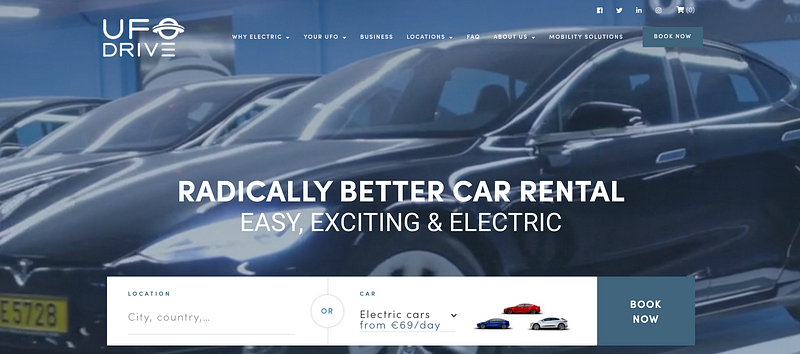
Enter UFO Drive, a rental company that is taking a radically different approach. Their entire fleet is electric for starters.
Want a Tesla? Done.
Want an Audi E-Tron? Done.
In addition to the fleet, their app and website are thoroughly modern. Take 5 minutes to check them out for yourself. I know next time I need a rental car in Europe, I’ll be checking out UFO Drive. They’re live in 8 different European countries and have plans to continue their expansion through the rest of Europe in 2020 as they scale.
Offices In: The Netherlands, Germany, Belgium, Ireland, UK, Austria, Luxembourg, France
Total Funding: €4.3MM
5. Virtuo: The Future of Car Rental in Europe
Hold on Alex…two rental car companies in the same top 10 startups post?! Yes! Did I mention how broken and antiquated current rental car offerings are?
Virtuo came on the scene in 2015 and has promptly raised several rounds of funding totaling $33.5MM to expand across Europe. The company is currently live in 5 European countries.
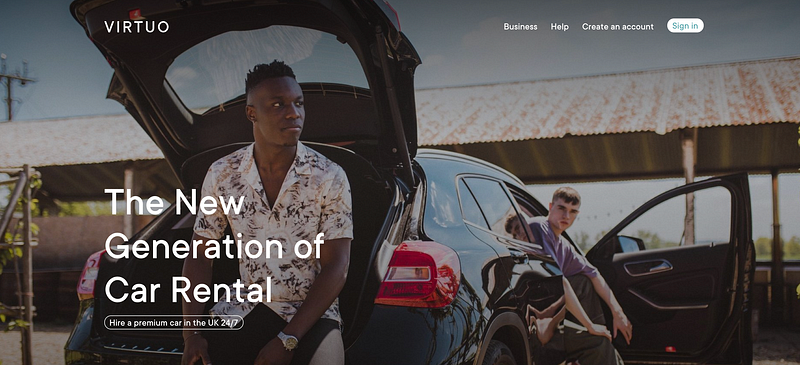
While they aren’t taking as aggressive as an approach as UFO Drive with an all-electric fleet, Virtuo has invested heavily in a mobile-only and tech-powered experience. For example, your phone with their app is the only key you need. Additionally, they’ve focused their fleet on premium offerings like the Mercedes A-Class and GLA.
The European car rental market was $14.2B in 2018 and is expected to reach $24B in 2027. The opportunity for newcomers like Virtuo and UFO Drive is massive.
Offices In: The Netherlands, Spain, France, UK, Belgium
Total Funding: $33.5MM
📣 Thanks for reading! If you’re enjoying this post, I know you will find major value in Africa: The Big Deal Startup Deals Database! And, even better, you’ll get 10% OFF with my special link below:
In the Big Deal Database, you’ll find:
- A monthly updated Excel database listing ALL $100K+ funding deals secured by startups in Africa
- Included with your initial subscription: The entire dataset from Jan 2019 to December 2022
- The database includes critical details like the number of employees, funding amounts, type of deal (Seed, Series A, B etc.), whether this transaction was an exit, startup valuation (when disclosed), investors, and much, much more!

If you’re investing or building in Africa or simply want to become as educated as possible on the fastest-growing startup ecosystem, you need the Big Deal Database!
6. Wayve: End-to-End Self-Driving AI
Wayve is one of my riskiest picks in this year’s startups to watch list. Why? Because they are going head to head with companies like Waymo, Uber, Cruise, and others that have raised billions of dollars and hired the best data scientists and manufacturers the world has to offer.
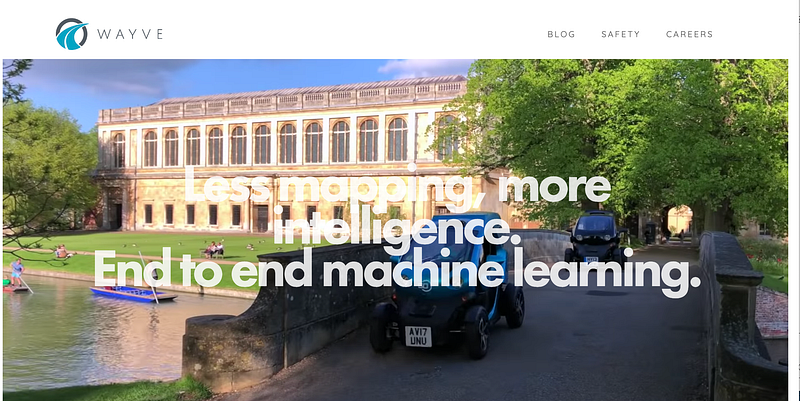
While Wayve has raised $20MM after being founded in 2017, that money will go quickly in this ML/AI arms race. However, I’ve chosen Wayve for this list because I like their different approach. Instead of requiring vehicles to map every minute detail of a city’s streets, they’re focused on building end-to-end deep learning that can drive in complex, never-before-seen environments. Their goal is to be able to release their technology in hundreds of cities and not just one.
It’s an incredibly aggressive goal and I’ll be rooting for them to succeed, even with the odds stacked against them. However, I think the most likely outcome is Wayve becomes the acquisition target of one of the aforementioned deep-pocketed rivals.
Offices In: UK
Total Funding: $20MM
7. Passbase: Identity Validation as a Service
As I’ve written about in my posts on African and Latin American Startups, with the rise of Neobanks around the world, the demand for identity verification as a service is rapidly growing. It’s a complex, data-heavy task that most companies would much rather outsource to someone like Passbase than build themselves.
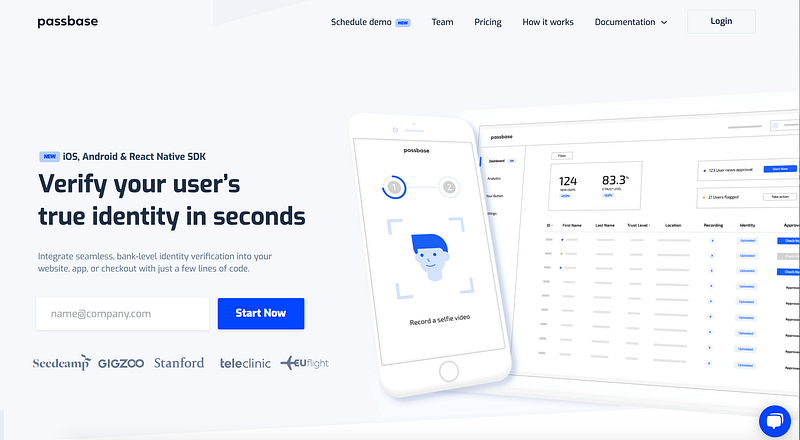
Passbase has built a product that can process identity verification for over 150 countries, do facial detection, liveness comparison, and extract information from identity documents. It does all of that with simple SDKs. Think of them as Twilio or Stripe for identity validation.
In a world where identity validation is becoming more and more important, Passbase is well-positioned to grow not only in Europe, but also around the world in 2020.
Offices In: Berlin, NYC
Total Funding: $4.2MM
8. Tide: Neobank for SMBs
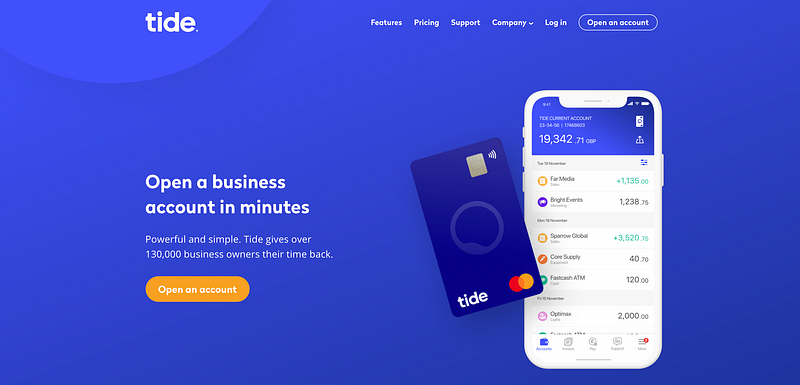
Speaking of Neobanks, Tide is a bank for SMBs that’s already trusted by over 130k businesses (mostly in the UK). Whether you’re a freelancer, small business, or scaling startup, Tide helps with expense management, accounting, invoicing, company cards and more.
The company was only founded in 2015, but given its strong traction, they’ve managed to raise almost $100MM since then! Keep an eye on them in 2020 as they start to scale across Europe beyond the UK.
Offices In: UK
Total Funding: $95.2MM
9. Immense Simulations: City-Wide Simulations

Immense Simulations is definitely one of the most fun companies on this year’s list! The company has built two key products: Digital Worlds and Mobility Simulator.
Digital Worlds are data-driven city models that provide instant access to massive amounts of data on transportation, infrastructure, and mobility systems.
Mobility Simulator allows companies to test the impact of increasing the size of their fleet, repositioning charging/parking stations, and more to see the impact on the entire system.
Together these products allow any company that has a fleet of scooters, cars, bikes, or really anything, optimize their deployment and scaling. Even better, the software allows these companies to better forecast and report to the cities they operate in, making regulators much happier.
Immense Simulations is the right product at absolutely the right time. I’m excited to watch them continue to improve the two above products, accumulate better data across major cities around the world, and ramp sales significantly in 2020.
Offices In: UK, Spain, Detroit, SF
Total Funding: $4.6MM
10. Cohabs: Hostels Meet WeWork Meet Furnished Apartments
Co-living spaces (see WeLive, Starcity) are still high on the hype curve, without the level of demand being fully established. For example, do you know anyone who actually lives in one of these places? Didn’t think so.
However, I’m still bullish on the coliving idea when I consider the personality attributes of Gen Z and Millennials. These generations want high-quality and stylish accomodations, they want integrated social opportunities, they want experiences over ownership, and they want things simplified for them.
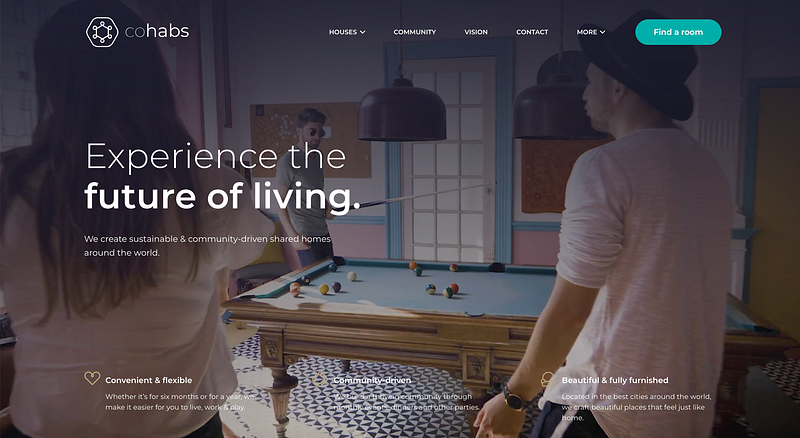
These desires are almost perfectly satisfied by Cohabs, what I’m calling a hostel meets a furnished apartment meets a WeWork.
Cohabs has completely blurred the lines between work + life, which is just how GenZ and Millennials like it. Currently, the company has apartments in Belgium and is expanding into NYC in 2020. I’m interested to see how quickly they can grow in 2020 and, more importantly, what the true market demand is for this style of living.
Offices In: Belgium
Total Funding: $18.7MM
Honorable Mentions
Cred Investments: Invest in Future Earnings of Celebrities/Athletes
Offices In: UK
Total Funding: $3MM
Legal OS: The Data-Layer for Law
Offices In: Germany
Total Funding: $2.2MM
Spendesk: Company Cards and Expense Management
Offices In: France
Total Funding: $50.5MM
What European Startups Did I Miss?
I’m sure I missed quite a few prolific, fast-growing European startups. Let me know which ones on Twitter at @amitch5903!
Interested in Investing in Startups Like These?
Check out the Mitchell Ventures syndicate on AngelList here: https://angel.co/mitchell-ventures/syndicate
Must-Read Books on European Startups
More from Alex Mitchell on Medium
📝 Save this story in Journal.
👩💻 Wake up every Sunday morning to the week’s most noteworthy stories in Tech waiting in your inbox. Read the Noteworthy in Tech newsletter.
Disclosure: Some of the links in this post are affiliate links, meaning that at no additional cost to you, I earn a commission if you click them and purchase a product.


