
Tools for Planning Your 2020 Medium Writing Year
Get organized now for a great start.
This is the fourth post in a weekly series that will run the rest of 2019. Every Sunday, I’ll post an action plan to help you get ready to start writing on Medium(or take your Medium blog to the next level) in 2020. Click here to get a free ebook about blogging on Medium and be notified when new posts in the series go live.
Read this whole series here:
So, if you’re playing along, you have a business plan and you know just what you want to write about. You’ve got a nice list of potential post ideas all ready to go.
Today I want to share a couple of ideas for organizing yourself so that you can maintain some momentum — not just on day one or in January, but all year.
These are tools that I find incredibly helpful. They keep me motivated, on task, and help me maintain a steady pace of work so that I produce new posts on a schedule instead of randomly or sporadically.
The problem with sporadic productivity is that it’s unreliable. Readers like to know they can count on you. Your income will grow more steadily. And you’ll be a happier writer in general if you have some kind of schedule.
An Editorial Calendar
My absolute favorite tool to use for maintaining an editorial calendar is a paper calendar from Erin Condren called the Deluxe Monthly Calendar. (There’s a sitewide 30 percent off Black Friday Sale right now, if you’re interested.)
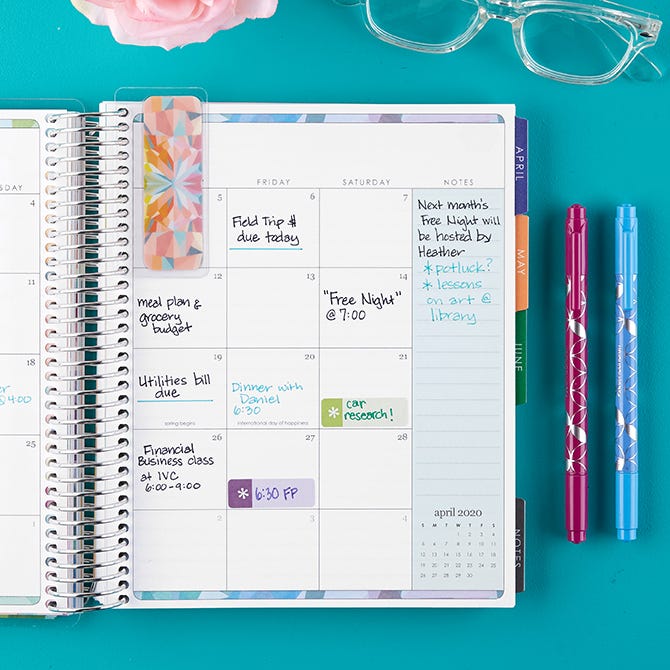
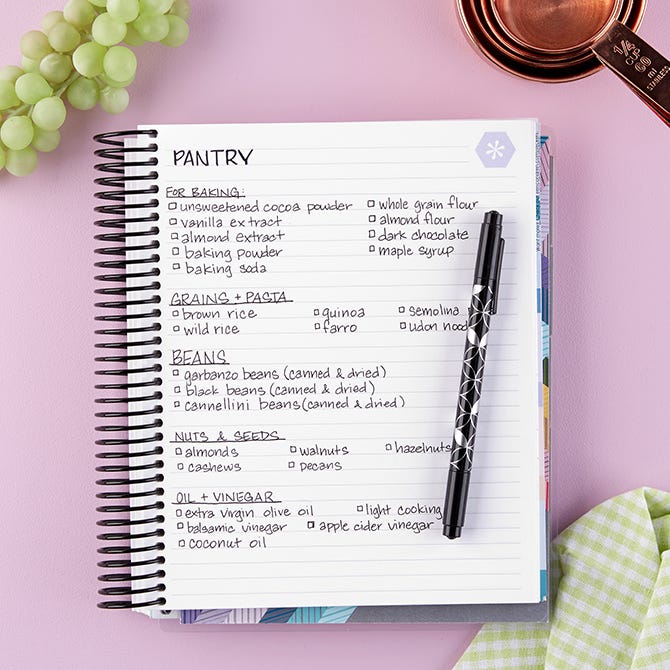
Basically — the Deluxe Monthly Planner is a monthly calendar in front with a few planning pages after each month, and then a notebook in the back. It’s the perfect tool for planning out a year of content.
I use the monthly calendar and pages to plan out each month. I write post titles on small post it notes (the page flag size) and stick them to the calendar date squares so that I can move them around if something changes.
I use the pages behind the calendar to make plans for the month. Maybe I’ll take notes on ideas for bigger posts that I want to develop or a series of connected posts. Or I’ll plan out some new strategy for promotion. I also keep track of of some of my stats — how much money I make every day (since Medium doesn’t separate that out) in particular.
The rest of the planner is a good sized notebook — plenty of space for using as my daily notebook for most of the year. If you decide to follow Ayodeji Awosika’s advice and come up with 10 story ideas every day, those notebook pages are a great page to write those.
Daily Work Log
This is one of my favorite tools. I’m not a journal-keeper. Maybe because I already blog so much. But I love keeping a daily log of my work. This isn’t reflective. I don’t analyze what I’ve done. I just keep a log — a written record of the work I’ve done every day.
You can keep a daily writing log in the notebook at the back of you Deluxe Writing Planner if you decide to use one. I’ve also used a Moleskiene daily planner for the last several years — something I learned from Austin Kleon. He uses them as general daily logs, not just for work.
Keeping a daily work log helps me to feel professional — even when things aren’t necessarily going the way I want them to. I don’t struggle so much with that now, but when I was a newer writer, keeping a daily log of my work helped me to see that I really was making progress, even if it wasn’t showing up in my bank account.
Set a Schedule for Yourself (For Work and For Learning)
How often will you publish?
I know we’ve already talked about this, but maybe you’ve rethought it, now that you have a better idea of what you’re going to write.
I‘ve published every day for the last year. In November 2018 I earned $185. In November 2019 I earned nearly $10,000. Obviously, I’m a big advocate for daily writing. It worked really well for me.
But here’s what I really wish I could do for you — I wish I could send you back in time to the time when Medium didn’t pay writers. I wish that you could have a year of writing on Medium without worrying about that. A year of just writing and learning and getting better.
I had two years of that and I’m grateful for it.
I know that you’re not going to be able to help but think about the money. We’re all only human, after all. But try to give yourself this first year as a learning year anyway. Whatever money you do make, consider it a bonus. Gravy.
Set a schedule for how much you’ll write — but also, every month make a learning goal. Think about what might help you to improve in the next month. Here are some ideas for learning focuses:
- Understanding how to write for curation.
- Writing better titles.
- Choosing better photos.
- Improving your grammar and spelling.
- Formatting your posts for easier reading.
- Building your email list using Medium.
- Creating a publication.
- Getting into other people’s publications.
- Getting into one of the Medium-owned publication.
- Learning how to use letters to reach your publication followers.
- Learning how t o self-promote on social media.
Just take one new thing at a time and focus on learning it for a month. Search out other people who do that thing well and learn what you can from them. I highly recommend starting with understanding curation in January.
No Time Like the Present
Spend some time this week coming up with a writing schedule for the new year. Think about it like you would a part time job — even a very part time job. Even if you only have an hour or two a week, get out your planner and make a solid plan for when those hours will fit into your schedule.
And then why not start utilizing them now?
One of the best things you can do for yourself is to write a few blog posts now, so that you’re ahead of the game when you’re ready to start posting. That will give them a chance to rest and for you to come back to them with fresh eyes for revision before you post them.
That resting period is especially helpful if you’re a new writer. It will give you a chance to seek out feedback from readers, if you can find a friend or two willing to read your drafts. And also study Medium’s curation guidelines and really make sure you’re hitting them all.
Making sure your first posts meet those guidelines is very important. If you have too many posts when you first start that aren’t curated, you run the risk of Medium’s curators not looking at your posts anymore at all.
Definitely take some time in the next couple of weeks to study posts that have been curated (look at featured posts) and make sure that your posts match the formatting of those.
Aim to write one blog post this week, just to have in your draft folder ready to go in January.
Here’s my secret weapon for sticking with whatever your thing is.
Shaunta Grimes is a writer and teacher. She is an out-of-place Nevadan living in Northwestern PA with her husband, three superstar kids, two dementia patients, a good friend, Alfred the cat, and a yellow rescue dog named Maybelline Scout. She’s on Twitter and Instagram and is the author of Viral Nation and Rebel Nation, and The Astonishing Maybe. She is the original Ninja Writer.


