
Too Much Selfing Makes You Anxious
Shift your focus to the welfare of others, and your confidence will grow
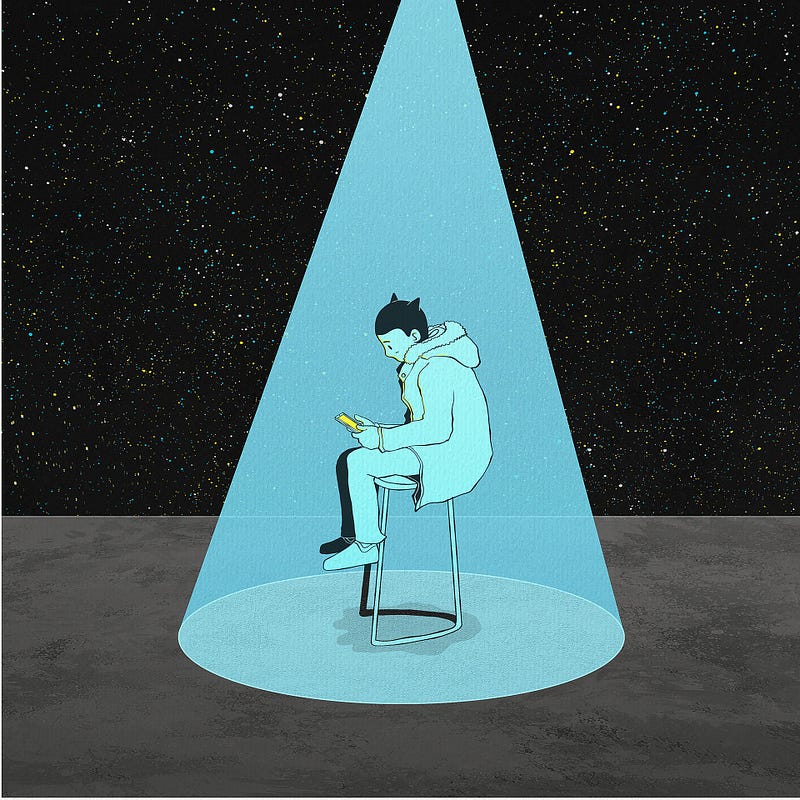
Selfing is how people make everything personal and turn it in on themselves. If you self too much, you worry what folks think of you and imagine you provoke their actions. You believe they’re focusing on you when, in reality, they are probably selfing too and not considering you much at all.
Why selfing hurts
Selfing increases anxiety because it makes you hyper-vigilant about yourself, and fight-or-flight mode causes your well-being to plummet.
At the same time, when you self a great deal, you don’t live in the moment, and your empathy drops. You can’t accurately consider other people’s experiences since you are stuck thinking it has something to do with you.
As a result, your life revolves around attempts to make yourself acceptable and good enough. We all encounter these needs occasionally. However, we also meet times when we relax and focus on the outside world as though we aren’t at its epicenter.
What selfing has in common with narrow vision
You’ve heard of narrow-mindedness, no doubt, and might consider it only relevant for folks who are set in their ways. Ring any bells? Selfing is a form of narrow-mindedness because it involves metaphorical blinkers; you can’t see as much as you would if your mind were open.
The key to reducing anxiety and increasing stress relief is to expand open-mindedness. You recognize the world outside of you and the people in it differently when you stop selfing and have an open mind. First, though, it helps to note why selfing happens.
What causes selfing?
We’re built to think about how we impact our environment and people. Doing so helps us survive. So, it’s natural to want to make a good impression. Nonetheless, taken too far, selfing is an unhelpful condition that keeps us in a disease state. (Dis-ease).
Often, we begin selfing when in a hyper-vigilant state. But if the behavior goes on too long, a habit develops. So, you might initially be anxious because you must attend a series of job interviews, for instance, and focus on your behavior and impress people.
If you don’t get a job fast and are stressed, you’re likely to imagine something’s wrong with you and consider yourself a failure. A selfing habit may develop out of your unease that stretches beyond interviews and spreads into social awkwardness.
A continual cycle evolves. Stress = selfing = increased focus and more selfing.
How to open your mind
Since selfing is chronic — and stems from repetitive thoughts of self — it makes sense to break the cycle and replace it with the opposite: thoughts about the world outside you without you as a central theme.
Each time you have an anxiety-provoking self-related thought, swap it for a non-self-related one.
“I wonder if I’m making a good impression on that person?” can become “I wonder how that person’s feeling right now?” And “everyone’s looking at me and thinking the worst” can become “everyone has their own life I know nothing about and might have worries I don’t understand.”
Retrain your mind to believe you can’t possibly guess what’s in people’s minds, and, most likely, it has nothing to do with you.
You can also switch selfing for considerations about people’s needs. What if the person you’re talking to is depressed/has a headache/is excited about an upcoming event? Then again, what does what they tell you say about them? Does it show they are anxious? Happy? Relaxed?
Turn selfing on its head by focusing outside yourself and ensure your thoughts don’t always include you as the main subject. The outcome will be less anxiety and an open mind.