avatarEsther Spurrill-Jones

Summary

The narrative describes a post-apocalyptic scenario where a virus has decimated the population, leaving the remaining survivors to cope with loss, isolation, and the collapse of society.

Abstract

In a flash fiction piece titled "Too Late," the author paints a grim picture of a world where denial and misinformation have led to catastrophic consequences. The story unfolds in a setting where children have succumbed to a deadly virus, and the few who have survived are left with severe health issues. The narrative conveys the eerie silence of once-bustling places like nursing homes and schools, now abandoned. The protagonist, reflecting on the state of their country—once a symbol of power and hope—expresses the stark reality of living in a ravaged nation, where basic services like grocery delivery have ceased, and the act of wearing masks has become a social dividing line. The story concludes with the protagonist acknowledging the personal impact of the virus, hinting at their own infection and the bleak future that awaits.

Opinions

  • The author suggests that the population was complicit in their downfall, having believed in lies and ignored the warning signs of the impending disaster.
  • There is a sense of regret and self-blame for the collective inaction that led to the current post-apocalyptic state.
  • The story implies that the few individuals who refused to wear masks are socially ostracized, equating them to "zombies" and implying they are part of the problem.
  • The narrative conveys a loss of global status, with the nation transitioning from a "shining beacon of hope" to an avoided wasteland.
  • The protagonist's contemplation of escape and the mention of others attempting to cross borders illegally highlights the desperation and the desire to flee from the dire circumstances.
  • The personal health symptoms experienced by the protagonist at the end serve as a somber reminder of the relentless spread of the virus and the inescapable fate it imposes on individuals.

Too Late

Our Children Are Dead — A Flash Fiction
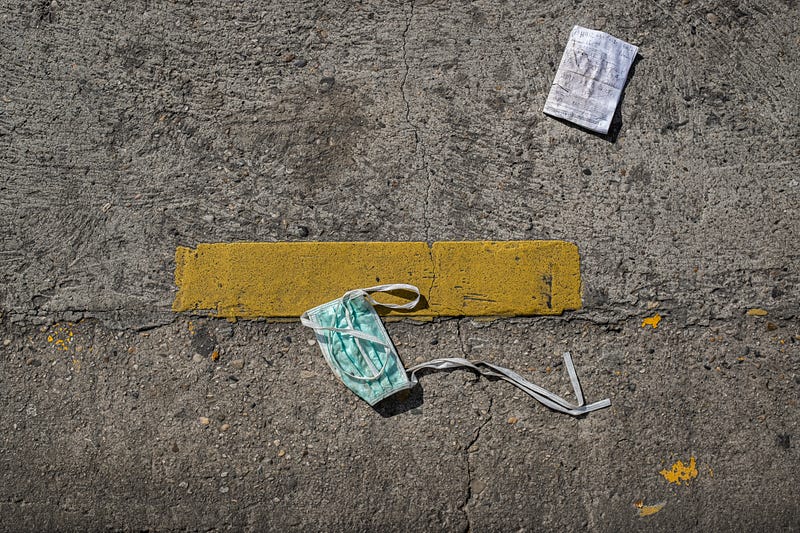
Photo by Clément Falize on Unsplash

We knew better. But we didn’t want to believe it. We thought it was hope, but we were only fooling ourselves, and dooming our children. We believed in lies and now it is too late.

Our children are dead.

The few who survived are weak and damaged, their hearts and lungs ravaged by the virus. If they live long enough to have children of their own, it will be a miracle.

So few of us remain. The nursing homes are empty, the schools are ghost towns. When I drive to the last open grocery store, I keep half expecting a mob of zombies to swarm my car. They used to deliver the groceries, but with so few staff left, they can only handle curbside pick up now.

Nearly everyone wears masks now. We learned that lesson the hard way. Those who still refuse to do so are shunned by everyone else. They are the zombies.

We were once the most powerful country in the world, a shining beacon of hope. Now we are a post-apocalyptic wasteland, our population ravaged by plague. No one wants to come here and we cannot escape.

I know people who tried to sneak across the border, into Canada or Mexico. I don’t know what happened to them. Maybe they made it. I hope they did. I would do the same, but I started coughing yesterday and my throat is sore today. I couldn’t taste my coffee this morning. I think it’s too late for me now.

It may be too late for us all.

Fiction
Post Apocalyptic
Pandemic
Future
Horror
Recommended from ReadMedium