
Tony Brown’s biggest rush playing piano with Elvis Presley
‘Was I worthy of being in the TCB Band? After being around Elvis’ house in Palm Springs, I realized it wasn’t necessarily about being as good as Glen D. Hardin. It was about being real. The way I played reminded Elvis of his gospel roots.’
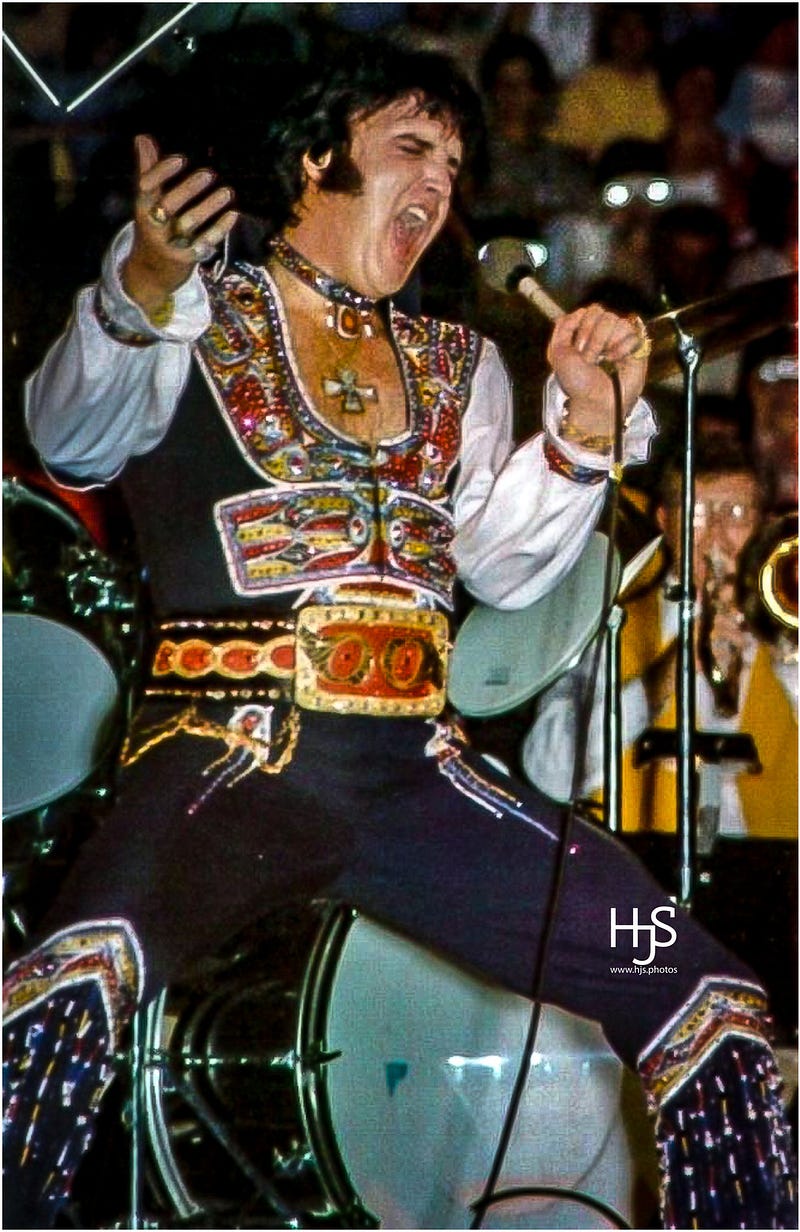
Tony Brown waited — and waited — for a clinically depressed Elvis Presley at his final, ultimately scrapped recording session. He supplied acoustic piano for Presley’s last sold-out tour. Having ascended to the producer’s seat, Curb Records refused to reimburse him for Wynonna Judd’s quintuple platinum debut. George Strait’s manager fired him after a 21-year hits stretch without warning over the phone. He steered Lionel Richie’s Tuskegee comeback and as president of MCA Nashville rubbed shoulders with Charles Bronson and Whitney Houston at a $20,000-a-table charity luncheon best known for Michael Jackson’s no-show.
The customarily media-shy mogul unlocks his door for the last installment of a comprehensive 10-chapter interview. On-deck are intimate jams at Presley’s Palm Springs home, replacing Glen D. Hardin as a bona fide TCB Band alum in 1976, the Memphis Boys, Nashville A-Team, Muscle Shoals Rhythm Section, Pro Tools studio wizardry, and annoying contemporary drum loops.
The Tony Brown Interview, Part Ten [Finale]
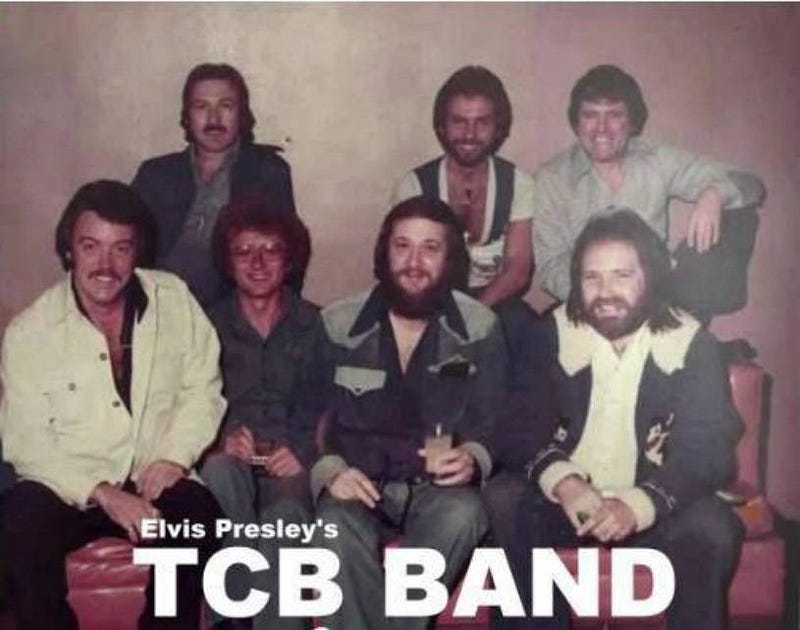
Was it awkward transitioning from opening act accompanist in Voice to full-blown TCB Band pianist for Elvis Presley? The Nashville-based gospel trio was comprised of former lead singer and arranger for J. D. Sumner and the Stamps Quartet Donnie Sumner, prior Statesmen tenor Sherrill Nielsen, and bass singer Tim Baty, while the TCB Band shone a light on lead guitarist James Burton, rhythm guitarist John Wilkinson, bassists Jerry Scheff/Duke Bardwell, drummer Ronnie Tutt, and pianist Glen D. Hardin.
Being in Voice gave me a totally different feeling about when I started playing with the TCB Band. I’d been around Elvis for hours at a time. Voice would hang out at his house in Palm Springs [850 West Chino Road, nicknamed Graceland West] talking about everything from cars to music. Elvis was also really into numerology.
Glen D. had started recording and touring as a founding member of Emmylou Harris’ Hot Band in 1975 during breaks from Elvis’ road schedule [as did Burton]. He decided to stay with Emmylou and tendered his resignation [the debut February 1976 round of Jungle Room sessions at Graceland served as Hardin’s final time recording with Elvis while an April 21, 1976, show at the Kemper Arena in Kansas City marked the last time he glimpsed the Atomic-Powered Singer].
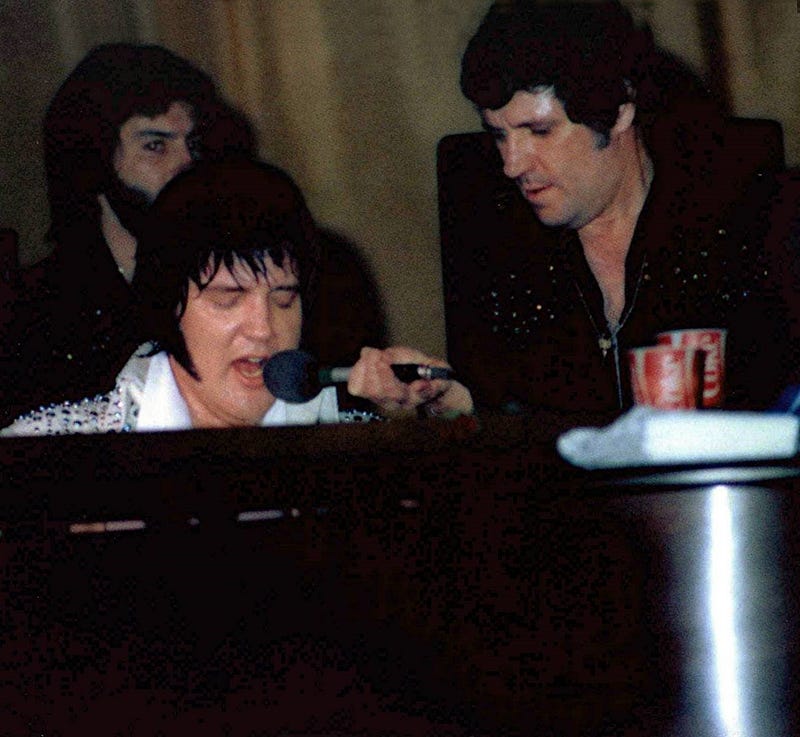
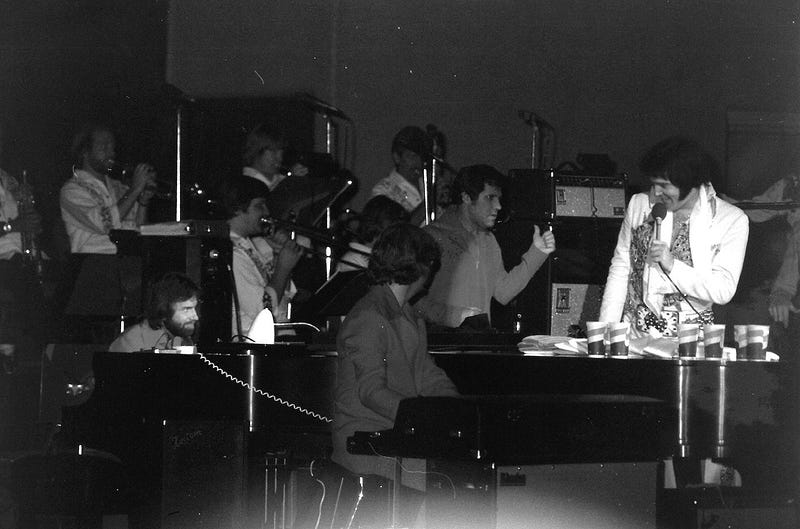
I was concerned about whether I was worthy of playing with Elvis’ band and the Joe Guercio Orchestra. You had finally arrived when you accompanied the biggest star in the world. Elvis’ deal was everybody had to be really good. I always felt like Elvis might discover the truth and suddenly exclaim, “Hey man, you’re not good enough. You’ve gotta leave” [laughs]. After being around Elvis’ house, I realized it wasn’t necessarily about being good. It was about being real. I think Elvis liked the fact that the way I played reminded him of his gospel roots. We were both well-versed in that genre [Brown had been part of the Southern gospel circuit since he was 13 years old, tickling the ivories in the Brown Family Singers and later getting hired to back J.D. Sumner and the Stamps Quartet and the Oak Ridge Boys]. So I actually did deserve to be there.
Everybody goes, “What’s the biggest rush you had playing with Elvis?” Without hesitation, starting “Also Sprach Zarathustra” [“Theme from 2001: A Space Odyssey”]. Then Ronnie went into “See See Rider” with that jungle rhythm thing he did on the toms. That’s as good as it gets, better than any drug you can do.
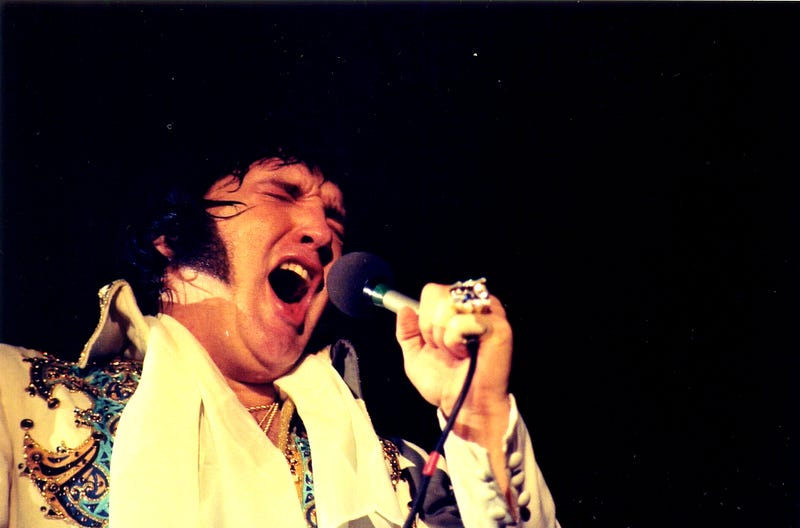
Relatively little is known about electric keyboardist Bobby Ogdin, who supplemented the TCB Band at the tail end of Elvis’ life.
When I accompanied Voice as an opening act for Elvis [1974–1976], David Briggs was playing the electric piano and Glen D. was playing the acoustic piano. Glen D. left, so I went to the acoustic and David stayed on electric. David eventually couldn’t do it, so Bobby replaced David for the last six months of Elvis’ life.
Bobby is best known as a session player in Nashville. In L.A. there was the Wrecking Crew, the guys that played on the Beach Boys’ Pet Sounds and many other landmark records. Nashville had the A-Team, and Elvis worked extensively with them including Jerry Carrigan and Buddy Harman [drums], Norbert Putnam and Henry Strzelecki [bass], Hank Garland, Chip Young, Billy Sanford, Ray Edenton [guitar], David Briggs and Floyd Cramer [piano], Charlie McCoy [harmonica and various stringed instruments], and pedal steel guitarist Pete Drake.
Larrie London was another monstrously talented A-Team drummer.
Actually Larrie drummed during the last two shows that Elvis ever did. Ronnie couldn’t make Cincinnati on the 25th and Indianapolis on the 26th of June, and the only person that could tow the line was Larrie London [when Tutt was unavailable for a week of shows in March 1976, London also filled in]. Larrie and I teamed up later as original members of the Cherry Bombs which were fronted by Rodney Crowell and Rosanne Cash.
Session cats from L.A., including members of the Wrecking Crew like bassist Joe Osborn, relocated to Nashville and thought that they would just take over. They didn’t realize that Nashville had its own crew.
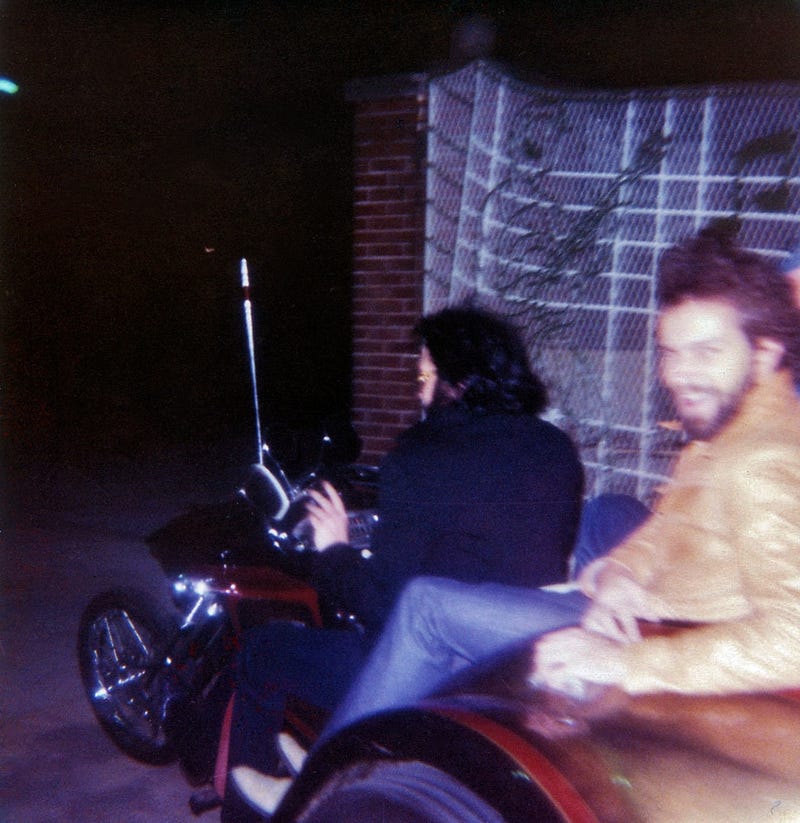
Even the famed Memphis Boys, who aided Elvis on his comeback trail with “Suspicious Minds” and “Kentucky Rain,” closed shop in the Birthplace of Rock ’n’ Roll and settled in Nashville by 1972.
Memphis was a recording mecca for Stax, Hi, and Ardent Records, but it never had as many work opportunities as Nashville had. Producers hired former Memphis players [e.g. pianist Bobby Wood, organist Bobby Emmons, drummer Gene Chrisman, guitarist Reggie Young, and bassists Mike Leech and Tommy Cogbill] to give country records that certain Memphis soul vibe. The Muscle Shoals Rhythm Section and Memphis Boys were white guys that played like black guys. That’s how Elvis wanted his songs to sound. Muscle Shoals was really on the back of the beat, whereas Memphis was kinda in-between.
I’m so glad that I was sitting in my chair at MCA Nashville from 1989 to 1997 [Brown produced for the label and eventually was named president during his total 1984–2002 tenure]. Those were the golden years, the “Garth [Brooks] years.” I was cutting 12 artists at one time. I was in the studio every week. I loved casting players from other musically-minded cities because it made a Nashville rhythm section really turn into another animal. I would fly in Leland Sklar from L.A. to play bass on a Reba McEntire session, Russ Kunkel to drum on Lyle Lovett, or Barry Beckett from Muscle Shoals to play keyboards on Vince Gill.
Now the new thing in Nashville and L.A. is “track guys.” They use loops and don’t use real drums at all. The producer, such as busbee [1976–2019, e.g. Lady A, Rascal Flatts, and Maren Morris], Ross Copperman [Dierks Bentley, Keith Urban, and Blake Shelton], or Luke Laird [Kacey Musgraves, Carrie Underwood, Tim McGraw, and Darius Rucker] will write the song with the artist’s input. Then the producer plays guitar, keyboards, bass, and sings backgrounds. In other words, the artist and producer are doing everything. I’m not that kinda guy. I’ve gotta have a rhythm section.
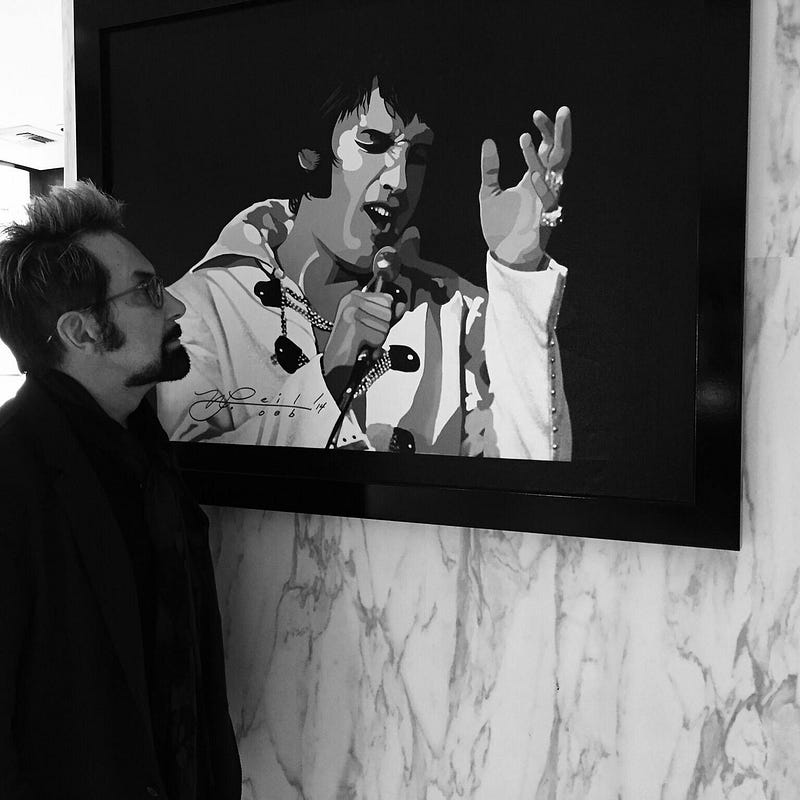
Spontaneously feeding off fellow inspired musicians in the same room is lost.
It’s a shame. Everything is to a loop. You can put a song on Pro Tools, basically a software grid where you can fly instruments and vocals around. It’s really a performance artificially created piece by piece. Ninety percent of the records you hear on pop and country radio these days — Ariana Grande, Cardi B, Keith Urban, Luke Bryan, Florida Georgia Line, Brantley Gilbert— are done with Pro Tools. Previously round-the-clock session players, including guitarist Tom Bukovac [Vince Gill] and drummer Paul Leim [Bob Seger], have to tour to supplement their income.
Elvis would have loathed drum loops.
Right on! When Elvis was alive they didn’t use clicks. I use a click now because it’s easier to fix something later on. Say you’ve got a great take of a song, but maybe the steel player or the guitarist kinda screwed up their part. You can go back and replace them really easy.
Elvis would not have liked a drum loop because he wouldn’t have had any control. The drummer had to play to Elvis, especially onstage. If Elvis kicked his hip one way, then Ronnie had to accent it with a certain drum lick. I always thought that was so cool. Elvis pretty much drove the machine, and that’s the way it should be for all great artists like Whitney Houston, Michael Jackson, Prince, and Adele.
HOLD TIGHT, PARDNER — THE FULL TONY BROWN INTERVIEW IS ACCESSIBLE BELOW!
© Jeremy Roberts, 2022. All rights reserved. The Tony Brown interview was edited for clarity, brevity, and sequenced cohesively. To touch base, email [email protected] and mention which story led you my way. I appreciate it sincerely.