
Thanks to AI and Deepfakes, Anyone Can Make You Their Private P*rn Star
Deepnudes — p*rn images and videos — are created without consent not just of adult women but also of minors and children.
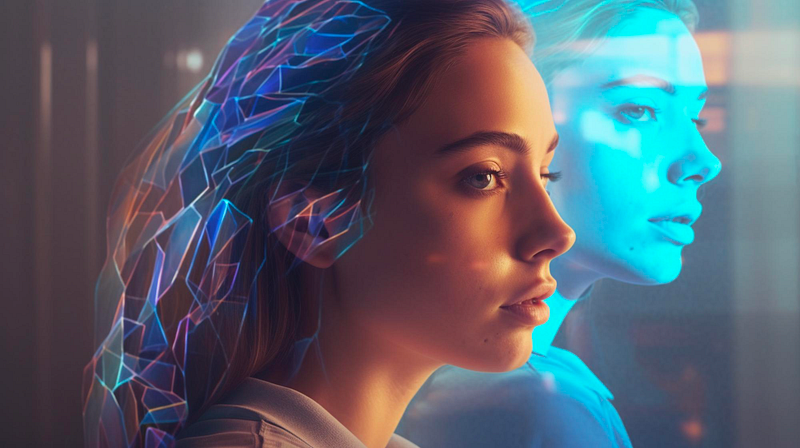
Did you know that anyone can hop on the Internet, do a quick search for a deepfake or deepnude tool and create a p*rn image of you — a very convincing one?
It only takes a couple of minutes. And, of course, they’ll need a picture of your face. But if you’re under 70, chances are slim that there isn’t at least one picture of you on the Internet. Or on someone’s cell phone.
It could be on a friend’s phone, a classmate’s, or a colleague’s. Or, someone you passed on the street snapped a picture of you without you realizing it. In this day and age, you have no power over your likeness. Technology has made sure of that.
And it has made sure that anyone can make you their own personal p*rn star without you knowing. At least until they share it on the Internet or in chat groups, and people start snickering behind your back. Or in your face.
For many women, this scenario has become the shocking reality with the proliferation of AI (artificial intelligence). For most, the incident was traumatizing and left them feeling isolated and filled with shame.
Of course, they know that it’s not their body that is shared on the Internet nude in lewd poses or video clips. But does that make any difference? What people see is, first and foremost, their face on a naked body. And that’s enough.
And these images will never go away.
In 2018, Rana Ayyub, an investigative journalist, became the target of an online hate campaign after she spoke out against the rape of an eight-year-old Kashmiri girl. Ayyub received rape and death threats, and a fake p*rnographic video of her was shared online.
Ayyub tells us that the incident had a devastating effect on her mental health and that these images and videos keep popping up whenever she takes on a high-profile story.
More recently, in January 2023, Atrioc, a well know Twitch streamer, was caught with deepfake p*rn he’d created of his colleagues, high-profile female Twitch streamers. He accidentally shared a browser tab on Live with the videos in the background.
The massive outrage this sparked led him to resign from Offbrand, the company he co-founded. He apologized publicly and became involved in an initiative that helps take down deepfake p*rn videos and image sites.
But the trauma the targeted woman suffered can’t be deleted.
In 2018, not everyone could create deepfake p*rn images and videos. And the result wasn’t necessarily convincing.
Today, thanks to AI, anyone can click on a website, pay a few dollars and create p*rn videos. Starring any person they know.
Even children can create p*rn images of their classmates. And there’s little preventing them from doing so.
The development of AI tools is advancing at an unprecedented pace. But there is no consensus or ethical baseline for how we intend to protect our privacy and intellectual property from AI.
Politicians are pussyfooting around the issue of AI regulation, and tech bros fantasize about a sentient AI wiping out humanity in the near future.
According to a survey conducted at the Yale CEO Summit, 42% of CEOs believe that AI could potentially destroy humanity within the next five to 10 years
Even men like Geoffrey Hinton — “the godfather of AI” — who so publicly resigned from Google, feel these assaults on women using AI are not important enough to tackle.
Reminding us that actual and present threats to women are never as important as the threats men envision for themselves in the future.
This week, a massive storm of outrage swept Almendralejo, Spain. About 30 girls, the youngest 11, reported that AI-generated nude photos of them are being circulated in chat groups. Nude images created by their male classmates.
However, there is a twist.
The images started circulating in June and the girls finally found the courage to go to their mothers. And their mothers went into berserk mode.
They told their daughters NOT to be ashamed. They united and organized themselves to take action against the responsible classmates. And they’re making this a national scandal.
They’re loud. They’ve made so much noise that finally there’s no chance to sweep the problem under the rug.
On Monday, gynecologist Miriam Al Adib — mother to a 14-year-old who was targeted — went public with a video on her Instagram channel. The video was viewed hundreds of thousands of times. Within days, it became a national uprising, and the Spanish data protection authority has gotten involved.
What is unique and so important about the Spanish mother’s revolt is the reversal of the logic of blame.
The mothers say what we all need to understand and upold: It’s not the targeted woman or girl who should be ashamed, but the perpetrators.
Myriam Adib emphasized this in her viral video.
In the text accompanying her video, she wrote, “Girls, don’t be afraid to denounce such acts, tell your mothers.” And in a later post, “Don’t be afraid, don’t feel ashamed and don’t feel guilty. We, as an entire society, support you unconditionally.”
It’s time to turn the table.
Men (and boys) need to learn that generating fake nude images of their colleagues, classmates or friends isn’t a prank nor funny — this is disgusting, shameful behavior. Any boy or man who uses this must be made aware that they’ll likely face legal consequences. Like any other s*x offender.
We women can make enough noise together to make sure that anyone who does this will be prosecuted. If we unite and if we are willing not to be ashamed.
Shame is the only power these cowards have to keep us quiet. Shame and indifference.
Experts refer to such images as image-based violence. Because besides “fun”, many perpetrators claim they wanted to shame women and girls with the pictures.
…women targeted by image-based violence report suffering from mental health issues like anxiety, depression and low self esteem.
And they are successful. The women targeted by image-based violence report suffering from mental health issues like anxiety, depression and low self-esteem.
victimisation resulted in at least one mental health issue, which was either self or clinically diagnosed. These included high levels of stress, depression, anxiety, low self-esteem, insecurity, paranoia, obsessive behaviour and suicidal thoughts. The most common impact was depression.
The technology to terrorize women and girls will not go away. We have to be willing to step up, speak up and support each other. We have to insist that legal ways to persecute the perpetrators are implemented.
The Spanish mothers have shown us how it’s done. Be loud, be unashamed — don’t let them victimize you or your daughters.
No one is safe from deepfake p*rn. Not even children. The youngest girl in the Spanish incident is 11 years old.
This is child p*rnography, even if it was created by another child.
And it’s not just children creating nude images of other children. People are using AI to create child s*xual abuse material (CSAM).
Deepfake technology has made the creation of child s*xual abuse material (CSAM), also often referenced to as child p*rnography, faster, safer and easier than it has ever been.
Deepfakes are used to create new material from existing material or to create CSAM from children who have not suffered s*xual abuse. That’s another reason- if you still need another — to keep your kids’ faces off the Internet.
Imagine your child being confronted with a video that shows them in s*xually explicit situations. Imagine the lifelong trauma.
We can’t uninvent technology.
AI is here to stay and there are many amazing use cases for it. But the rise of the Internet should be a cautionary tale. Due to a lack of regulation, the Internet has contributed more to fake news, p*rn, and cat pics than it has to science.
We are at a crossroads. We can still decide which direction we want to take.
Do we want AI to be a tool that makes our lives better? Or do we just want to use it to make money and let it terrorize us until we all hope a sentient AI shows up and puts an end to it?
If you’ve enjoyed this article and want to support my writing, buy me a cup of coffee! For more of my writing, subscribe to my Substack newsletter or follow me on Linkedin


