Toastmasters Table Topics #7 — What Do You Do For Your Self-Care?
Let’s practice impromptu speech delivery.
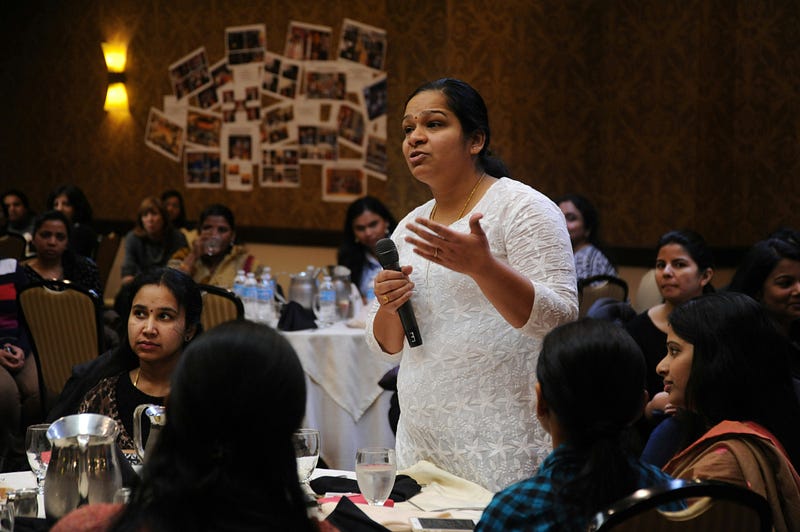
I have written about the significance of public speaking in the past. I started this writing series on table topics some months back. Before we dive into today’s topic, below is a quick introduction to Table Topics
What are Table Topics?
In Toastmasters, “Table Topics” is a segment where participants deliver an impromptu speech. The speech should not be less than half a minute or more than two and a half minutes.
Table Topics aims to encourage speakers to seize opportunities with promptness. Speakers learn to provide coherent and concise content without prior preparation. It’s a valuable exercise for developing spontaneous speaking skills. Something very useful in formal presentations and everyday conversations.
The topic for today’s article is:
What Do You Do For Your Self-Care?
We are living in times when speaking on mental health is trendy. The speaker can use the topic of Mental Health for this question. They should use their personal experience to narrate their self-care strategies. A common pitfall will be to speak on bookish answers. Quoting personal experience will be the differentiating factor for this topic.
My Ritual
I follow a ritual for every speech. The routine helps me to compose myself. It gives me a sense of satisfaction that things are in control.
A confident stride to the podium is the easiest way to kickstart the ritual. The next step would be to thank the table topic master and give a firm handshake. Repeating the question will buy me some thinking time.
I ensure that the podium is not standing in the way between me and the audience. It also gives me an excellent opportunity to take a deep breath and shrug off any anxiety. I prefer not to look at my feet while thinking, and my hands should not be in my pocket. It demonstrates an anxious personality.
Speech Delivery
My speech goes as follows:
A healthy mind leads to a healthy body. Hence, my self-care focuses on the chatterbox in my head. Every night before bed, I pray to GOD to wake me up on the right side of my brain. If my brain works as per my expectations, I have the confidence to handle any life drama without breaking a sweat. A sane mind is my definition of self-care.
There is a reason why the self-help industry is worth 11 billion dollars in the US alone. We all have the same enemy — our brain. Numerous courses are available online to take care of mental health. They are affordable and easily accessible.
Being a lazy bum, I like easy ways to stay mentally fit. Hence, I prioritize moderate physical activity, healthy eating, and daily meditation.
Physical Activity — My pot belly should be a good enough indication that I don’t work out every day. I have a GYM membership, though. At the very least, I give my GYM a visit thrice a week.
Healthy Eating — Thanks to my beautiful genes, I have been a pre-diabetic over the last decade. It’s an excellent motivation to stay away from sugar and carbs. Hence, healthy eating isn’t a choice but a compulsion.
Meditation — My aunt introduced me to Vipassana — a Buddhist form of meditation. I did a course just before COVID, and I practice it regularly. I have managed 30 minutes of practice five days a week for the last three years. It’s not intense, but it keeps me grounded.
I use physical activity, healthy eating, and daily meditation to maintain my sanity. Moderation is the key to ensuring continuity and avoiding burnout. It took me some years to fine-tune the intensity, but I resist any temptation to plan beyond 15 days.
Thank you.
Conclusion
I try to be as spontaneous as possible when I write articles on table topics. It means I will elaborate on the first idea which comes into my head. The first idea may not be the best answer. Writing the first answer helps me to simulate a live environment.
I am writing these stories on table topics to create a collection for competitions. It is tough to think on the spot. A compilation like this sounds like an excellent way to practice. Hence, this is my way of visualizing robust and impactful content. Recording these speeches is a part of my routine. It gives me invaluable input to work and improve. THANKS FOR READING THIS PIECE. Positive feedback will help growth.
Thanks
See below links to other articles from this series on table topics:


