
To Wear Or Not to Wear? That is Not the Question
The staggering absurdity of the “mask war”
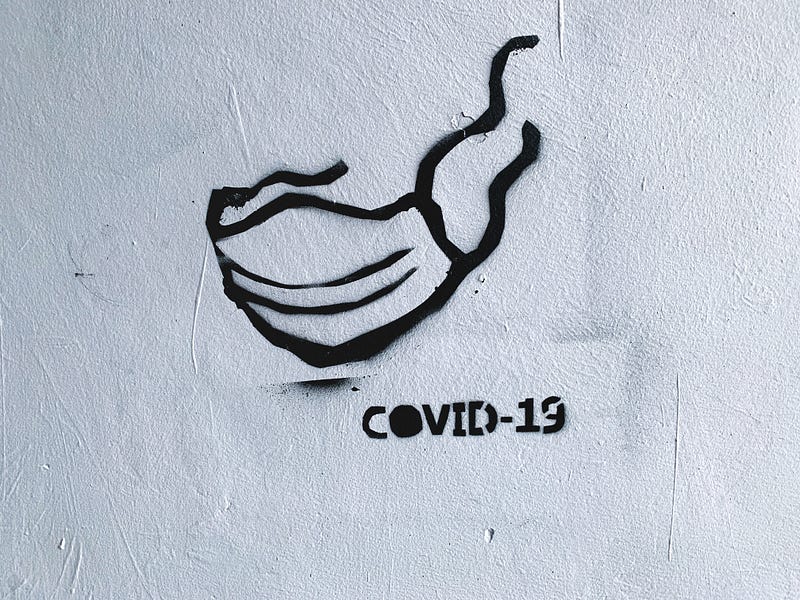
Who would have thought we would someday be fighting over whether or not to wear masks?
How could a simple piece of cloth become a hot button issue? How is it possible? Yet here we are.
In the U.S., COVID 19 has claimed over 154,000 lives since the beginning of this year partly because it received political leeway to roam freely. The infection rate continues to spiral upward. Still we fight over wearing masks as if it is a political issue rather than a matter of life and death.
How did this come to be?
The world’s scientific community has long established the effectiveness of masks and the role they play in reducing the infection rate. Many countries including Hong Kong, Taiwan, and the Czech Republic have shown that universal mask-wearing is a powerful tool to curb the virus’s spread.
Steve Kashkett wrote in USA Today:
From a public policy perspective, it is clear that Czech leaders placed all of their hopes and trust in a gamble that mandatory face mask-wearing would be the “magic bullet” in the fight against COVID-19, and they seem to have been right. Today, the Czech Republic, home to about 11 million people, has one of the lowest per capita death rates in Europe. The U.S. per-capita death rate from this disease is 12 times higher.
Yet, in the U.S., the very country that needs universal mask-wearing most desperately, a portion of its residents still refuse to wear them. They refuse to see how covering their faces with a cloth can be a solution and not a hindrance to their freedom.
Is it really freedom if not covering our faces leads us to be more enslaved by the virus and its aftermath, including longer periods of lockdowns?
Reality is stranger than fiction. I wonder who these people are? Don’t they have friends and relatives who are either at-risk or already in trouble with the virus? Do they live lives that somehow protect them from getting infected? Have they been simply waiting for Donald Trump to encourage them to wear it for real?
Stores in the U.S. have long posted signs stating “No Shirts, No Shoes, No Service.” I’ve seen them for years and haven’t seen people raising a fuss about their personal freedom. Why then have masks become a point of contention, especially when they could save lives, particularly the workers in those stores?
I suspect the answer is more likely to do with culture wars and political games gone awry. Exploiting the pandemic to play these petty games is to me unconscionable. The virus doesn’t care what our cultural beliefs or political affiliations are. It only responds to measures that have been proven effective, such as the universal wearing of masks.
It seems not all of us are interested in fighting together against the pandemic, which sadly has given the virus more power.
Shouting slogans like “My Body, My Freedom” is absurd and sad. Fueled by twisted notions of freedom, these delusional self aggrandizing behaviors are part of the deeply entrenched toxic entitlement that has endangered many lives during the pandemic.
Thousands have paid the price for stupidity lauded as freedom.
The U.S. has proven to the world that freedom without responsibility leads to disaster. The pandemic has exposed many of our societal ills, and now the culture war over masks sheds light on the danger of mis-conceived freedom.
To wear a mask or not isn’t a question of freedom. It is simply the right thing to do for the greater good.


