
EATING HEALTHY
To Vegan or Not to Vegan? 3 Things to Consider Before You Decide.
If you want to cut the confusion and make a lasting change towards a healthier plant-powered lifestyle, this may help.
You are thinking about it, you are tempted, but the confusion around the subject is so overwhelming that you keep postponing the decision. Or maybe you tried and gave up?
On one hand, there is so much hype around the subject. Many of the world’s top athletes and celebrities have made the transition and are thriving. From Venus Williams, Novak Djokovic, and Morgan Mitchell to Rooney Mara, Joaquin Phoenix, Lenny Kravitz, and Billie Eilish, public figures are leading by example and actively advocating for, evoking health, ethical or environmental reasons.
On the other hand, when it comes to the health implications of a vegan diet, we find contradicting information on almost every subject related to it. From nutritional value and health benefits to farming conditions and prices of produce. Reasons for this are multiple and quite complex, but let’s just say that the food industry is very powerful, and the majority of the nutrition-related research, that is made public and promoted, is financed by the food corporations. The findings, as well as the conclusions of these studies, very rarely go against the sponsors.
Searching for information on vegan forums and chat groups, and from what I have seen, this is true for any diet group (no carbs, keto, paleo, etc.), could be a daunting experience, too. People can get very emotional and sometimes quite radical about their views on the subject, as if there were only one truth about healthy eating, theirs.
As a decade-long vegetarian and a five-year-long (imperfect) vegan I would suggest that you consider these three things before committing to change.
I Know your why.
Eating habits are among the most difficult to change.
Firstly, food is related to basic survival, with roots digging deep into our reptilian brain. Messing up with food may trigger existential fears and this is especially true if we have a history of food insecurity caused by poverty, scarcity, or eating disorders.
Secondly, food has a powerful emotional component to it. We do not eat only to nourish our body, we eat to reward or comfort ourselves, to compensate for emotional distress, to create connections, and to share love. Changing our diet can impact all these areas of our lives.
My shift to plant-based stretched over more than a decade, and the following three reasons (in that order) helped me persist and finally thrive.
1. Undeniable health benefits
My father got sick of an aggressive stomach cancer in 2006. After the doctors completely removed his stomach and a part of the oesophagus, he decided, with our unwavering support, to change his diet.
We did not know anything about the plant-based diet at the time, but after research and discussions with doctors in macrobiotics and some other alternative medicines specialists, we got rid of the meat. Except for the steamed white fish occasionally. We also drastically reduced other animal protein intake, while introducing various kinds of plants and fungi.
If I knew then what I know now, we would have gone 100% plant-based whole food.
My father’s results: years of life of vitality and joy, without chemo and hospital visits.
My evolution to plant-based started with my father.
There are more and more serious independent studies that demonstrate the numerous health benefits of a whole food plant-based diet. If you are curious, I would recommend that you start by reading the books “Whole” and “The China Study” by T. Colin Campbell, PhD.
2. Contributing to animal welfare
According to FAO (Food and Agriculture Organisation), we slaughter 92 billion land animals, living sentient beings, for food annually. My choice of words in this sentence gives you an idea of how I feel about it. I will avoid talking here about the way they are bred and kept.
1 to 2,8 trillion fish. Mind the difference between a billion and a trillion.
What do you think, and even more importantly, how do you feel about this?
3. Doing my part in fighting the climate crisis
Animal farming is one of the main contributors and in some cases the main contributor, to water pollution, farmland use and deforestation, biodiversity loss, and greenhouse gas emissions.
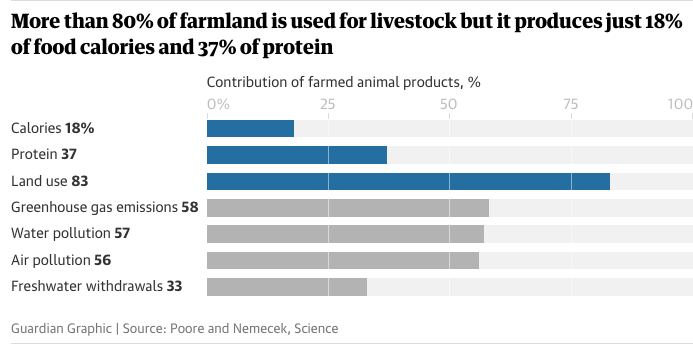
Although I am very disappointed, to say the least, by the lack of concrete decisive action from our governments to ensure the future of humanity on this planet, I have always refused to believe that individual action is insignificant compared to the immensity of the problem. I believe in “doing my part” even when the others are not doing theirs (yet).
“A vegan diet is probably the single biggest way to reduce your impact on planet Earth, not just greenhouse gases, but global acidification, eutrophication, land use, and water use,” said Joseph Poore, at the University of Oxford, UK, who led the research. “It is far bigger than cutting down on your flights or buying an electric car,” he said, as these only cut greenhouse gas emissions.
II Examine your current eating habits.
Vegan, or plant-based, does not automatically mean healthy(er).
If your everyday diet consists primarily of highly processed “supermarket” food, like cured meats, sauces, and ready-made meals, going for the same types of food labelled vegan will not improve your health. In some cases, the nutritional value of highly processed vegan options is even lower than that of their “traditional” equivalents. Tastewise, you will probably find them to be poor imitations of the food you like.
Highly processed food is full of food additives that are supposed to improve the colour, texture, or longevity of the products, not their nutritional value. The food industry uses more than 400 different food additives today (in the EU, the US data is not very clear, some sources claim that there are several thousands in use today) and a considerable number of them have long-term harmful effects on our health. Cured meats, for example, contain some of the most harmful food additives: E250, and E251.
Maybe the best first step, in this case, would be to introduce more unprocessed, whole foods, like greens and legumes, and give up on processed meat.
If your diet is already rich in veggies, fruit, and legumes you are off to a much easier start. And if you do not shy away from rolling up your sleeves and spending some quality time with your cooking utensils and appliances, you are ready to go.
To be willing to prepare food yourself is an important part of the process. Quality “supermarket” vegan products and meals, i.e. products with good nutritional value, are still quite expensive.
III Check your mindset.
When I first told my friends that I ate plant-based, they asked me “But, what do you eat then?” And I get it, it is a valid question when one’s point of reference is a plate with a meaty centre piece accompanied by some “sides”. Take the centre piece out, and what’s left is potatoes or green salad, in most cases. OK, yes, I am exaggerating a bit.
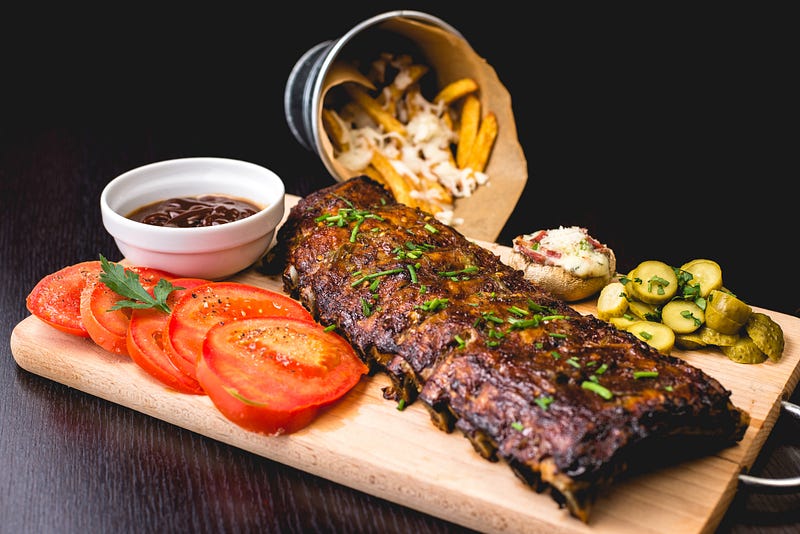
This cannot be further from the reality of a whole food plant-based plate. An amazing new world of flavours, colours, and nutrients opened up to me when I started the journey. Playing with recipes and ingredients I learned a lot about different cuisines, and far beyond, about different traditions and cultures. I must say that the “meat” plates now look boring to me and nutritiously very questionable.
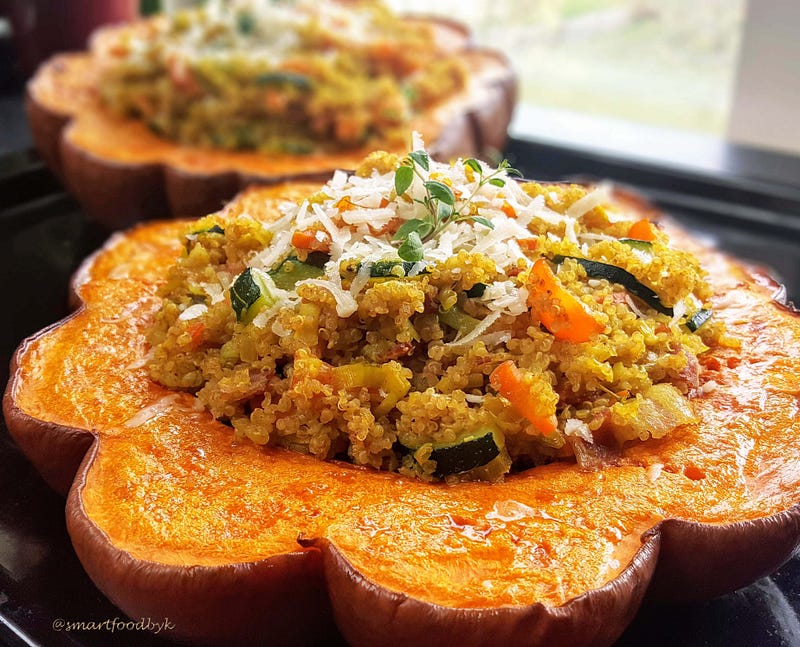
Be curious about what you gain, and do not focus on what you lose.
And do not aim at 100% immediately.
Frustration is a powerful enemy that can force you to give up. My transition was very progressive. I started by abandoning highly processed food, and especially cured meat. Then red meat, then other meat, then… You get the picture. The more I learned, the more I practiced, the more convinced I became of what I was doing.
I am still not a perfect vegan. I can be tempted by a piece of cheese or a cake containing eggs or cream. I have two teenage boys, and although we do not do meat at home, I still make them omelettes, full-fat cheesecakes, etc. Not because I think it’s better for them in any way, but because I let them choose.
I do not beat myself up about not being perfect, because plant-based is much more than just a diet, it’s a lifestyle. But it’s another story that I intend to write.
Conclusion: If you feel the urge to change, just start
1. Understand why you want to change. What benefits it would bring to you, what results do you want to see for yourself, and maybe for the people around you and your environment. Strong motivation makes it easier.
2. Examine your present eating habits. Your health is your most important asset. Choosing ingredients wisely and making your meals yourself is an important skill to learn to create that asset.
3. Be curious and playful. You do not need to be radical and demand 100% of yourself unless this is your usual way of doing things. Get rid of and replace staples progressively.
This process can be creative and joyful, or it can be frustrating and stressful. It’s your choice. Make it your own and just start.
Drop me a line if you need a bit of encouragement or some advice, I am happy to help.
A disclaimer concerning my father’s cancer story may be necessary here: I am NOT a doctor, and his story is NOT medical advice nor a recommendation you should follow.