
LIFE
Is My Job Worth Dying For?
Sobering thoughts on my first Sept. 11 as a Manhattan resident
I’ve lived in New York City for six months now. A lot of people in my hometown would tell you that I am a “New Yorker,” and a lot of people here would tell you that I’m nothing like one and never will be. Like most aspects of my life and personality, I consider my own truth to be somewhere in between.
But that’s every other day of the year. Today, I am definitely a New Yorker.
I didn’t even realize that I was learning this lesson, but now that I live here, I understand Sept. 11 on a different level—the level of the office workers who lost their lives that day. Now that I work in a Manhattan office just like they did, those victims aren’t just a faceless number. They are people who had identities, and families, and memories, and routines, and preferences, and pending items on their To Do lists, and problems they didn’t quite know how to solve but didn’t want to give up on. They had life stories that they were still writing and editing. Those people are me. And I am them.
I offer my physical proof and emotional evidence.
I walk almost everywhere. Sometimes I take the Subway, and I curse at the MTA for its nonsensical weekend hours and meandering rabbit holes. Occasionally I hail the obligatory yellow cab. (But who does that anymore? It’s 2018, the Age of Uber, when ordering a ride on the Internet from the palm of your hand and then climbing into the back of a stranger’s car only to sit next to another stranger—both of whom know your name and approximate address—is somehow completely normal.)
I occasionally cross paths with people I know, and marvel at how small the world can feel in a metropolis like this. (And then I remember that it’s geographically pretty small, and statistically we’re quite bound to be in the same place at the same time.)
I literally bump into fellow pedestrians; I sometimes say, “Excuse me.” (It’s not that I don’t mean it the other times; it’s that I know they know I didn’t intend to offend.) With loud sighs and quiet curses, I rush through crowds of tourists who had the audacity to exist right in that spot. How dare they be in my way—on 34th, right by the Empire State Building. What business could they possibly have here where I need to walk?
I cross the street when it seems like I can make it across before that car does, not when it’s clear or when the orange hand disappears. I stand in line—no, on line—for an exorbitantly long wait just to eat a supremely delicious cupcake inside a bakery as big as my bathroom.
I often forget there are four other boroughs besides Manhattan. I become numb to the prevalence of homelessness. I pretend I don’t hear the crazy people — because after awhile, I genuinely don’t. I don’t give the person with an outlandish glittery getup a second glance or even a first glance because this is New York and it’s just another Tuesday and I’ve got stuff to do.
I don’t give the person with an outlandish glittery getup a second glance or even a first glance because this is New York and it’s just another Tuesday and I’ve got stuff to do.
I sit in the center of Times Square as thousands of people from every corner of the globe whiz around me in a loud and colorful blur—and yet I feel absolutely invisible, and completely alone.
… So I guess I am kind of a New Yorker.
Maybe. By some definitions.
(I have not yet waited in a three-hour line for brunch, nor have I indulged in a bagel or folded my pizza.)
Even though I can see Freedom Tower if I look down a certain street on my daily commute, I still haven’t taken the time to see it up close, nor to visit the memorial.
That is, not until today. I thought that since this is where my whirlwind life has taken me on a Sept. 11, I should finally pay my respects.
Somber silence never feels silent. There are a million thoughts in your head, thoughts of grief and pain and anger and worry and confusion and doubt—thoughts that don’t really have words because nothing can describe the feelings. Yet, there is also some peace floating around in there. Gratitude that you’re standing in front of the memorial, not engraved into the front of the memorial.
I remember where I was on this day 17 years ago, just like everyone else. I even remember what I was wearing—a white tank top with a thick pink stripe which was decorated with some kind of black filigree pattern. (Not very “me,” not even then. But that’s what you do when you’re a sophomore in high school: You try to figure out who you are, and how to be you.)
I was 15 years old. The time which has elapsed between the tragedy and now, spans longer than my entire existence had when it happened.
I remember starting the day quite ordinarily, progressing from Homeroom into my first class: Economics. Ugh, I hated that class. I also hated mornings.
I remember that constant overwhelming feeling of uneasiness—no, anxiety—of being a high schooler. And being shy. And being uncomfortable in my own skin. And feeling like everyone knew it.
And oh yeah, my crush was in that class with me, so I was extra nervous. Practically a shivering chihuahua.
I remember one of our three principals interrupting my classroom’s quiet disquietude with a ding over the P.A. system. Now there was yet another level compounded into my sticky, complex baklava of layered anxiety: The fact that this never happened … So something was wrong.
Suddenly, the selfish teenager I was didn’t care so much about herself.
“Attention, teachers. Please tune your TVs to Channel 1. We have history in the making. There has been an attack on the World Trade Center.”
I remember thinking “ … What’s the World Trade Center?”
I was aware that I didn’t grasp the significance of what was happening. Felt like I was out of some loop. As a kid in Tennessee, I hadn’t heard much about those buildings. Or the world. Or trade. I heard about Tennessee, and farms, and tractors, and rodeos. I’m not kidding, and I’m not putting it down, either; I’m just saying that it was a different realm. We passed cows on our way to school every morning—including that morning—and then at some point we crossed railroad tracks. Sometimes we were tardy because we had to wait for the train to pass. We would count the cars to pass the time, because we didn’t have cell phones to numb the boredom.
God, I sound ancient … I’m 32; not 80.
I may have heard the Towers mentioned a time or two prior to Sept. 11, 2001, but I had no idea what the World Trade Center was, or where it was, or that it was a tower. (Or actually two.) But once I pieced together what was happening live on the news throughout the day, I increasingly understood the Center’s importance.
In the week following the buildings’ collapse, I re-watched old movies of New York. I realized that the World Trade Center had been standing there right before my eyes for my whole life. The Towers had been two silent figures in the backdrop of my cinematic childhood, yet I’d never noticed them before. It was then that I realized more about what had been lost.
Two pieces of iconic history, former jewels in the city skyline that represented my entire country and culture, twin symbols of freedom and power—and thousands of human lives. They weren’t empty buildings; none of them were. They were full of people. Hives for the worker bees. Always buzzing.
Sitting there 17 years ago and watching those distant towers burn and crumble in a city I had never been to, in a region of the country and of the world where I knew no one, it all felt so distant … yet it felt like it was happening in my own backyard. That wasn’t Unattainable Manhattan smoldering in ash; it was my entire country. My home. And I was watching it crumble.
Suddenly, the young strangers who I had always passed in mutual anonymity along my school’s locker-lined hallways were not just my classmates; they were my brothers and sisters. Even though it was a small town, we didn’t all know each others’ names, but we knew each others’ faces—and they suddenly looked more familiar than they ever had before. We all had the same expression of fear.
We didn’t understand what was happening. We didn’t know what it all meant or why it was so important. We just knew the grown-ups were afraid, so we were afraid—even though just a few hours ago, we had thought we were the grown-ups. Ha.
We stitched together the story, piece by piece, from classroom to classroom and TV to TV.
Not flat screens; gray screens inside of big brown boxes that tried to look wooden. The kind of TVs that made a fizzling flick sound when you turned them on. A little white light would then spark from the center of the screen and grow into a picture right before your eyes—but not as fast as the voices hit your ears. It always took a minute for the images to catch up to the sounds. And when the graphics finally got there, they were small and grainy. But that’s how it was.
Again, I’m 32.
I watched the first tower gasp in black smoke. I watched the second plane hit the second tower. For the first time in my life, I heard fear in the voices of news anchors, people who had previously always seemed nearly robotic in their calm, flat delivery of any given current event. I realized that news anchors were people, too.
I watched little dots emerge from the sides of the buildings, and then drop slowly … and then I realized those little dots were people.
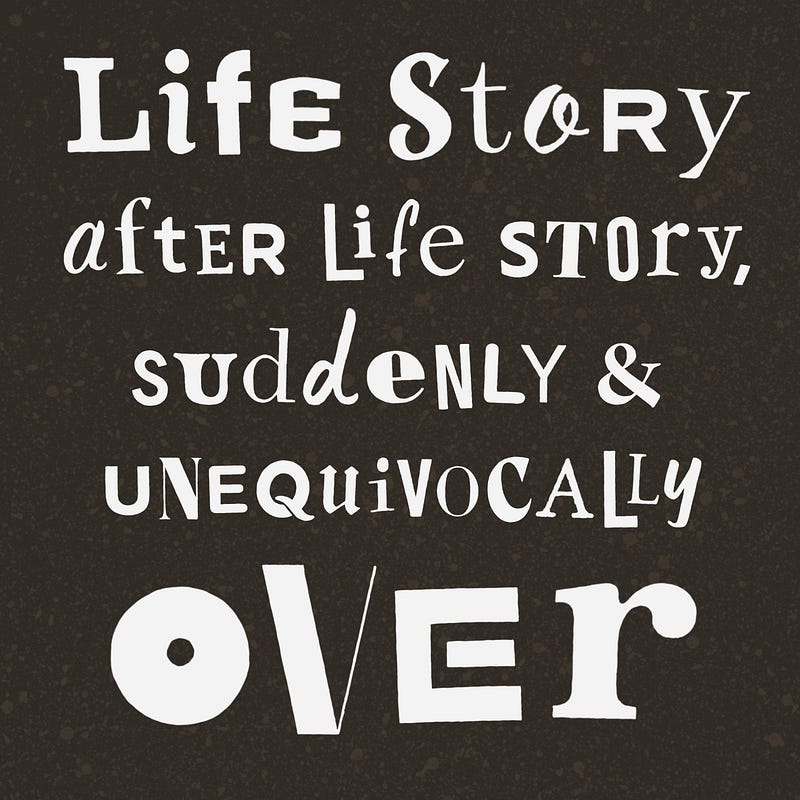
Part of me had known that people were dying inside those buildings at that very moment—some horrible, fiery deaths that I hadn’t let myself fully imagine—but I hadn’t actually seen it happen. All at once, they were dying right before my eyes. Life story, after life story, after life story, suddenly and unequivocally over.
Parent. Sibling. Cousin. Nephew. Friend. Roommate. Soulmate. Kind stranger. Human being. They were all just … gone. I was watching them go, in droves. I was watching the moment they all came to the realizations that they were fighting a battle they could not win, yet I was somehow numb to the significance of it. My adolescent mind couldn’t quite process the gravity of it all.
I watched the first tower collapse—inadvertently watching hundreds of people get crushed to death. I heard blood-curdling screams erupt from the depths of bystanders’ souls without their control, and shouts of profanity that no one could edit out because it was live. I watched people cry, weep, sob. I watched people lose hope and gain fear.
I watched the skies fill with smoke. I watched papers flutter down from an invisible silhouette—documents that had probably seemed so important just a few hours ago. I watched more people kill themselves. I watched the second tower collapse.
And then, I watched my entire country transform.
In the days that followed, I saw colors and stars swirl around me in my nation’s dizzy stumble. I watched the iconic skyline smolder on my screen in a yellow combination of smoke and rubble and ash. I watched the white people and the brown people grow closer together—but away from each other. I watched Blue turn Red. I watched the Stars and Stripes rise up everywhere—but only as high as half-mast. I watched other countries light up in our colors as signs of respect and empathy and solidarity. I watched millions of people try to make sense of a national tragedy, only to realize that it didn’t make much sense at all. I watched fingers point in several directions.
I watched the white people and the brown people grow closer together — but away from each other.
I watched in confusion. I didn’t know what to think except for what everyone on the mainstream media and in my Red state was telling me to think. Seventeen years and a mind of my own later, and I still don’t know what I think. I just know that, for me, it’s not Red or Blue—it’s some weird shade of purple, just like an awful bruise. And no matter how long it’s had to heal, it still hurts. And I still can’t quite figure out how it got there.
I didn’t know a single person who died in that tragedy, yet even then it felt like I knew those people well. And now that I walk the very same streets they once did, I now feel like I know them better than ever.
That’s because now, they’re me.
I walk to my skyscraper office building every morning, just like they did. I undoubtedly cross some of the same intersections they did. I probably even pass some of the same homeless people they did. I stop for a coffee if I have the time and feel like indulging, just like they did. I have a “usual,” just like they did. I keep checking my watch impatiently, just like they did.
I greet the doormen, and rush to catch the elevator that just arrived, and stand there in mutual awkwardness with a dozen other people as my ears pop from the pressure on my way to succeed. I greet my coworkers with a warm and cheery, “Good morning, Name!” which is probably a dead giveaway that I’m actually not a New Yorker—but somehow I am. I get water from the water cooler and coffee from the coffee maker. I sit down at my desk and begin to do work that is completely. And utterly. Routine.
I send emails that probably sound way more important than they actually are. I frequently glance at the pictures of my loved ones, which obscure one wall of my cubicle entirely. I consider myself lucky to have so much love in my life, and yet I wonder why it sometimes feels like I don’t have any.
They probably felt the same thing at times, too.
For me, every day feels just like the rest—just like Sept. 11, 2001, probably did to them.
And “them” now feels like me. … What if it was me?
If I had been in one of those buildings on Sept. 11, 2001, what would I have done? How would I have reacted? Would I have survived, or would I have perished?
Would I and my desk have been instantaneously obliterated by the explosive, fiery crash of a plane? Could that have been my entire office, the international headquarters of my entire company just erased in a split second?
Would I have been sipping my coffee as I gazed out the window across the skyline which I am somehow lucky enough to call my home, only to notice an unusually low plane, and grow increasingly alarmed as I watched it get closer? Would I have watched it crash into me, or crash into the building right across from me?
Would I have been one of the lucky people in the other building who evacuated? Or would I have been one of the workers who heard someone say that the giant thundering BOOM that just shook the whole building was actually nothing to worry about and that we should all just stay at our desks? Would I have trusted my instinct and jolted down 110 flights of stairs? Or would I have trusted authority, and not asked questions?
What if I had been one of the unlucky ones, in an office above the crash?
Would I have cowered in a catatonic state, unable to function or to move or to even think? Or would I have run around frantically, trying to find my friends and comfort other coworkers who had been nameless strangers only a moment ago but who were now crying and burnt and scared fellow humans? Would I have fought tooth and nail to survive until the bitter end? And what about when I discovered that was the bitter end …
Would I have jumped?
Would I have called my family and best friends to say goodbye first? Would I have had the time? And if I did get caught in one of those top floors, and I did find my friends and comfort them, and we did search for a way out, and we did discover that there was none … What would I have said on my final phone call?
It’s scary to think about. So unnerving that you want to push it away and count your lucky stars that it’s not your reality. That’s exactly why it’s important to actually process such a thought.
Be grateful that you still have the chance to call your loved ones at any time, and those people don’t. You owe it to the victims to at least consider what each of your loved ones means to you, and you’d better make certain that they know it somehow, because you might not get a last chance. They didn’t. Learn from their missed opportunity.
Bearing all that in mind, I’ve thought about it in detail.
I’d take as much time as my impending fate would allow me, to make my peace amidst the chaos, and say goodbye to the people who mattered the most to me in a life I’d always thought would be longer.
Then, I would grab a phone and frantically dial one of the only phone numbers I still know by heart. I’d watch my hands shake while doing so, and shut my eyes in an attempt to make the world around me stop spinning so feverishly. I would hear the reverse ring of the other end, and marvel at how normal and commonplace such a sound is in a moment like that. I would whisper, “Don’t answer, don’t answer, don’t answer … ” in the hopes that my call would go to the machine. I’d want my family would get my final moments and well wishes on tape, so they could play back my voice as many times as they needed to. Yet, I would really miss hearing their voices one last time.
(Oh, good. There they are, asking me to leave a message. I’d feel warm tears stream down my cheeks uncontrollably, knowing it would be the last time I’d ever hear them speak to me—and that it wasn’t even really them, and that they didn’t know.)
Through intermittent sniffles and in a wavering voice, I would begin speaking my last words.
Hi, Mama, Daddy, Julie, Camron. It’s Janna. I’m at work, and um… I guess I die here. Ha… I never thought this would be how it ends, but I can’t find a way out. I’m sorry; I can’t. I tried. It’s so hot, it’s dark, it’s very smoky… I’m going to jump. I don’t wanna just curl up into the fetal position and close my eyes… I wanna go out feeling like I’m flying. Be happy for me in that. I chose it.
Before I go though, I just wanted you all to know that I love you. Please tell all my best friends that I miss them and love them too. I hope you’ll forgive me for everything I ever said or did that hurt your feelings. I didn’t mean it, and I don’t know why I did it… Because I was selfish, I guess. I’m sorry.
I want you all to know—friends and family and former partners—that you made me happy. All of you, just by existing. It wasn’t my job, or my money, or my apartment, or my things, or my clothes, or my accomplishments, or my passport stamps, or even my Bucket List—it was you. It was your time and your words and your laughter and even your tears. You gave me so many moments of joy, so many happy memories. That’s what I’m going to think of when I jump.
I’ll remember Christmas mornings around the fire, and road trips when we got on each other’s nerves but made each other laugh hysterically five minutes later. Board games with coffee and endearing impatience. Bike rides and dog walks. Rain and fog. Sunshine and humidity. Snow and sledding. Spring and flowers. Watching movies together, and eating popcorn from the same big yellow family heirloom bowl every single time throughout my entire childhood. Listening to records together. Running errands together. Baking cookies together. Breaking things. Losing things. Finding things. Those little moments never felt important at the time, but they do now. Thank you for them all.
Tell my former partners that I’m grateful for their love, for getting to look into their eyes and wonder how we could possibly be in two separate bodies when we actually felt like one soul. I’m sad that I lost that three times… But I’m glad that I got to experience that three times. Must be why it feels like so much of me is missing now—it’s because I gave pieces of my heart to each of them.
Tell my friends, too, that I’ll also think of all the times when I felt like they were actually my brothers and sisters. I’ll think of the times we didn’t have to say a word, but instead just made eye contact with a certain look that said exactly what we thought was so funny. I’ll also think of the times we looked at each other as though we came from different planets, and couldn’t figure out how we actually wound up as best friends. I’ll think of the times when I cried and all they did was hug me because there was nothing to say—and I’ll think of the times that we laughed so hard we cried.
I wish you were all here with me right now—or actually, I wish I was there. I wish we could have made more memories together. I’m sorry that we didn’t. I’m sorry that I spent so much time looking at my f***ing phone or computer screen when I could have been looking into your eyes. … And I’m sorry that I just swore in my final message, Mama. So those are the things I wanted to say: I’m sorry, and thank you, and I love you, and I’ll miss you.
Oh, and if you can, please finish my Bucket List for me. My adventure won’t truly end here if you carry on with my spirit in mind. I’m really glad I got to do what I did, and to live the life that I lived. Even though I often questioned my own decisions, and at times didn’t know what the hell I was doing, all of those choices and experiences helped me learn so much about myself. And ultimately, they lead me to each of you—people who made my life richer. I want you to have experiences like that, too.
Goodbye.
That’s a one-way conversation that I hope to never have. Some people were lucky enough to have it that fateful day. Some didn’t get the chance.
Maybe this sounds macabre, but those deaths helped me value my life. I don’t mean to offend or disrespect anyone by saying that. I just mean to say that … Those people didn’t die for nothing. I value my own life a lot more today simply because I know a lot more now about what those people lost, and what it must have been like to lose it.
I now understand what must have been going through their heads in those final moments — and even though you might not be able to relate to their/our lives on a surface level, I bet those thoughts seem familiar to you, too. That notion of, “I worked so hard to get all the way here to this country, this city, this building, this desk … and this is it? This all there is? The view is great, but god I’m gonna miss certain faces so much more. I would have given up a lot of what I have now, in order to have a lot of what I gave up.”
I would have given up a lot of what I have now, in order to have a lot of what I gave up.
So here’s to all the New Yorkers who I never got the opportunity to cross paths with. Here’s to all the men and women who would have squished into the Subway car behind me when it’s already too packed. To the people who would have caused my Uber price to soar tremendously during a surge. To the friendly ladies and gents with whom I would have loved to strike up a conversation during our wait on line for a bagel, and to the nasty mofos who would have spit in the streets as they tossed their cigarettes to the ground right next to a trash can. To the people who would have held the door open for me as I trudged through the rain, even though I was that awkward distance away when you’re not quite sure if it’s more rude to wait than it is to proceed—and here’s to the snooty Suits who would have let the door slam in my face if it meant them catching the elevator.
Here’s to all the people who showed up to the office on Sept. 11 for another regular day of work, but never came home.
To the people who burned, who suffocated, who jumped, and who were crushed. To the people who evacuated, and the people who stayed put. To the people who helped others until their last dying breath. To the people who were too scared to move.
To the men and women who sorted through the rubble the next day looking for survivors, as they heard the chilling sounds of muffled cell phones ringing desperately underneath. To the NYPD, and the NYFD, and the K-9 officers, too. To the 9–1–1 operators who stayed on the phone to hear people’s last minutes, even though they couldn’t do anything to help. To the pedestrians in the streets that day who got blindsided by the rubble. To the people who worked in the buildings nearby and watched the entire scene unfold on their immediate turf.
To the children whose mothers and fathers didn’t realize that was their last bedtime story with you the night before, and their last kiss goodbye the morning of. To the husbands and wives and fiancées and boyfriends and girlfriends and mistresses and all manner of romantic partners, who suddenly found themselves without a soulmate. To the twins who lost their other half. To the people who had been in the midst of arguments or disagreements with the victims when they died, and then realized that their drama actually didn’t matter at all.
To the people who committed those atrocities. They were people, too. Maybe they became more monster than man at some point along the way, but they were mortal, which means they were still human. I believe they deserve a measure of sympathy.
To the passengers and crew on the planes that never reached their destinations. To the people who did, and who never looked at life the same way. To the people who called in sick that day when they weren’t really sick. To the people who now owe their life to a Subway delay. To the people whose lives changed that day — to all of us.
To everyone who suffered this tragedy first-hand, right here on the streets I now call my home. My experience from that day pales in comparison to yours, but I hope you know that I empathize, and that I understand it now much better than I ever did. Wherever you are reading this now, you’re here. You got through it. And you know why? Because you’re a New Yorker. You’re tough, because you’re tender. Always remember to be both.
For me, Sept. 11, 2018, has been different from all 17 of its predecessors. This is the year that it actually feels much more real for me than it has ever felt. It’s been a day full of sobering thoughts and a hundred questions, big and small.
Have I made the most of every single moment? Did I take every opportunity to live a full life, and to tell the people I love that I really do love them? Am I worried about things that actually matter? And what I keep asking myself is, do I have a job that’s worth dying for? What about the people in this office, are they worth dying for? What can I do to make sure that the answer to at least one of those questions is always a “yes”?
Ask yourself the same questions. Try to align your 9-to-5 with your core values. If you feel like your particular job doesn’t make a difference in the world, make sure you feel like what your company does makes a difference in the world, because you make a difference in your company. (Otherwise, they wouldn’t have hired you.)
Try to make a difference in your coworkers’ lives, too. You share the same space for 40 hours a week. Amortize that by a year and that’s more than 10,000 hours of time shared. That’s 260-ish hours of lunch breaks, around 4,000 minutes of coffee breaks. Take breaks together. Use that time well to bond and connect on levels other than professional. You should know the people you work with just as well as you know your work. You’re not a drone; you’re a person. Your coworkers are not drones either. Don’t treat them that way. If nothing else, look them in the eyes say good morning — preferably by name — and acknowledge one another’s existence. Make each other feel like you matter, because you do.
Whatever you do, take comfort in the fact that no matter where you are or who you are or how you choose to prioritize your time and how well you live your life, you’ll get to the end someday and still feel like you didn’t do enough. It feels that way for everyone else, too. There never seems to be enough time — not even when you set your watch to New York Minutes.
Janna Barrett is now a flight attendant, writer, and lettering artist based in Washington, D.C. She creates to explore her passions for people, place, and emotional expression. See her artwork here. 🍌