
To the Dubai doubtful
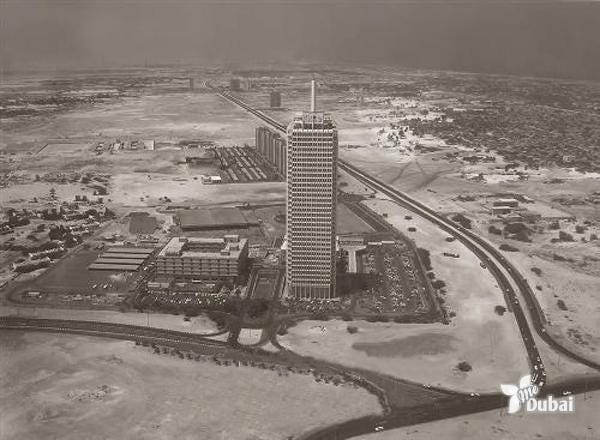
In my 38 years living and working in Dubai, I have heard thousands of supposed expert opinions on business. The one that keeps coming back: “Dubai is finished.”
I have heard this phrase since I moved to the promising Emirate as a fresh graduate from the American University of Beirut in the early 80s. At that time, my higher education had afforded me an entry-level job at a dominant Fortune 500 company. I felt I too had earned the authority to have expert opinions on the budding Dubai economy.
In reality, my education had just begun. For the rest of my professional life, I would be schooled by the children of nomads, fishermen and pearl traders.
My first lesson came shortly after I moved. In the course of my sales job, I met on a regular basis with Dubai Creek traders. The Dubai Creek had been massively developed in the 70s and, by the time of my arrival, it was the heart of wholesale trade routes between the UAE and surrounding regions in Iran, East Africa and the Indian sub-continent. Every day, hundreds of traditional Dhows left loaded with exports to different cities, the most lucrative in southern Iran. Dubai was booming.
So, when the Iranian market closed, Dubai was deeply challenged. Colleagues, reporters, and high-profile businessmen all said the same thing: “Dubai is finished.”
I believed it too. I couldn’t find the silver lining as I readied myself for another trip to the Creek. I thought of the tons of inventory that would need to be liquidated, and of the many people and industries in Dubai that would suffer. Yet, my trader friends were calm and confident. “Dubai is blessed,” they said. “Something will open up.”
And eventually that’s what happened. The USSR collapsed and Russia came into play, pumping the economy like never before. That level of trade was unprecedented for Dubai. If you looked out your car window on the Sharjah-Fujeirah road, you could see the ex-Soviet cargo planes filled to the brim with Dubai export, flying out of Sharjah Airport.
But when a self-sufficient Russia established itself, I heard it again: “Dubai is finished.” Everyone predicted another collapse. We waited patiently for the day these failed traders would pack up.
We all know what happened next. To everyone’s surprise, Dubai reshaped itself, shifting its focus to tourism. It was the beginning of an undeniable legacy that made ripples around the world.
That’s also when we started seeing names like Media City and Internet City become home to hundreds of multinational corporations and bring in an amount of foreign investment no one could have ever predicted.
Time and again, Dubai turned crisis into opportunity.
I remember the Iran-Iraq war and the loss of confidence felt on our side of the Gulf. The last two years known as the Tanker War brought this conflict even closer to our shores, as the rival countries raided each other’s oil tankers.
After peace, there was another boom.
I remember when Saddam invaded Kuwait in 1990. The unstable situation posed an obvious threat to the region. Western embassies evacuated their citizens and handed out gas masks.
After the defeat of Saddam Hussein, Dubai had its infamous construction boom. Two-lane Dubai-Abu Dhabi Road became Sheikh Zayed Road.
I remember the 2008 International crisis, when the global media reported on panicked expats fleeing Dubai, leaving dusty sports cars parked at the airport. We had all accepted that it was now time to wake up from our Dubai dreams.
After the crash, our recovery was so strong; the Emirate earned its status as one of the world’s global cities.
And now, we are in a global pandemic. I am flooded with articles about Dubai. Bloomberg, Reuters. They often have headlines that echo that fateful phrase. I delete them immediately.
I’m also cutting off my emotionally motivated friends who flood my Whatsapp with bleak predictions and rumours. These are the same expat friends who, in times of prosperity, take Dubai for granted. They have not realized that no matter how hard we try, Dubai will always be the better option for us.
I’m not going to say living in Dubai is all sunshine and roses. Like any other capitalistic society, there are set backs. Life is tough: people lose their jobs, their savings, their quality of life. And though I’ve been here for 38 years, for most of my life, there is a chance that I will lose my right to live in the place I call home.
But compared to where I’m from, I’m taken care of. I come from a country where we know the names of every single government minister, the head of telecom, the head of transport, the mayors of every region and major cities, who all constantly appear in the media, selling their accomplishments to the Lebanese people. And their results: garbage. Construction of a small bridge over a crumbling major highway — a project which would last a few months in Dubai — took 5 years and was inaugurated by the president himself. And it wasn’t even worth the effort.
The infrastructure in Dubai is world-class. And we cannot name the head of the RTA, the TRA or the municipality.
No, Dubai isn’t finished. Dubai always comes back stronger. And people who leave always want to come back. They send articles on Whatsapp but, when it comes down to it, offer them a desk job in Dubai and they’ll be on the first flight in.
Sure, the Covid-19 situation is scary. But I’m betting that Dubai will do what it always does — surprise us.
Remember how skeptical we used to be? How shocked by the major projects that kept Dubai so busy over the years? How surprised by their success?
“City Centre? Continent?” The head of Spinneys UAE whom I met at the time was also skeptical. The prospect of having 52 checkout counters in a store was inconceivable to him. “Where is the consumer base, he said, that would sustain this hypermarket?” As some of you might remember, Continent later changed its name to Carrefour.
“A golf course in Dubai? An indoor ski slope?”
“Who’d buy a 1,000,000 dhs. Meadows villa in the desert? Or even half that money for a flat on an artificial palm island?”
Many years later, I would.
No, Dubai isn’t finished. Dubai turns crisis into opportunity. Notice Dubai’s impressive response to the Covid-19 outbreak? Notice the flawless execution of crisis management plans? I’m betting that Dubai comes back stronger. I’m betting that Emirates will be the first airline to turn things around, and that Dubai hotels and resorts will get filled up again.
I don’t know how, but I’m confident they can do it.
As for me, when Kodak — my only employer over the years — filed for bankruptcy, it did not feel like doomsday. By then, I had learned my lesson and was on my way to realizing the Dubai dream. I uncovered a few business channels that have sustained me to this day, doing what we do best in Dubai: trading.
That’s how I turned crisis into opportunity. Dubai taught me well.
Ramzi Cheaib


