To Sir, With Love
A Review of the Novel by E. R. Braithwaite

In 1967, I was mesmerized and inspired by the movie, To Sir, With Love, starring Sidney Poitier. Poitier, playing the role of Mark Thackeray in the British drama, touched our hearts with how he inspired a class of difficult, troubled students to become better people.
Fast forward more than 50 years and I discovered the autobiographical novel on which the movie was based: To Sir, With Love by E. R. Braithwaite.
Eustace Edward Ricardo Braithwaite was born in 1912 in British Guiana (now Guyana) on the Atlantic coast of South America. His parents were both graduates of Oxford. Braithwaite joined the Royal Air Force as a pilot during World War II. After the war, he graduated from the University of Cambridge in physics.
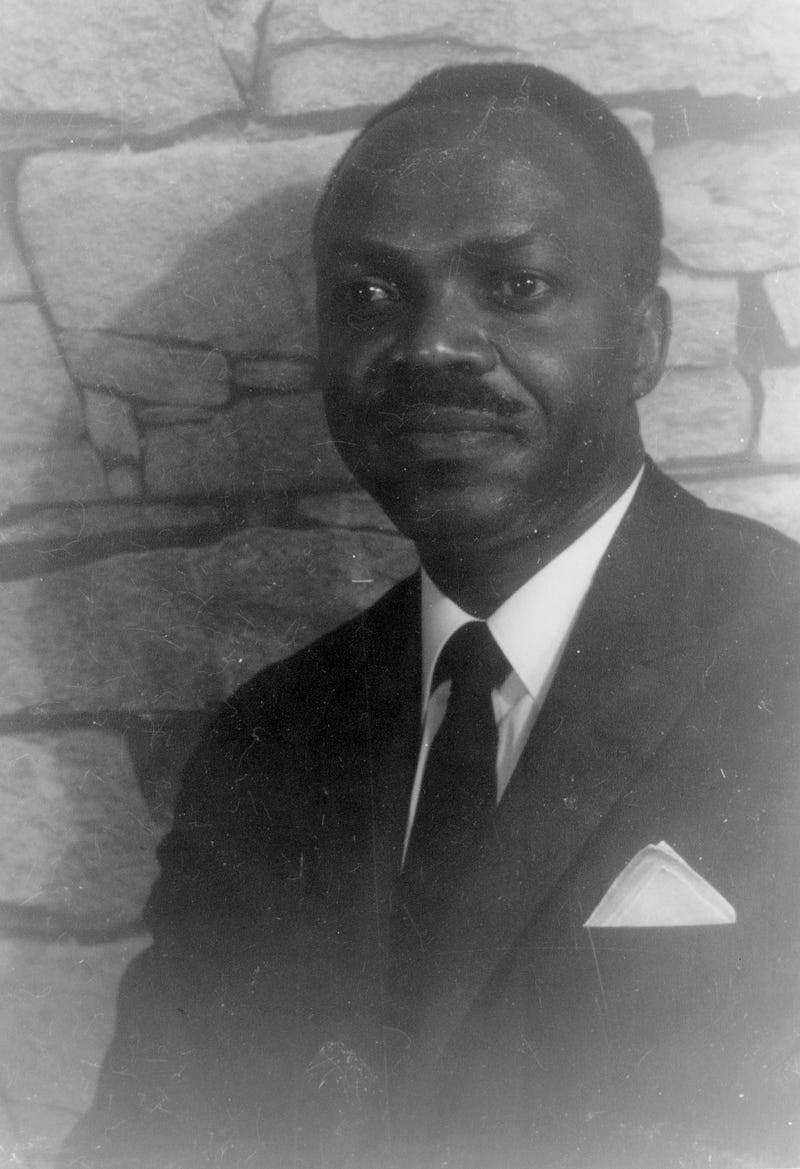
Despite Braithwaite’s academic achievements and his experience in the RAF, he could not find work in his field because of discrimination. British companies would not hire him because he was black. To support himself, he took a job as a teacher in the East End of London. His students were poor, tough white kids of working-class families. He was the only black teacher in the school. Since he had no training in how to be a teacher, he had to learn on the job.
Braithwaite transformed his experiences at the school into an autobiographic novel, published in 1959. The main character is himself, Ricky Braithwaite. (The movie changed his name to Mark Thackeray.)
To Sir, With Love explores the challenges that Braithwaite faces with both his fellow teachers and the students. The school had a high turnover of teachers because many could not cope with the behavior and attitudes of the students. Some of the male teachers did not last more than a term or two.
The novel opens with Braithwaite riding a bus in London on the way to a job interview at the school. He describes the fellow passengers: “thick-armed, bovine women, huge breasted, with heavy bodies….They reminded me somehow of the peasants in a book by Steinbeck: they were of the city, but they dressed like peasants, they looked like peasants, and they talked like peasants.”
The school was not what he expected. “His vision of teaching in a school was one of straight rows of desks, and neat, well-mannered, obedient children.” What he found was: “They nearly all wore a kind of unofficial uniform. Among the girls, proud of bust and uplift brassiere, this took the form of too-tight sweaters and too-long clinging skirts and flat-heeled shoes….The boys wore blue jeans and T-shirts or open-necked plaid shirts.”
While the school and the students do not have a good reputation in the community, Alex Florian, the Headmaster, lays out his progressive expectations for Braithwaite.
“The children in this area have always been poorly fed, clothed, and housed. By the very nature of their environment, they are subject to many pressures and tensions which tend to inhibit their spiritual, moral, and physical growth….A child who has slept all night in a stuffy, overcrowded room and then breakfasts on a cup of weak tea and a piece of bread, can hardly be expected to show a sharp, sustained interest in the abstraction of arithmetic, and the unrelated niceties of correct spelling.
“We try to give them affection, confidence, and guidance, more or less in that order, because experience has shown us that those are their most immediate needs.”
Braithwaite writes that there were three stages in his relationship with students. First, he received the silent treatment. The students would do whatever task he gave them but without interest or enthusiasm.
In the second phase, the students tested Braithwaite in various ways. He calls it the noisy period. While he was speaking, a student would lift the lid of a desk and let it fall with a bang.
In the third phase, the language of the students changed. They began to use swear words like “bloody” or “bleedin.”
A major turning point came when Braithwaite walked in the classroom and discovered that someone had tossed a used sanitary napkin into the fireplace. Braithwaite lost his temper, ordered the boys out of the room, and lectured the girls.
He told the girls: “There are certain things which decent women keep private at all times, and I would have thought that your mothers or older sisters would have explained such things to you…Only a filthy slut would have dared to do this thing, and those of you who stood by and encouraged her are just as bad.” He told them to remove the napkin and stormed out of the room.
When Braithwaite had calmed down and returned to the classroom, he spelled out the new rules: “As from today, there will be certain courtesies which will be observed at all times in this classroom. Myself you will address as ‘Mr. Braithwaite’ or ‘Sir” — the choice is yours; the young ladies will be addressed as ‘Miss” and the young men will be addressed by their surnames.”
From that day forward, Braithwaite’s relationship with the students changed. By the time they were ready to graduate and face the world, he had impacted their lives. Moria Joseph, speaking for all the students, told Braithwaite: “Sir, we want to tell you how grateful we are for all you have done for us….We think we are much better children for having had you as a teacher. We liked best the way you always talked to us, not like silly kids, but like grown-ups.”
One of the themes of the novel is the racism a black man faced in England after World War II. Braithwaite claims that during the war as a pilot he was treated as an equal. Only after the war, as he tried to find work was he confronted with the ugliness of racism. He writes: “To many in Britain a Negro is a ‘darky’ or a ‘nigger’ or a ‘black’; he is identified, in their minds, with inexhaustible brute strength; and often I would hear the remark ‘working like a nigger’ or ‘laboring like a black’ used to emphasize some occasion of sustained effort.”
In the novel, Braithwaite falls in love with one of the teachers, a young white woman. In the movie, the relationship was downplayed which upset Braithwaite.
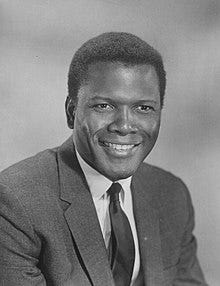
Both Sidney Poitier, the actor, and James Clavell, the director, and screenwriter, wanted to produce the movie, but Columbia Pictures was reluctant because it did not think it would be successful. Poitier and Clavell agreed to take less money upfront in exchange for a piece of the action. Poitier received 10% of the gross and Clavell received 30% of the profits. The movie grossed $42,432,803 on a budget of $640,000. It was the eighth highest-grossing movie in 1967. If you do the math, Poitier earned more than 4 million dollars and Clavell earned more than 12 million dollars.
Sidney Poitier acted in three movies that premiered in 1967: To Sir, With Love (June), In the Heat of the Night (August), and Guess Who Is Coming To Dinner (December). All three movies dealt with racism.
To place these films in historical context, during the hot summer of 1967 there were 159 race riots in the United States. Interracial marriages were illegal in 16 states until June 1967 when the Supreme Court struck down laws banning interracial marriages. Dr. Martin Luther King, Jr. was shot and killed on April 4, 1968.
E. R. Braithwaite wrote seven books over the course of his life. He died in 2016 at the age of 104.
I highly recommend this novel to those interested in teaching, racism, and Great Britain in the 1950s. The novel will touch your heart.


