
To See Ourselves As Others See Us
May Not Make the Universe Less Lonely
O wad some Power the giftie gie us To see oursels as ithers see us! — Robert Burns
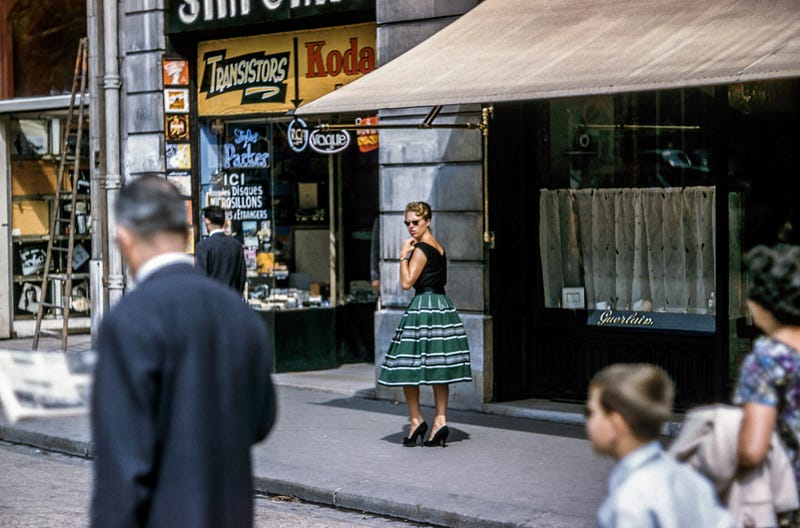
What the Bystander Saw on the Far Sidewalk
Forty-something guy, maybe fifty, in a blue business suit wears a crooked smile. He stops to talk with a young blonde woman in a striped skirt, black blouse and sunglasses. She wears a confident smile. Whatever she said, it made his eyebrows crinkle. Maybe that’s his daughter, asking for money.
What the Bystander Failed to See
Man: Oh no, it’s Annabelle in Accounting! We just made eye contact, so I can’t pretend to not see her. I wish I could stop fantasizing about Annabelle. Damn this obsession! Okay I’ll just say something quick and cheerful about the new potted plants in the hallway outside my office. I’ll make a silly joke.
Woman (imagined wrongly by man): Oh no, It’s Robert in Production. I will teach him a lesson for bothering me. He looks vulnerable, bare skin against a cold breeze, cowering in the darkness at the edge of a chasm. Time to plant a high heel on his chest and push him in. I’ll laugh half-heartedly at his dumb joke and then ask about the company retirement plan to remind him of his age. Yep, that did it!
Knowing Other People
Of course we cannot really know what another person thinks of us. Science has tested telepathy and found it hazy, rare and weak at best. Even that much support surprised me. For the sake of privacy, I have no desire to try it.
Neither can we be sure how another person really feels about us. Words go wrong. If you tell someone you hate them, you might also love them. Ambivalence happens.
The evidence for direct empathy looks encouraging but still far from a strong everyday occurrence. The heart generally requires a face in order to communicate well. Even then, the noise can overwhelm the message.
Sincere smiles differ from fake smiles, but distinguishing them is probably not a matter of high reliability. Is the smile below real or fake?

By neurological standards, she is wearing a fake smile. Could be wrong.
I loved my sales job before the lockdown. Getting hundreds of smiles every day exhilarated and uplifted me. Now I hate it. Nobody sees a smile behind my mask. I will never take the human smile for granted again.
Are my smiles below real or fake?


By neurological standards, my smile in the second photo is real. The standards have gauged me correctly. Carmelita wears a real smile too.
Keep reading through the Conclusion. After the story turns sad, it turns hopeful.
Back when I thought I would serve as a professional anthropologist, I studied Symbolic Interactionism. George Herbert Mead started this school of thought.
He posited that we learn about other people through photons and sound waves. Based on these inputs and the structure of language, we reconstruct other selves inside of our selves.
A multiple personality is in a certain sense normal.
— George Herbert Mead
We interact mentally with these reconstructed others. We judge our own thoughts and behaviors through reconstructions. We run simulations.
We do a poor job of it. Back in the 1980s, I read a review of studies that found low correlations between what we think others see in us and what they say they see in us (No link available, see Shrauger and Schoeneman below).
It always bothered me to think of the others in my heart as reconstructions. Eventually I turned to mysticism. I believed I could connect my heart directly to God and maybe even to human beings on rare occasion. I thirsted for it.
My father, a Presbyterian minister, told me a story when I was young about remotely sensing an emotional event that his mother experienced. I approached his story skeptically. Coincidence happens.
My mother, a born-again Christian, suffered from a chronic condition that almost killed her. I prayed silently one day in the back of the car. She turned around with eyes wide in amazement. “Were you just praying for me? I feel completely healed!”
In recent years, science started to seriously explore direct emotional connection. If human hearts could bond directly or, more likely, through Divinity, I wanted to figure out a way to do it often.
The psychotic drowns in the same waters where the mystic swims with delight. ― Joseph Campbell
Big mistake. A meditation group had improved my life. Clasping hands and maintaining long eye contact with specific meditation partners had the opposite effect in the long run. I felt troubled in the days following some encounters. One person broke off contact with me.
I thought, maybe if I can just get the technique to work right and do it with the right people. I tried remote connections, even approaching people I had not seen physically for decades. The safety of remoteness would protect us, right? The global lockdown limited such experimentation to the remote realm anyway.
Another mistake. It failed for almost the same reasons, plus the new reason that it does not work reliably for me. Those who declined to try it made the right choice. Some people may do it safely and reliably. Not me.
Two Key Lessons
- Mystical encounters between humans may be real but rare. It is too easy to imagine something that does not really happen.
- Most of your loved ones may walk around in your brain as distorted reconstructions much of the time. This world often descends to a lonely place.
You never really understand your path until you reach the end of it. A failed path can teach you as much as a path that succeeds.
The owl of Minerva spreads her wings only with the falling of dusk.
— Georg Hegel
Conclusion
Our lives matter. The temporary estrangement of hearts on Earth must serve a higher purpose. The part of us in Heaven lives free of this burden. Understanding the limitations of your embodied self can lead to better awareness of your heavenly self.
Anyway… In art we transform and exaggerate life. We confess. In life we distort and tone down art. We sleepwalk. Only the rare individual will live life as an opera.
Don’t let the academic tone fool you. I cried writing this article. I trembled. It serves as a confession, explanation and apology to people I hurt. Given a garnering of courage (plus acceptance by Spiritual Tree), I will send friend links to them.
Many years ago I struggled to avoid fantasizing about a co-worker. That memory inspired the silly story about the people on the sidewalk. It imagines what might have happened if I had been old and she had been mean (which she was not). It playfully inverts the old Jethro Tull meme, Aqualung versus innocence.
Further Reading
Inspiration for this Work Came From These Four Sources
Shrauger, J. S., and T. J. Schoeneman. 1979. “Symbolic Interactionist View of Self-Concept: Through the Looking Glass Darkly.” Psychological Bulletin 86:549–73.