
To Know Ecstasy You Have to Know Despair
Seasons are important because they are inevitable
Nick Cave was only 19 years old when his father died in a car crash.
In an article for The New York Times Magazine, Cave said, “I was unconscious of the effect of grief entirely when my father died. I don’t think I had any understanding of what was going on in my life. I was extraordinarily un-self-aware about anything except my own appetites.”
Sadly, profound grief would revisit Cave twice again.
Cave’s 15-year-old son, Arthur, accidentally fell off a cliff and died near their family home in Brighton, England. Then, nearly seven years later, his 31-year-old son Jethro died unexpectedly in a motel.
I discovered Nick Cave randomly through his popular blog The Red Hand Files, where fans submit various questions and he replies. I was struck by the depth, sensitivity, and eloquence of Cave’s written responses.
I asked myself, “Who is this guy?”
Wikipedia told me that Nick Cave “is an Australian musician, writer and actor. Known for his baritone voice and for fronting the rock band Nick Cave and the Bad Seeds, Cave’s music is characterised by emotional intensity, a wide variety of influences and lyrical obsessions with death, religion, love and violence.”
I was curious about the sophistication of Cave’s writing. Clearly, he was intellectually curious and likely well-read. Further in Wikipedia, I read:
“His father taught English and mathematics at the local technical school; his mother was a librarian at the high school that Cave attended. From an early age, Cave’s father introduced him to literary classics, such as Crime and Punishment and Lolita,…”
In one of Cave’s blog posts, he replies to a young person who has grown disillusioned with life. Cave’s brilliant response recommends two qualities.
Two qualities that, if mastered, will likely improve anyone’s life.
The values that you hold sacred now may change
A twenty-year-old high school graduate in his gap year wrote to Nick Cave, “I find it pointless to pursue anything in this bizarre and temporary world that is so much against my values in every way possible.”
Who can blame the young man for feeling this way in a world increasingly consumed by death, violence, and war. The young man went on to write:
“I believe I am speaking for a generation here. I am asking with the biggest admiration, what would you do in my/our situation?”
Usually the young are full of optimism, hope, and idealism. So it’s sad to see such a sense of defeat and hopelessness in the young man’s question. I thought for a moment about the various ways I’d offer a response, and then I read Nick Cave’s reply.
Talk about a masterclass in understanding, tenderness, gentle mentoring, and deep wisdom.
Cave agreed that the world is bizarre, temporary, strange, and a mysterious place, forever changing and remaking itself anew. But, according to Cave, it has always been this way and always will be.
Cave adds:
“The same can be said for our values, they too can be temporary and exist in a state of flux. If my experience is anything to go by, the values that you hold sacred now may change and be considerably different to those you hold dear in ten years’ time — and be almost unrecognisable when compared to those you possess when you reach your later years. You may also find that some of the values that you perceive now as incontestable truths will be looked at with suspicion, even contempt, by the generations that come after you — a humbling realisation if ever there was one. In the past, for example, an older person giving advice to someone younger was a trusted value for all, but in the present age it is sometimes viewed in a different light altogether.”
Cave tells the young man not to abandon his youthful values, “because even though values evolve and grow, they are at any given time a crucial part of our nature and critical to the development of the world.”
And then Cave recommends two qualities that will improve one’s life immeasurably.
What are the two qualities?
Humility and curiosity
Humility, according to Cave, understands that there are all manner of people in this world, each broken in their own way. Everyone struggles. Sometimes we do beautiful things, sometimes we do terrible things.
Cave writes:
“If we truly comprehend and acknowledge that we are all imperfect creatures, we find that we become more tolerant and accepting of others’ shortcomings and the world appears less dissonant, less isolating, less threatening.”
Next, Cave recommends that we look with curiosity at people who do not share our values. That way, they become interesting rather than threatening. People are fascinating, and the more we view them with an open mind, the more we learn.
Cave adds, “Cultivating a questioning mind, of which conversation is the chief instrument, enriches our relationship with the world. Having a conversation with someone I may disagree with is, I have come to find, a great, life-embracing pleasure.”
At the end of Cave’s reply, he suggests to his young reader that humility and curiosity, “have a softening effect on our sometimes inflexible and isolating value systems. They allow us to remain true to our temporary selves but fluid and playful in our dealings with this strange and ever-changing world.”
Nick Cave has lived through various seasons in his life.
From the loss of his father early in life to great success as a rock star, to losing two sons, to becoming a philosophical writer in the autumn of his years. Nick Cave has experienced love and loss. Ecstasy and despair.
And through his creative spirit, Nick Cave is inspiring the next generation.
Not striving to be like everybody else
Another wise man who knows a thing or two about the seasons of our lives is the poet and writer Harry Owen.
In a moving video documentary titled, “Life is Magic,” by Green Renaissance, Harry Owen admits with a chuckle, “Yeah, of course, I’m odd. I’m very proud to be odd. It’s what I want to be.”
There’s a twinkle in Owen’s eyes, as he adds, “But it’s odd only in the sense that it’s not striving to be like everybody else.” He goes on to explain that, “Yeah, I’m odd, that’s where the poetry comes from.”
Everyone has their own uniqueness.
It’s easy to forget this with today’s shallow fixation on celebrity worship, social media stardom, and endless attention-getting. The qualities we often salivate over, like physical beauty, fame, and wealth, are often the least important.
There is so much more to life.
Harry Owen reiterates that we fail to see our own uniqueness and the magic of life that is all around us. “I am magic. You are magic,” Owen states, adding that it’s not waving a wand and pulling a rabbit out of a hat.
Rather, Owen says, “It’s the feeling that my own heartbeat, my own breathing, is as a response to and in parallel with a heartbeat and a breath that is already there.”
I have felt what Owen is talking about, during both peaceful and sad moments.
This magical sense of being a part of everything, and everything being a part of me. It happens sometimes when the wind blows in the garden, and the sun warms my face. When the hummingbirds flit past me, and my hands feel the soft grass, and a sense of utter peace radiates throughout my being.
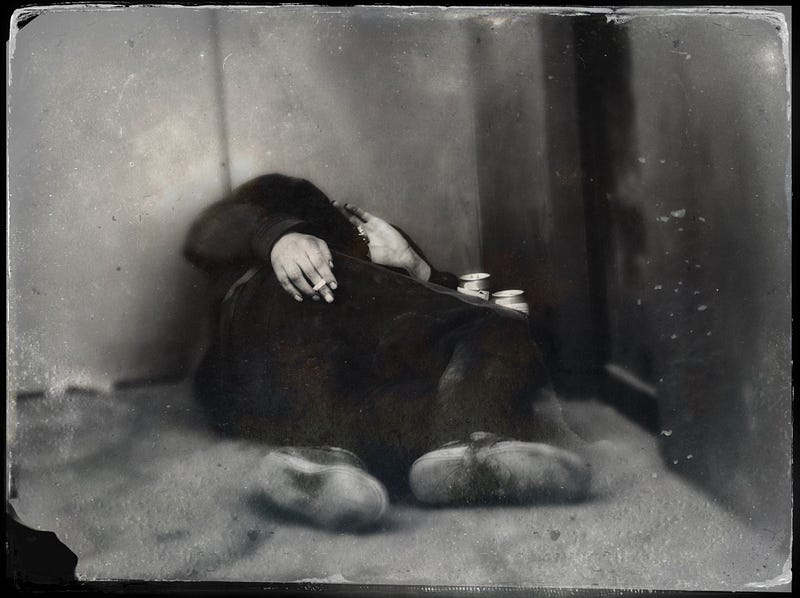
And I’ve felt it during my street photography when I encounter less fortunate souls on the margins of society. I sense their sadness and lostness. Their bruised dignity. I feel the weight in my heart.
It’s just like Owen states: “You are a part of it and it’s a part of you.”
To know love you have to know its opposite
It wasn’t easy for Harry Owen growing up.
He was raised in an urban, harsh, working-class area outside Liverpool in the 1950s and 1960s. The natural countryside was giving way to roads, buildings, and modernity.
Owen felt a deep affinity for the natural world.
The boys Owen grew up with were all about playing football, swearing, and fighting. All the things Owen wasn’t good at. So he learned to keep quiet and internalize his deeper sensitivities.
All because he wanted to fit in.
But it’s hard to deny our true nature. As the years passed Owen was unhappy. He realized that the natural world was where his heart was. He discovered the difference between loneliness and aloneness and craved a bit of the latter.
He found a sense of revival in being alone in nature, in its “soup of life.”
The natural world taught Harry Owen much about life. It informs his poetry and writing. He argues, “The seasons are important because they are inevitable. They are what life is.”
Just as Nick Cave has grown wiser through the seasons of his life, so has Harry Owen.
Owen notes:
“To know love you have to know its opposite. To know ecstasy you have to know despair. I’ve known for example what it’s like to be without, to have no money. I’ve known bereavement. I’ve known upset. I’ve known betrayal. And knowing that those days will pass, recognizing that you can live with them and come out the other side, is an important part of knowing who you are.”
Near the end of the documentary, Owen acknowledges that he is in the autumn of his life. He tells us why growing older is helpful:
“Because generally speaking, you have a life behind you. And if it’s been a full life, or even a semi-full life, you’ve known some of these downtimes. So that when the good times come you know how to accept them, you know how to live with them. You know how to feel in love with them. Without that, what’s life for?”
What’s life for? Indeed.
The rockstar and writer Nick Cave is also in the autumn of his life. He’s suffered the slings and arrows. He has known love and profound loss. And that’s why he’s able to write so poignantly to a young reader about the merits of humility and curiosity.
Similarly, Harry Owen has experienced the vicissitudes of life. He has found the joy in celebrating one’s uniqueness and the edifying gift of the natural world.
Both of these wise men understand that our seasons of life are inevitable. That we only truly know the best of life by first experiencing its pains and sorrows. And that when we embrace humility, curiosity, and our own God- given uniqueness, we experience deeper meaning and contentment.
What’s life for?
It’s for you to live, dear reader. In all your uniqueness. Through all the challenges, sorrows, and joys of every season. With humility and curiosity.
Here’s to the rest of your life.
(First published here)
Before you go
I’m John P. Weiss. I write elegant stories and essays about life. If you enjoyed this piece, check out my free weekend newsletter, The Saturday Letters.


