
“To Kill A Mockingbird” Still Resonates Today
“It’s a sin to kill a mockingbird”
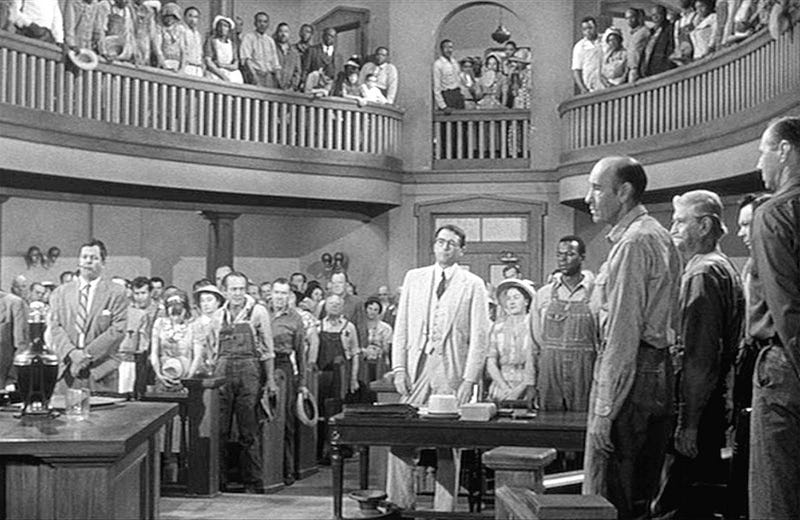
Harper Lee published To Kill A Mockingbird in 1960 and it angers me that nothing has changed. For those who have never read it, or read it some time ago, let me refresh its pages for you:
The story is set in the 1930s and features a young girl, Scout, who lives with her brother, Jem, and her father, Atticus, in the Alabama town of Maycomb. Atticus is a lawyer defending Tom Robinson, a black man who has been accused of beating and raping Mayella Ewell, a white girl. Tom is innocent, in fact, Mayella’s whole story is twisted — she was the one forcibly touching Tom, not the other way around. When Tom tries to escape from prison, he’s shot by prison guards, seventeen times. Following the trial, Jem falls into a state of deep despondency, losing faith in justice.
“Mockingbirds don’t do one thing but make music for us to enjoy. They don’t eat up people’s gardens, don’t nest in corncribs, they don’t do one thing but sing their hearts out for us. That’s why it’s a sin to kill a mockingbird”.
— Harper Lee, To Kill A Mockingbird
To kill a mockingbird is to kill innocence. Tom Robinson was innocent. He was called over by Mayella to help fix a door. When he entered the house to help, he found there was nothing wrong with the door and the house, normally filled with children, was empty. It was then that Mayella forced herself on him while he resisted. And yet, authority figures saw Tom as such a big threat, his attempted escape was warranted by shooting him seventeen times in the back.
“It’s a sin to kill a mockingbird” is a metaphor for innocent people being destroyed by evil. The metaphor extends its reach throughout the novel, as Lee explicitly relates songbirds to innocence multiple times. Mr. Underwood, the owner, editor, and printer of the town newspaper, compares Tom Robinson’s death to “the senseless slaughter of songbirds by hunters and children”.
Tom Robinson was a mockingbird. George Floyd was a mockingbird. The innumerable black lives taken by authoritative figures, for no reason other than racism, were mockingbirds.
I adore this novel for its power in exposing humanity’s faults, but I’m angry its message still resonates today. Am I brazen to say calling the police on a black man bird watching reminded me of Mr. Ewell calling the police on Tom? Why do we live in such a hateful world where people show animosity towards others just because of the colour of their skin?
I advocate so strongly for education through classic literature. As James LaRue, the director of American Library Association’s Office for Intellectual Freedom says, “the whole point to classics is they challenge the way we think about things”. And yet for years, classics that have challenged the way we think have been banned — To Kill A Mockingbird is one of the most frequently banned books in the United States.
I mentioned earlier how the symbolism of songbirds extends throughout the entire novel. Mockingbirds mimic the songs of the birds surrounding them. At the end of the novel, it becomes clear Mayella has adopted the perspective of her father, Bob. She is imbued with the hatred and racism that surrounds her, and projects it. It is her father that beats and rapes her, however, Mayella fails to admit to her false accusations even though during the trial she comes close. Just like the mockingbirds mimic the songs of the birds surrounding them, children mimic the ideals of their parents.
We all fear what we don’t know. It is blatantly lucid to me that those who continue to enforce and participate in oppression are scared of change. Oppression, it seems, is all we know. If it was erased somewhere in history, To Kill A Mockingbird would read as a work of fiction that details the oppression and racism that occurred in the past. But it doesn’t, and it won’t, until we educate ourselves and others on the racism that pervades our society. It is a sin to kill a mockingbird, but it is just as wrong to be complicit in hateful actions and remain silent.
In light of the protests occurring in the United States and around the world to fight against systems of oppression and racism, I will be donating the money I earn from this article in addition to my own contribution to ActBlue, who are donating between 50 community bail funds, mutual aid funds, and racial justice organizers.