
CHINA TRADE WAR
To Get Rid of Chinese Products, You Might Need To Burn Your House
Some of the key sectors of the Indian economy are critically dependent on China.
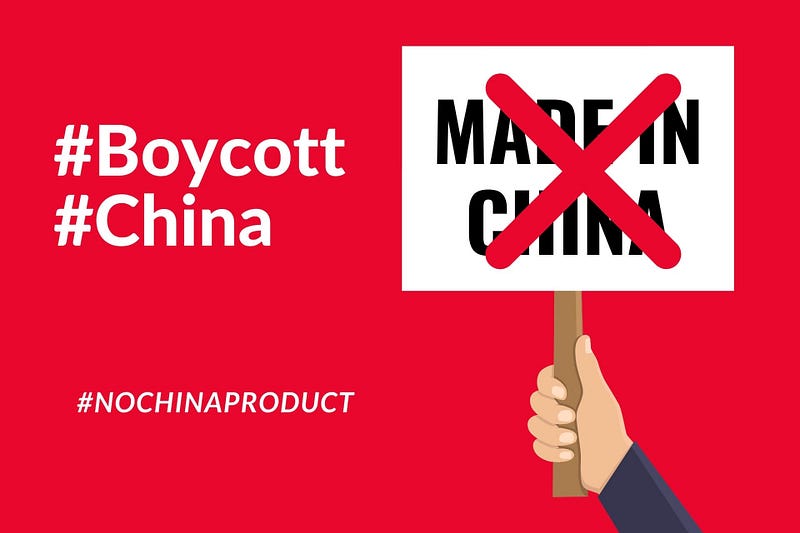
Walk into any house — small, big, or a mansion, you will get at least 100 things which are “Made in China.”
The clip in your hair, the toy the kids are playing with, the nuts and bolts attached to your window, the remote control you are using for TV and air condition, the memory card in your phone, the computer keyboard, the pill cutter your mother is using to split the medicines, the hairdryer you are using every other day, the power bank, mobile battery, earphones and much more are all “Made in China.”
China is better known as “The World’s Factory” because of the efficient manufacturing business. The kitchen appliances, clothing, bed and linen, automobiles, electrical equipment, electronic items, toys, textile materials, stationery items, builder hardware, and much more.
The list is probably never-ending, but recently The Confederation of All India Traders (CAIT) has prepared 3000 Chinese products flooding in the Indian market for centuries and decided to boycott it now.
Can you beat this? Diwali is India's festival, but the firecrackers packaging, decoration lamps, and lights in the house during the festive season are all “Made in China.”
Even the water guns kids use in the Holi festival are also manufacture in China.
A national campaign called ‘Indian goods — our pride’ has been launched to boycott Chinese goods across the country from June 10.
‘Made in China’ Tag Largely Refers to Cheap Goods.
China is a breeding ground for amazing technology companies like Alibaba and Taobao (the world’s biggest e-commerce website and the eighth-most visited website according to Alexa) that make bringing items to market and then buying them extremely easy.
Chinese products are of inferior quality. Everyone knows that. But they’re cheap—also, highly profitable business.
The products manufactured in China are reportedly lower prices, mainly because of their opaque subsidy regime and distorted factor prices.
Major India’s Tech Investors Are China-Based Company
Chinese firms have established a strong lead in the Indian market through VC-venture investments in startups, smartphones, and mobile applications. Since their costs are low and great technology, most of the Indians are using Chinese phones.
As per the Gateway House Report, 2020 Chinese tech investors have estimated $4 billion into Indian start-ups. Huh! This is big.
The four big Chinese smartphone brands — Xiaomi (known as MI), Vivo, Realme, and Oppo, dominate nearly 72% of the industry share, leaving Samsung and Apple behind. (I am still a big fan of Vivo V17 PRO’s 48MP AI Quad Camera. The night mode shot is incredible).
TikTok, the Chinese video app, has 200+ million subscribers and has overtaken YouTube in India. The irony is, Indians are boycotting China Products by making videos on Tik-Tok.
Zoom, an American communications technology that provides services like — video telephony and online chat services through a cloud-based peer-to-peer software platform, is used for teleconferencing, telecommuting, and distance education.
Amid the Global Pandemic, Zoom has gained popularity among the corporate and education sectors.
A large part of Zoom’s workforce is based in China, which has given rise to surveillance and censorship concerns. Zoom recently has faced public and media scrutiny related to security and privacy issues.
Founded in August 2010 with a USD 2 million investment, Paytm, an Indian digital payments platform started as a prepaid mobile and DTH recharge platform.
In 2015, Ant Financials of the Alibaba Group and SoftBank Vision Fund, both China-based organizations, invested in Paytm, with a combined shareholding stake of 49.34%.
That time it wasn’t a great success for Paytm. People barely even know its existence. When uber added Paytm as a digital payment method in addition to credit/debit card, I was the only one in my friends and family circle using it. Because I was experimenting, and it was good.
A year later, in November 2016, Narendra Modi, the Prime Minister of India, decided to demonetize its large currency notes of 500 and 1000 and simultaneously promoted a cashless economy. Paytm gained popularity overnight.
Paytm benefitted from Alibaba’s superior fintech experience, which is applied to India seamlessly, making it a dominant player.
Paytm networks with all of its merchants with the Business with its applications, right from booking flight and train tickets to event and movie booking. Paytm has crossed the seven million threshold. It is also partners with AGTech in mobile gaming and Citibank in credit card services.
Fast forward to the current scenario — Global Pandemic. Paytm is still number one for digital payment even though India has its own channels like freecharge, airtel payment, and amazon payment. Paytm even has partnered with UPI (Unified Payments Interface).
Paytm current investment standings are as follows: Vijay Shekhar Sharma holds a 14.67% stake in the company. Ant Financials and SoftBank Vision Fund hold 29.71% and 19.63% each, SAIF Partners holds an 18.56%, AGH holding 7.18%, Berkshire Hathaway — pioneer investor Warren Buffett’s company — holds 2.76%. Various institutions hold the rest, 7.49%.
So guess who’s benefited the most? China. Period.
Final Thoughts
According to trade figures, India is the biggest importer of Chinese consumer goods, which puts India at a huge trade deficit. During the financial year of 2018–2019, India’s exports total up to USD 16.7 billion, while imports added up to a larger USD 70.3 billion.
On the other hand, China’s imports from India account for 2% of their total imports — barely a dent should we decide to boycott the trade agreements.
This leads to one visible conclusion — China is India’s largest trading partner, but the favor heavily leans towards China. Such a counter-intuitive situation has led to a trade war between the countries, which may not favor India.
Thus, the boycotting of Chinese products is feasible only when India has a substitute source that can match the cost and bulk-availability of Chinese products in the country, which is quite impossible right now!
Thanks for reading! Check out more of my articles by clicking on my page.
If you enjoy reading stories on Medium and want to support me and others as a writer, consider signing up to become a Medium member. The membership cost is $5 per month and it will give you unlimited access to stories on Medium.
Furthermore, you can support me as a writer by buying me a coffee — https://www.buymeacoffee.com/lakhwanishweta
Stay safe and have a great day!


