
To Change Cop Culture, these Cops Must Change
A few years ago, I wrote a piece about the culture of bullying against children and adolescents who are LGBTQ or perceived as such. (Gender-fluid and non-binary are categories I did not include but certainly apply — even if the bullies don’t make the distinction.) I argued that focusing on the bullies and the bullied was insufficient to solve the problem, because it ignored a huge factor in the entire psychological process involved. Bullies continue to bully because they perceive no downside to it and even significant upside. But the holy grail of their “popularity” is given to them by far more than just the other jocks or mean girls. It is dependent on intimidating a far greater number of students. This “silent majority” is the great middle swath of kids that neither bully nor are bullied. These “good kids,” would never initiate or participate in the cruelty the witness. But their silence is taken as acquiescence and even approval by those who engage in it.
These kids who don’t rock the boat have more power than they know. Together, they can effectively stop bullying by shaming and shunning those who engage in it. But these kids won’t be brave enough to step up unless they get the message from home that it’s the right thing to do — the only thing to do.
I contended that the best strategy to put an end to the culture of adolescent bullying was to insist that “innocent bystanding” was no longer acceptable. That parents, in particular, had to teach their children to step up, step in and speak out, and if this shift occurred, the bullies would no longer associate bullying with a rise in social status, but a loss of it, and they would stop.
This article came to mind as I read multiple pieces on police culture that describe essentially the same syndrome. The bad actors remain on the force, piling up charges of misconduct that never seem to result in any consequence besides a note in their docket, because they are operate with confidence that they will never be challenged in real time by those they work with — whose approval they care about far more than that of a Civilian Review Board. In the case of George Floyd, twice Derek Chauvin was urged by Thomas Lane that “maybe we should turn him on his side now.” If the other officers had voiced agreement with him, and the three of them had shown a willingness to Chauvin to pull him off Floyd, he would be alive today.
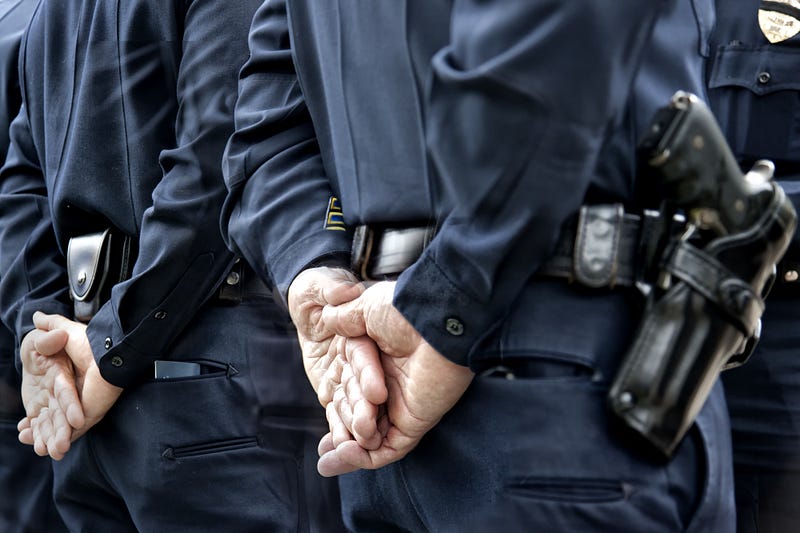
What happened in the Floyd arrest is a microcosm (in its most severe manifestation) of what has happens constantly on most police forces in the United States. The aggressive impulse comes from a minority of officers, and the counter-impulses to calm and defuse come from at least an equal minority of officers. Who should and can make the difference are the majority of officers in the middle. Changing their behavior is the indispensable component to reducing police violence. These officers must have a sense that if they prevent or restrain an aggressive officer before a situation irrevocably escalates, they will be supported, not rebuked. Right now, the culture of the “blue wall” fuels precisely the opposite peer pressure. The officer who steps in risks being ostracized and shunned, and this fear infects others present who may be struggling with their discomfort at the abusive cop’s behavior as well.
Aggressive officers have to feel that they are the ones who risk being shunned for their conduct — in the patrol car, answering a call, back in the precinct room. To the extent that training can change police culture, scenarios that elevate a cop who acts with restraint over the cop who doesn’t would be a good start — if no magic formula, if only because peer pressure begins at the academy. The cadets that show they can use force well gain far more status among those watching than the cadet that shows talent at de-escalating a tense situation.
It is entirely possible that the warrior culture is so entrenched within the police that the only real solution is the one being proposed, that police forces are dissolved and replaced by entirely different systems of public safety. But that cannot and will not happen overnight, if it happens at all. Right now, we already have officers on the job who can make a tremendous difference if enough of them start to step up, step in, and speak out. It is not a pipe dream that this can happen — who among us would have imagined two weeks ago that so many would take a knee in support of those protesting against their brethren? The trickle can turn into a flood.
MCO 2020


