avatarMuhammad Zunair

Summary

The content reflects a personal existential crisis akin to Hamlet's famous soliloquy, exploring themes of love, hardship, and the purpose of life.

Abstract

The text presents a modern interpretation of the existential question "To be, or not to be," originally from Shakespeare's Hamlet. The author shares a deep sense of sorrow and introspection, drawing parallels with Hamlet's despair over love and life's harsh realities. Despite feelings of loss and a battle with inner demons, the author, like Hamlet, ultimately chooses to embrace existence, finding method in the madness and deciding to live, to exist, and to be.

Opinions

  • The author perceives life's challenges as having an underlying purpose, similar to the structured madness in Hamlet's actions.
  • There is a suggestion that societal expectations and whispers influence the decision to persevere, with the phrase "Frailty, thy name is woman!" implying a critique of gender roles.
  • The author's choice to live is portrayed as a courageous act, emphasizing the value of life despite its inherent struggles.

To Be or Not To Be

A Poem
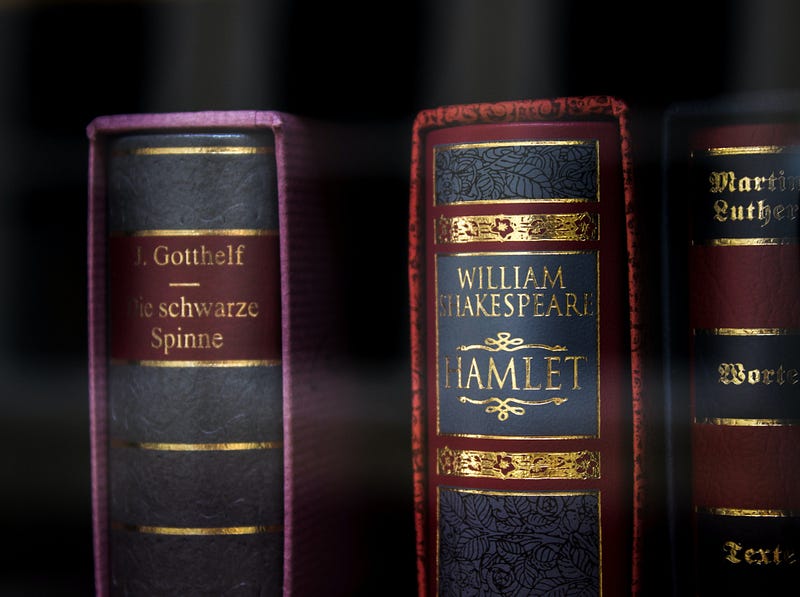
Photo by Max Muselmann on Unsplash

Not Shakespeare’s creation, But riddled with miseries of love And the harshness of this world I once asked myself, To be, Or not to be?

With an aching soul, And a bleeding heart, I questioned my existence In fact, I have of late — but Wherefore I know not — lost all my mirth

Just like Hamlet, I was drowned in sadness, While thinking about my Ophelia And fighting with my demons It felt, There’d be no sun after that night

Though, It was chaos, But with a purpose, Disseminating a message Though this be madness, Yet there is method in’t.

I heard whispers, ‘Don’t be cruel Save thyself, Young and brave You’re a true man’ Frailty, thy name is woman!

Thus, Just like Hamlet, I made the decision, To live, To exist, To be

Shakespeare
Hamlet
Poetry
Poetry On Medium
Poetry Sunday
Recommended from ReadMedium
avatarAlan Schilling
Reborn Again

A Poem

2 min read